


Introduction
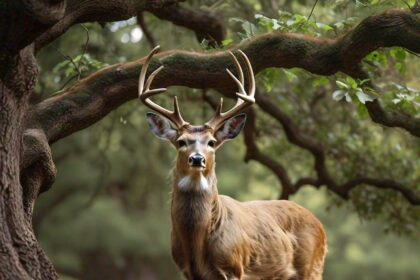
Forest dwelling deer are some of the most fascinating and elusive creatures in the wild. They move with silent precision through thick woodlands, relying on instincts and adaptations that have kept them alive for centuries. To the untrained eye, these animals might seem predictable. But any hunter knows the moment you underestimate a forest dwelling deer, it vanishes like smoke into the trees.
Have you ever wondered how deer always seem to know you’re there—even before you make a sound? That’s because forest dwelling deer are masters of survival. They blend in, sense danger before it arrives, and adapt to every season of the year.
In this post, we’ll uncover the 7 survival secrets of forest dwelling deer. These insights will not only help you appreciate the intelligence of these woodland survivors but also give hunters a valuable edge in the field.
Secret 1: Mastering Camouflage in Dense Forests
The first survival advantage of a forest dwelling deer is its natural camouflage. Their coats change with the seasons, allowing them to vanish into the forest background:
- Summer coats: Reddish-brown fur blends with leaves and undergrowth.
- Winter coats: Grayish hues match bare trees and snow.
A forest dwelling deer doesn’t just rely on color. It freezes and stays still, becoming part of the forest itself. Sometimes, a hunter may sit for hours within 30 yards of a deer without realizing it’s there. Their ability to merge into shadows makes them nearly invisible.
For hunters, success means spotting movement, not shapes. Train your eyes to detect small, subtle motions, the flick of an ear, the rise and fall of a chest, or the twitch of a tail.
Pro tip: Next time you’re glassing a woodlot, look for movement rather than silhouettes. In the forest, stillness is often the deer’s strongest weapon.
Secret 2: Acute Senses – Hearing, Smell, and Sight
The second survival secret of forest dwelling deer is their extraordinary senses. These animals are built to detect danger long before it arrives.
- Hearing: Their ears swivel like radar dishes, picking up faint rustles or the snap of a twig. Hunters often underestimate just how quiet they must be.
- Smell: A forest dwelling deer can detect human scent from hundreds of yards away, sometimes hours after you’ve passed through.
- Sight: While deer don’t see colors the way humans do, they excel at detecting movement, especially in low-light conditions at dawn and dusk.
For hunters, this creates both a challenge and an opportunity. Success depends on working with the deer’s senses rather than against them. Check the wind before you head out, wear scent-control gear, and minimize unnecessary noise.
Secret 3: Strategic Feeding Patterns
A forest dwelling deer doesn’t feed randomly—it eats with strategy and caution.
- Timing: Deer are crepuscular, meaning they feed most actively at dawn and dusk. These times reduce risk because predators are less effective in low light.
- Diet shifts: In summer, deer prefer fresh greens, while in autumn they gorge on acorns and crops to build fat reserves. Winter diets are leaner, woody browse, bark, and fungi sustain them when food is scarce.
- Location: Forest dwelling deer rarely feed in wide-open areas unless they feel safe. They stick to forest edges or areas close to cover for a quick escape.
Hunters who pay attention to seasonal food sources can predict movement. For instance, when acorns drop in early fall, deer abandon fields to feast in oak groves. Knowing this helps you position yourself where the deer will be, not just where they were.
Secret 4: Navigating with Memory and Mapping
A forest dwelling deer isn’t a wanderer, it’s a strategist with a mental map of the forest. This map includes:
- Safe bedding areas
- Water sources
- Feeding zones
- Trusted escape routes
Deer remember danger zones. If they survive an encounter in one spot, they may avoid it for weeks or shift to a safer route. This memory is why hunters often notice trails worn smooth in certain areas while others remain unused.
For hunters, understanding this “mental map” is critical. Rub lines, scrapes, and deer trails are clues to their preferred routes. Study these, and you’re essentially reading the diary of a forest dwelling deer.
Pro tip: If you spook a deer in one area, give it a week or two before returning. Their memory is sharp, and they won’t risk danger twice in quick succession.
Secret 5: Stealth and Silence in Movement
A forest dwelling deer moves with incredible stealth. Their hooves and muscles are designed for quiet movement, allowing them to slip through forests without breaking the silence.
They pause frequently, scanning and listening before moving again. This stop-and-go pattern makes it hard for predators or hunters to track them.
For hunters, the lesson is clear: mimic the deer. Move slowly, pause often, and always watch where you step. A snapped twig may seem minor, but to a deer, it’s an alarm bell.
Picture this: You’re easing through a thicket, taking one step every 20 seconds. You pause, listen, then move again. This rhythm mirrors the caution of a forest dwelling deer and drastically increases your chances of going undetected.
Secret 6: Group Dynamics and Alert Systems
A single forest dwelling deer is cautious, but a group is nearly impossible to fool. Deer—especially does and fawns, often move in small groups for safety.
They communicate with subtle signals:
- Tail flicks show alertness.
- Foot stomps warn of potential danger.
- Snorts trigger group flight.
One alert deer can ruin a hunt. If the lead doe stomps and snorts, the entire group may bolt, and even nearby deer could be alerted.
Hunters must watch carefully for body language. A raised tail or stomping hoof is your warning sign—you’ve been noticed. Freeze, stay still, and you may avoid a full alarm.
Secret 7: Seasonal Adaptations and Survival Strategies
The final secret of the forest dwelling deer is how it adapts to the seasons. These strategies ensure survival year-round:
- Winter: Energy conservation is vital. Deer reduce movement, seek sheltered bedding areas, and rely on fat reserves.
- Antler cycles: Bucks grow antlers for dominance during the rut, then shed them afterward to conserve strength.
- Range shifts: In times of scarcity, deer may migrate short distances to find better cover and food.
For hunters, timing is everything. The rut offers the best opportunities to hunt mature bucks because their guard drops. In winter, focusing on food sources or thick bedding areas pays off.
Pro tip: Study your hunting grounds year-round. Each season tells a different story about where forest dwelling deer will be.
Conclusion
The forest dwelling deer is one of nature’s most skilled survivors. From camouflage and sharp senses to memory, stealth, group alerts, and seasonal adaptability, these strategies reveal just how intelligent and resourceful deer truly are.
For hunters, this knowledge changes the game. It transforms hunting from guesswork into a thoughtful pursuit of skill and respect. More importantly, it deepens admiration for the animal itself.
When you step into the woods, remember you’re not just entering a hunting ground. You’re entering the carefully managed world of a master survivor.
Call to Action
Did these forest dwelling deer secrets give you new hunting insights?
- Share this post with your hunting buddies.
- Comment with your own deer encounters.
The more we understand forest dwelling deer, the more rewarding every trip into the woods becomes.