For hunters, the thrill of the game forms part of their reasons for engaging in the sport. Useful for hunting, sports, and even military tasks. Long-range shooting is a skill that tests your mind and body.
If you are not sure how to start, this guide will show you how to improve your long-range shooting skills. You’ll learn about body position, trigger control, and how to pick the right gear.
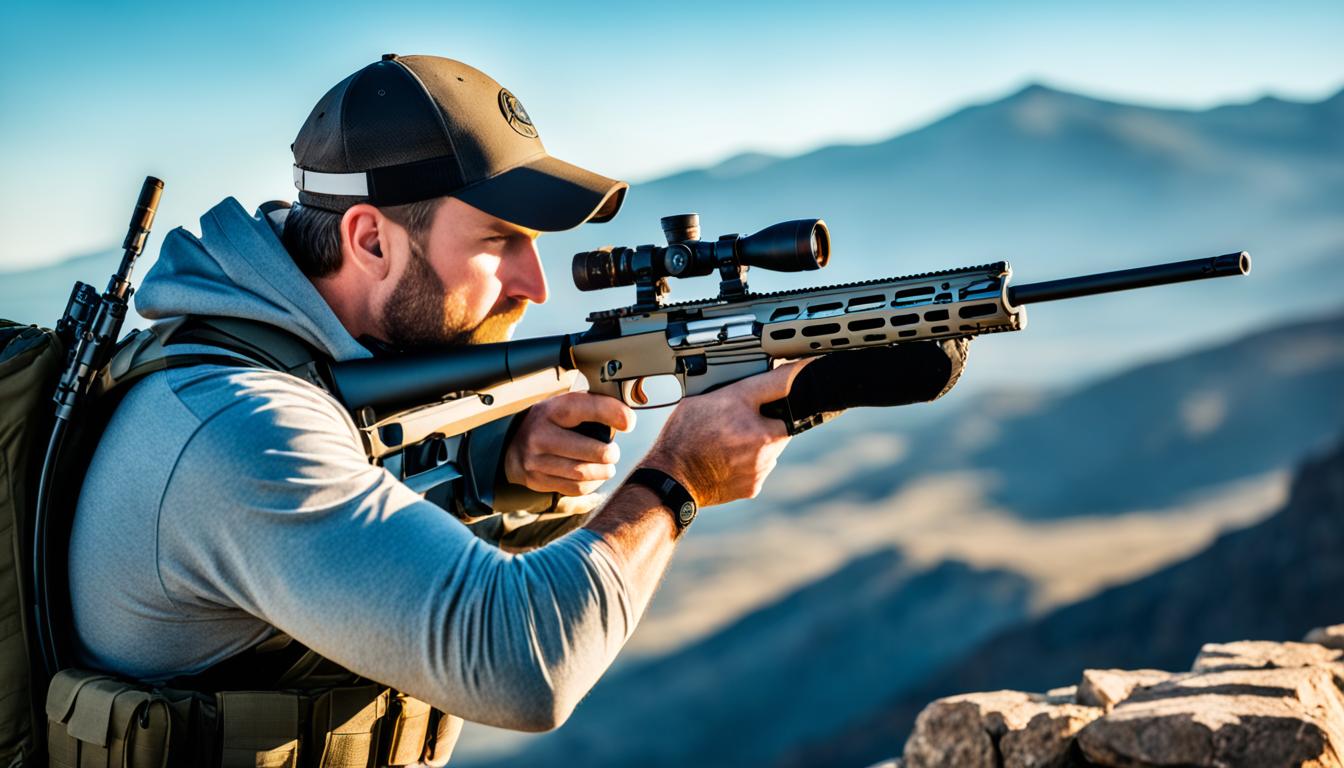
Fundamentals of Long-Range Shooting
Long-range shooting requires mastering basic shooting skills. How your body is positioned, trigger pulls among others.
Let us examine these in detail:
- Right Body Positioning
Stand directly behind the rifle with your eyes on the scope. This setup helps keep your aim steady and true.
- Proper Grip and Stance
Hold the rifle firmly but not too tightly. Place your thumb on the stock’s side, not around it, to prevent movement. When shooting prone (time for you to shoot), use your non-dominant hand for support, not your dominant one.
- Breathing and Trigger Control
Slow, steady breathing and a smooth trigger pull are vital. Take your time to breathe fully before shooting. This helps you stay calm and hit your mark consistently.
Choosing the Right Equipment For Long-Range Shooting
Choosing the right gear is key for long-range shooting is about picking the best Rifle and high-quality Optics that suit this type of shooting. Each piece you select is vital for accuracy and precision.
The Ideal Rifle and Caliber
For long-range, a rifle with a heavy barrel, quality trigger, and a stable chassis is ideal for the job. An example of this will be The Savage 110 Precision rifle which is a top pick with a low budget, (under $1,500).
For calibers, ensure you go for calibers with high Ballistic Coefficients (BCs) to fight wind and keep accuracy.
Invest in Quality Optics
Scope Features are key for long-range. Find a scope with adjustable zoom and a big objective lens for better light. A typical example of this is The Vortex Strike Eagle 5–25×56 FFP. This scope is a great choice for beginners, priced around $800.
Other optics such as the reticle system, eye relief, and Ballistic Calculators when picking optics. These help you adjust your scope for your setup and the environment.
Quality accessories like a Kestrel 5700 Elite wind meter ($749) and a Vortex Razor HD 4000 GB rangefinder ($499.99) can boost your shooting skills.
Long-Range Shooting: Techniques and Tips for Precision
The way a bullet moves, its speed, and how it fights against the air can change where it hits. This makes learning the basics of long-range shooting very important. When you understand the wind speed, you can change the wind drift and get more accurate shots.
Mastering Proper Shooting Positions
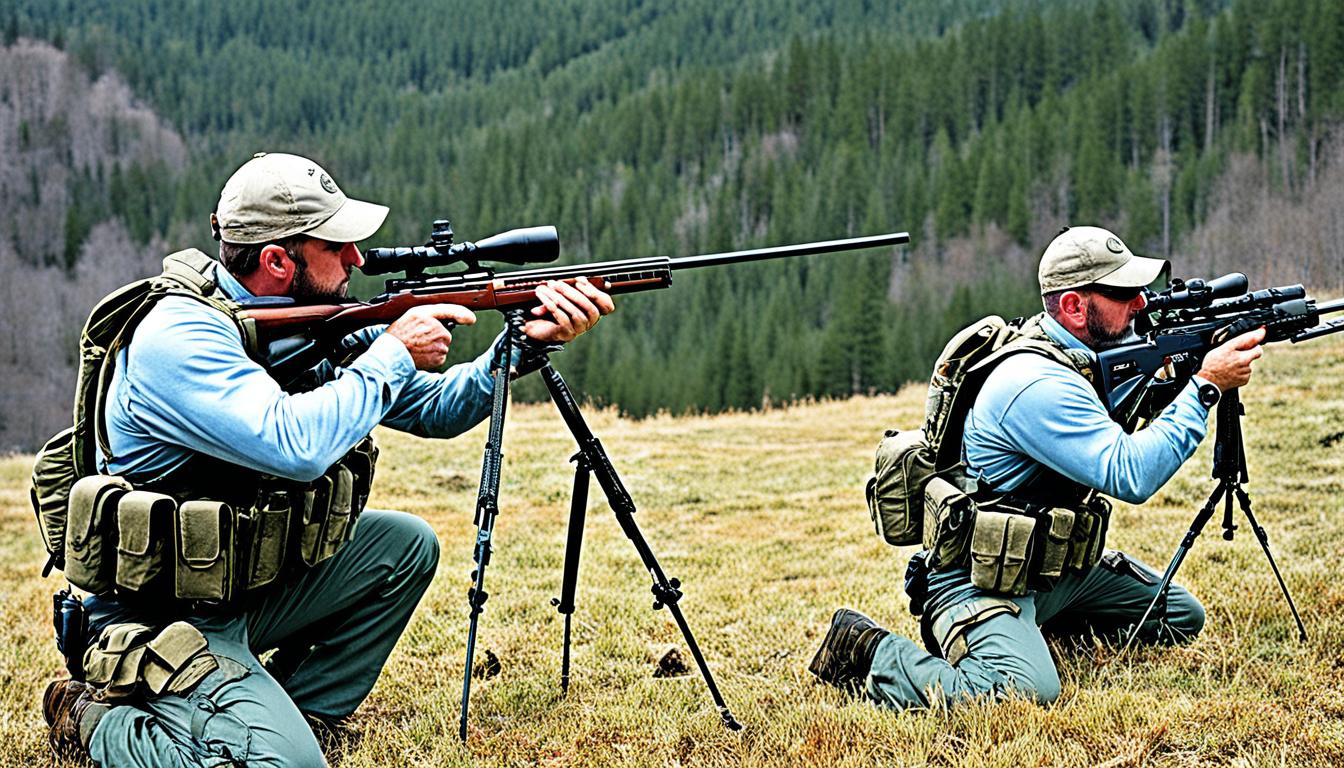
To accurately hit your mark from a distance, you should get into the right Shooting Positions. The prone position, where you lie flat on the ground, is often used because it’s stable.
You can also consider adding things like bipods or sandbags which will keep you still, giving you more accurate shots.
You should also consider the environment when shooting far away. Things like the ground and the weather can affect your aim. There’s no shortcut, to be a good shooter, learn to adjust your skills using a mix of knowledge. Sometimes too, trust your instinct!
Consistent Routines and Practice
Practicing regularly is key to getting better at long-range shooting. Try Dry-fire training, (where you practice without live ammo), this can help improve your skills.
Make sure to set aside time for shooting and stick to a schedule, even when it’s hard.This way, you can slowly get better at hitting your targets. Focus on the basics and keep practicing. Over time, you’ll see your accuracy and consistency grow.
Before hunting season, check your rifle’s aim and pick the right ammo. Using the same gear for practice as you will for hunting makes you more efficient. This helps you get ready for real shots.

Master Long-Range Shooting
Regular practice and focusing on the basics are key to getting better at long-range shooting. To be a pro, get the basics right and keep practicing.
You can also try connecting with long-range shooting communities near you. Having a community will boost your hunting and competition game.
The path to long-range shooting mastery is ongoing, so be patient with yourself. You will be a pro at it, sooner than you think.
]]>In such cases, the recovery and responsibility of tracking wounded game rest on the hunter. What do they do, and not just that, but what are the right ways to do it as well?
This guide will explore the techniques and best practices for tracking and recovering wounded animals, ensuring your efforts at hunting responsibly are not thwarted.
Ethical Responsibility and Initial Steps
Responsible hunting or hunting ethically is about respecting the life of the animal and ensuring its suffering is minimized. Your first priority as a responsible hunter should be to track and recover any wounded game no matter how difficult it is or the time required.
Even if the animal flees at the sound of your shot, assume it was hit and take the necessary steps to go get it.
Although sometimes difficult, it can be easier to track wounded animals if you follow a systematic approach and understand the signs left by the animal.
The following are a few things you can do:
Tracking Wounded Game
- Observe The Animal Behavior After the Shot
Watch how the animal reacts to see where you hit it and how badly it’s hurt. Look for signs like how it moves, the direction it goes, and any injuries or blood. These clues help guide your tracking.
- Mark the Location and Waiting Period
Mark where the animal disappeared with a landmark, compass, or GPS. This spot is where you start tracking. Wait 30 minutes to an hour before searching. Don’t be in a hurry because waiting lets the animal weaken and the blood trail get clearer.
- Identifying Blood Signs and Patterns
Start by checking the spot where the animal was shot. Look for blood signs to understand the wound and the animal’s condition. This is where you should know the difference between lung, gut, and grazing wounds because this will help you gauge the severity of the would and track how difficult or easy it will be to track the animal.
- Using Tracking Tools and Trail Markers
Having the right tools helps in tracking wounded game. Toilet papers are good for marking blood spots. A compass is also useful for keeping track of the animal especially when the blood signs fade.
In cases where the blood trail is hard to see, you can move slowly and use your senses. Listen for sounds be patient and observant. To really track a wounded animal you will need to be persistent and pay strong attention to detail.
Remember you goal is to track and recover the animal humanely so you have to be committed to doing just that
Now you have an idea how you can track your wounded game, but sometimes how would you know to track the right game? What if there are previous blood trails in the area?
How can you avoid wasting time only to find out the game you tracked was not the one you shot? Let’s look at that next.
Blood Trail Clues
Where your shot hits and the blood spilled can tell you how badly an animal is hurt. This can help guide your search to find it.
The color of the blood trail tells you a lot about the shot. For example:
- Bright red or pink blood with bubbles means a hit to the lungs or heart. This shot is usually fatal, happening within 5-10 seconds.
- Darker, crimson blood means a hit to the muscles or liver. The animal might take up to an hour to die.
- Greenish blood with food bits means a gut shot. This is the toughest to recover, as the deer may travel far before dying, taking 5 hours or more.
Deer may also exhibit different reactions depending on the intensity of the shot. A deer hit badly will usually lie down within 200-300 yards and die soon, unless scared away.
If scared, it may run a 1/2 mile or more, leaving blood drops if the shot was not good. This could make tracking hard.
Now, after you have used blood trail clues to catch your game, you need to learn how to kill them responsibly if they are not fully dead, what’s more, you should also be able to tell if the meat is safe for consumption too.
Tracking Wounded Game: Prioritizing Humane Recovery
In responsible hunting, timing is everything when tracking a wounded game. Waiting too long lets the animal suffer. But acting too soon can also make it hard or impossible to find.
The humane thing to do is to:
- Watch how the animal acts after the shot to see how bad the wound is.
- Wait at least 30 minutes before tracking to let the animal weaken from its injury.
- Look for blood signs and patterns to follow the animal, telling apart bright red arterial blood from darker, clotted blood.
- When you find the animal, come up from behind to avoid a dangerous fight.
Preserving Meat Quality
While considering humane techniques, to really keep deer meat good, you need to get to it fast. Waiting too long makes the meat taste bad.
It’s important to handle and store the meat right to keep it fresh and tasty.
Here are some ways you can preserve the quality of your meat.
- Know the animal’s body and how it reacts to the shot to check if it was a good hit.
- Follow the rules for tagging and moving the carcass to keep it safe and sound.
- Use Responsible Hunting methods to reduce the animal’s pain and keep the meat quality high.
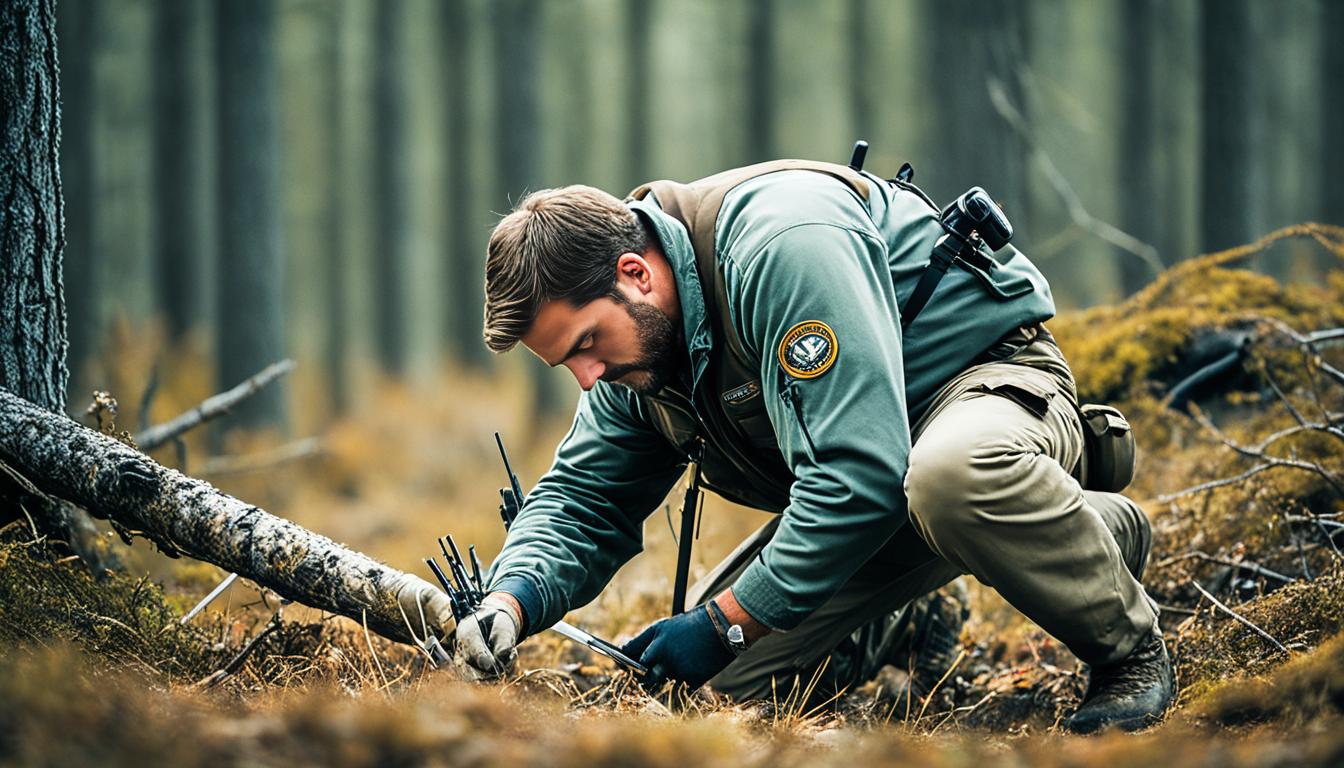
Go Get Your Game!
Tracking wounded deer or bear takes patience and knowledge of animal behavior. It’s a tough task, but the reward of a successful recovery is huge.
If you follow ethical hunting principles, you’ll become a better tracker. This helps keep your sport sustainable for the future.
Remember to focus on humane recovery and keeping the meat quality up!
]]>They are a beautiful breed that has caught the eye of many nature lovers and outdoor fans. But what do we really know about them?
In this article, we will explore their world, from where they live to how they reproduce and the efforts to save them.
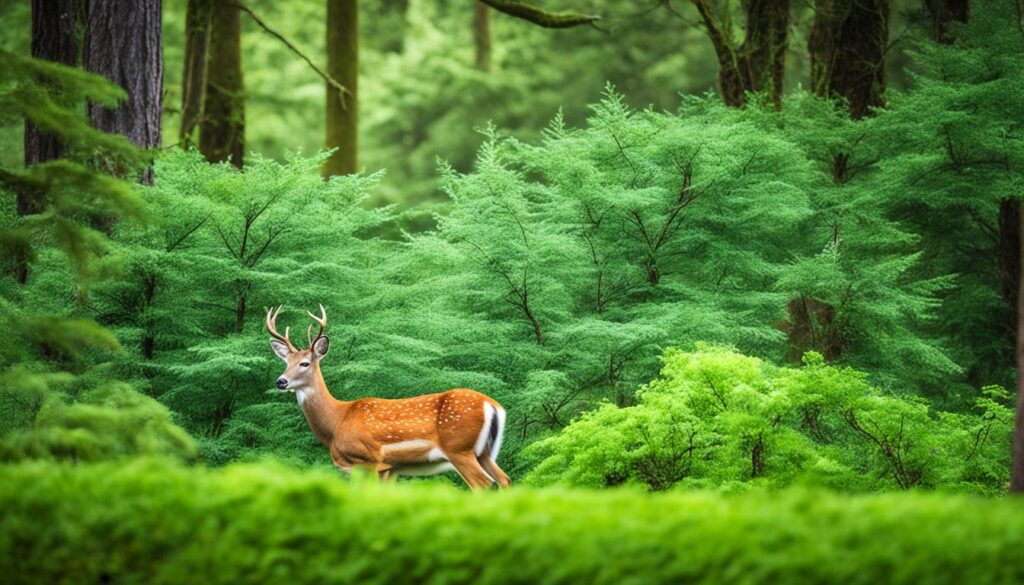
Introduction to Sika Deer
Sika deer are also known as spotted deer. They are small to medium-sized and belong to the cervid family. They have a head and body length of about 950–1,800 mm. Their tail is 75–130 mm long, and they stand 640–1090 mm tall at the shoulder.
Among the sika deer, there are clear differences between males and females. Males are, on average, 8.7% bigger than females.
Sika deer originally lived in East Asia. Their home includes the southern Ussuri district of eastern Siberia, China, Formosa, Japan, Korea, Manchuria, Taiwan, and parts of Vietnam. But, they have been introduced to many other places around the world.
Now, they live in countries like Australia, Austria, Denmark, England, France, Ireland, Jolo Island (south of the Philippines), New Zealand, Poland, Scotland, and some states in the United States. These places include Maryland, Oklahoma, Texas, Wisconsin, and Virginia.
Habitat Preferences
Sika deer tend to prefer specific habitats that meet their needs, that is why marshes and thickly forested wetlands are perfect for them.
To them, these areas offer the needed food and shelter to cater for their survival.
Sika deer also live at different heights, from sea level up to 1800 meters (5,900 feet). If there are mountains around where they live, they will move up and down the mountain.
This behavior also depends on the season. In winter, they would exhibit this behavior because of the snow their breeding cycles.
Let me leave you with these few pointers:
- Sika deer love living in marshes and thickly forested wetlands for food and shelter.
- They are largely grouped in southern Dorchester County, Maryland.
- Hinds stay in about 1 square mile, but stags have bigger areas, especially during mating season.
- They live from sea level to 1800 meters (5,900 feet) high.
- They move up and down mountains by up to 700 meters (2,300 feet) with the seasons.
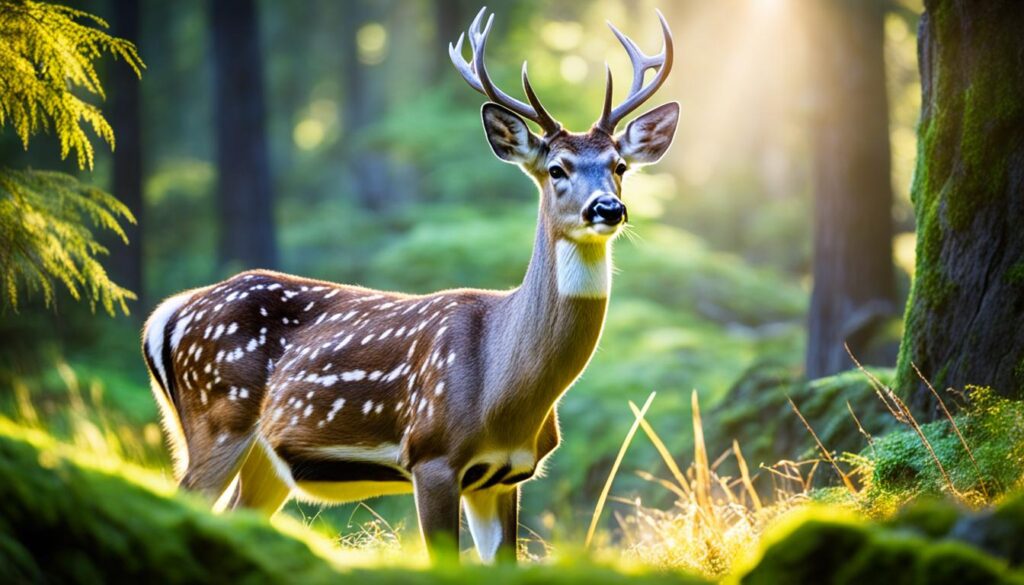
Sika Deer Diet
Sika deer mainly eat marsh plants, grasses, and crops like corn and soybeans. They also enjoy bayberry, catbrier, and poison ivy.
These deer primarily feed and are most active at dusk and dawn. They use the low light to eat in freshwater marshes, grasslands, and farmlands.
Let’s look at the different types of Sika deer diet in detail:
- Marsh vegetation
Marshes generally offer a diverse diet consisting of aquatic vegetation and grasses, which are important for their nutrition. Firstly, marshes provide abundant food resources such as marsh grasses and leafy vegetation, which are part of their herbivorous diet.
Also, marshes have dense vegetation, which can keep deer safe from predators. It seems like a win for them; they get to eat without being bothered about predators.
Marshes provide a relatively stable microclimate that protects sika deer from extreme weather conditions. The wet environment also helps to reduce parasites, and the water available in these areas is also essential for their survival.
- Grasses
Primarily, sika deer consume grasses because they are herbivores, and grasses form a significant portion of their diet.
That aside, however, grasses are key to the diet of Sika deer because they are rich in essential nutrients and support their overall health and energy needs.
Additionally, the structure and availability of grasses in their habitats, such as marshes and forested wetlands, align well with the sika deer’s grazing behavior.
- Agricultural crops
Agricultural crops are often rich in proteins and carbohydrates, which are essential for the growth, reproduction, and overall health of deer.
Crops like soybean and corn, in particular, provide high nutritional value. Corn provides around 365 calories per 100 grams, with significant amounts of carbohydrates (about 74 grams) and moderate protein (around 9 grams).
Soybeans, on the other hand, contain approximately 446 calories per 100 grams, with about 36 grams of protein and 20 grams of fat. This nutritional combination make these two rich crops a great source of nutrients for deer.
Additionally, in areas where agricultural fields are abundant, these crops may be more readily available and accessible compared to natural forage, which is good for deer.
- Special Diet Plants
Although sika deer have a varied diet, they prefer some plants above others. These include; bayberry, catbrier, and poison ivy.
If bayberry, catbrier, and poison ivy are abundant in their environment, they are likely to consume these plants more frequently.
Bayberry is highly rich in fatty acids, which can be beneficial for deer energy levels. Taste and Palatability: Deer are selective feeders, and they are likely to prefer plants that have a taste and texture they enjoy. The specific taste profiles of these plants may appeal to sika deer.
While some plants, such as poison ivy, may be considered undesirable by humans due to their irritating properties, sika deer find them palatable. Catbrier also often grows in thickets and can provide shelter as well as food; this, like marshes, makes it an attractive choice for sika deer.
Reproduction and Behavior
Sika deer have complex social lives and unique behaviors. These traits are key to their survival and reproduction. They usually become ready to breed at about 16 months old.
Their breeding season starts in late September and lasts for about 30 weeks. Most calves are born in May, weighing between 4.5 and 7.0 kg. During mating, male Sika deer, or stags, protect a group of females, or hinds, by using sounds such as bugling to defend them.
Vocalizations
Sika deer make many sounds, like bugling, bleats, and barks. These sounds are used when talking to each other. The male’s bugling call is especially striking during mating season.
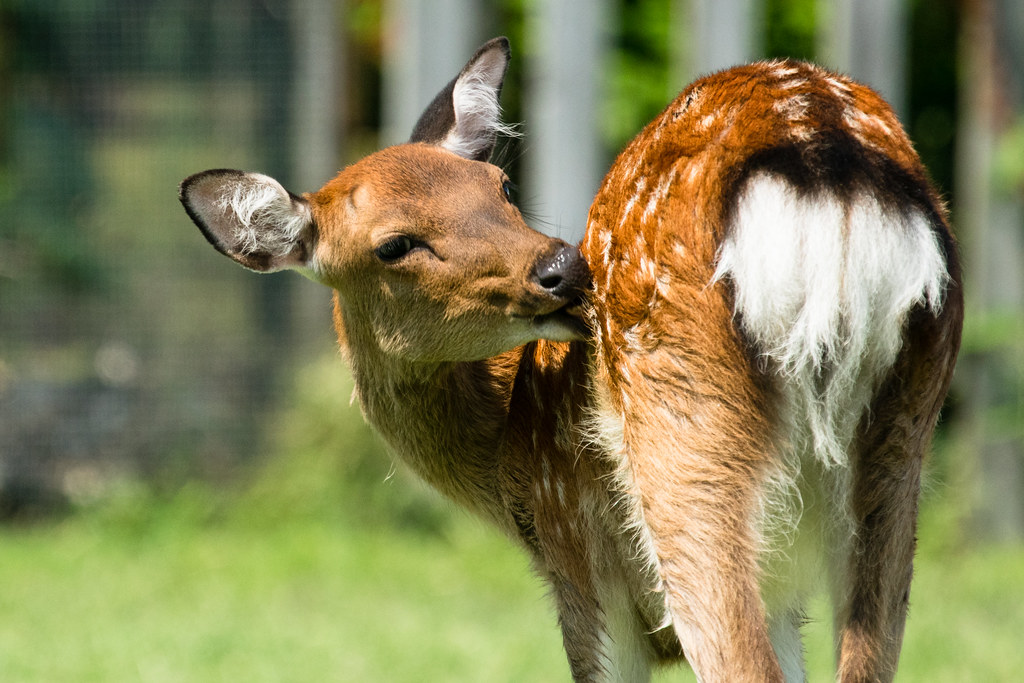
Anatomy and Physical Adaptations
Having evolved to live well in their environments, Sika deer stand out with their unique look. They have a thick winter coat, up to 50–70 mm long, that keeps them warm during cold seasons. In summer, they have a finer, shorter coat to stay cool.
Their antlers are another key feature. Male Sika deer, or stags, have long, straight antlers. These can be 300–660 mm long with 2–5 tines. These antlers show their strength and help in fights during mating season.
In this species of deer, there’s a big difference between male and female Sika deer. Males are about 8.7% bigger than females. This size difference is common in many deer species.
In summary, the anatomy of Sika deer can be said to be:
- Sika deer have a dense, insulating winter coat with hairs up to 70 mm long.
- Their summer coat is much finer, straighter, and shorter (around 30 mm).
- Male Sika deer possess narrow, erect antlers that are 300–660 mm in length and have 2–5 tines.
- Sika deer exhibit significant sexual dimorphism, with males being 8.7% larger than females on average.
Conservation and Management
The Sika deer is a beloved game species on the Eastern Shore. For Hunters, especially those in the Eastern Shore, sika deer is a beloved game. China has the biggest native sika deer population,even this, is now less than a thousand.
This is why it is important to consider the conservation and management of Sika deer for the future. To keep the ecosystem balanced, hunting should be done in a controlled way.
The following management strategies may be useful in maintaining a safe ecological system for both deer and humans:
- Culling: This is the selective way of hunting deer (or wild animals), is employed as a tool in wildlife conservation to control population spread and diseases.
- Controlled hunting: This is the practice of hunting that is governed by specific rules and regulations to ensure ecological balanceand conservation of ecosystems.
The Sika deer are a captivating species found all over the world. Despite being found in many places, the Sika deer is considered “Least Concern” by the IUCN. This means their numbers are stable.
But, they face issues with genetic pollution and hybridization with other deer, like the red deer. These problems can threaten the Sika deer and their natural habitats.
It is important to support conservation measures for sika deer. By doing so, we can ensure that future generations continue to appreciate their role in our natural world.
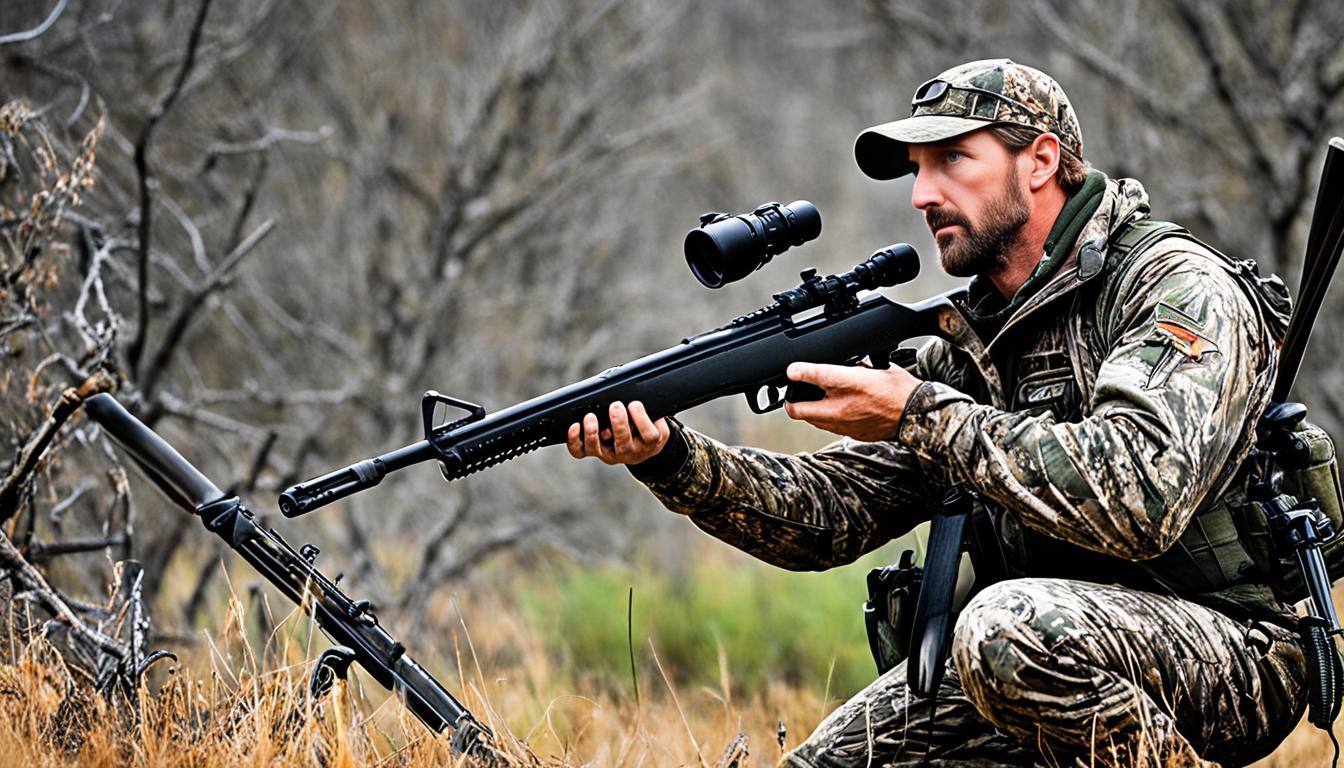
]]>In this comprehensive guide, we will take an in-depth look into how to call like a pro, with a focus on three specific animals: turkeys, coyotes, and mallard ducks.
Understanding Turkey Vocalizations
Birds have many sounds, each with their own purpose. As a hunter, you should know these sounds so you can either identify or hunt turkeys more effectively.
Let us examine a few:
Cluck
The cluck is a sharp sound turkeys use to stay in touch. Hunters can use the cluck to keep turkeys interested. This can help in a successful hunt.
Purr
The purr is a soft sound turkeys make when they’re happy or socializing. Hunters can use the purr to make turkeys feel safe and come closer.
Gobble
The gobble is a loud call only males make. It shows they’re availability and mostly is used to attract hens. Hunters can use the gobble to bring in other turkeys, either out of curiosity or to challenge them.
Kee-kee run
The kee-kee run is a high-pitched whistle young turkeys make when they’re lost. Hunters can use this call to show they care and bring in turkeys of all ages.
Choosing the Most Effective calling technique
There are many types of ways you can call a turkey. Depending on your hunting style, you can use any of the calls to attract turkey.
Let us look at the different types, and then you get to choose what works best for you depending on your style and hunting conditions:
Box Calls
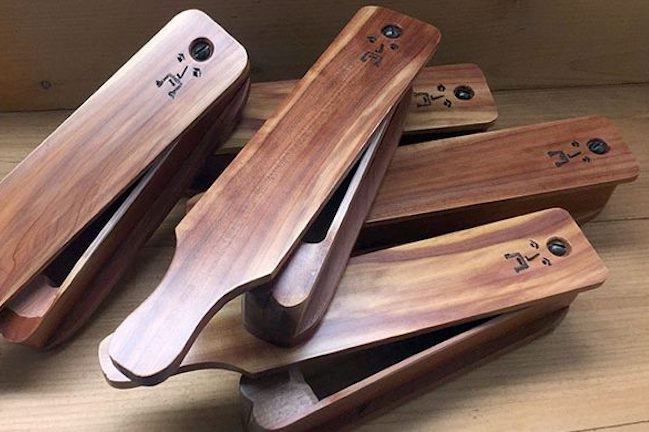
Box calls are easy to use and great for making realistic turkey sounds. They have a chamber and a stick, or paddle. Rubbing them together makes the sounds turkeys make. Even beginners can learn to use them quickly.
Pot Calls
Pot Calls are mostly used by hunters because of their range of sounds. They have a circular pot with a striking surface. When the striker is hit on the pot, hunters can make different turkey sounds.
This type of call also allows hunters to control the sounds well, attracting turkeys.
Diaphragm Calls
Diaphragm Calls are hands-free and versatile but to use them, you will need practice. They usually have a frame with a latex reed in the mouth.
Blowing air across the reed makes different turkey sounds. Diaphragm calls are very useful because they let hunters call without losing their shooting position. But, they take skill to use well.
Push-Pull Calls
Push-Pull Calls are very simple. They usually come with a box and a spring and a peg. Moving the peg makes different turkey sounds.
This kind of call is great for beginner hunters or those who want a reliable call.
Locator Calls
Locator Calls help find turkeys by mimicking sounds like a crow or coyote. They don’t sound like turkeys, so they won’t scare them away.
Using them right can help hunters locate turkeys from afar. The best time for using these calls are early in the morning or late afternoon.
Turkey Calls Summary: Effective Calling Techniques
When learning turkey calls, you should start with the basics like clucks. Later, you can move to more complex calls. To really replicate these sounds, you should listen to real turkeys or recordings to learn their sounds.
When implementing these calls, you should take not of how loud you call. Ensure that your calls are moderate such that they attract turkeys far way without scaring those close by.
Also learn to adjust your calls based on how the turkey reacts to increase your chances of success.
In summary:
- Develop a strong foundation in turkey vocalizations by mastering easy calls such as clucks before moving to more advanced calls.
- Observe and learn from real turkeys or recordings to gain a deeper understanding of their calls.
- Adjust your calling volume to attract distant turkeys without distracting nearby ones.
- Time your calls carefully to engage a turkey’s curiosity without scaring it away.
- Adapt your calling strategy based on the turkey’s response to increase your chances of success.
Mastering Effective Calling Techniques For Coyote
Previously hunters used rodent and rabbit calls to hunt coyotes. However, they are are getting smarter and harder to hunt with just rodent or rabbit calls.
Now, hunters need to use different Coyote Vocalizations to catch them. This includes non-aggressive male howls and female yodels or pup sounds.
Using Coyote Vocalizations
Coyotes make over two dozen sounds to talk to each other. Interesting right?! Usually from January to March, these sounds work better than calls for prey.
In some instances, a special Coyote Call Sequence may be appropriate. It starts with electronic male howls, then a female yodel, a calm howl, a distress call, and finally, sounds of pup distress and death.
This mix makes coyotes curious and think there are more of them. Handmade coyote equipment have big benefits over store-bought ones because they are made just for you and will sound better and coyotes won’t recognize them.
Effective Calling Techniques for Mallard Ducks
Mallard ducks are a top choice for Waterfowl Hunting. If you are looking to hunt these birds, learning their calling techniques is a good way to go.
Mallards use different calls for various situations, like decrescendo calls for females, chuckles for feeding and flying together, and common quacks for other needs.
Mallard Call Vocalizations
Using the right calls is important because when you use them right, you can help attract these birds.
Calls like quacks, feeding calls, comeback calls, and hail calls can be used to get better results.
To get the most out of your waterfowl hunting expedition, you need to have the right hunting gear and really master these duck calling techniques.
Effective calling techniques for ducks is about precise mouth movements and controlled air. To get better, you should learn to mimic mallards’ sounds, including the basic quack and chuckle sequence and practice often.
Now let’s take examine the differences between some two duck calls.
Effective Calling Techniques: Single Vs Double Reed Call
First, you should know that the type of duck call you pick depends on the situation and the sound you want.
Single-reed calls on the other hand are versatile, letting you make many mallard sounds, from basic quacks to complex ones.
Double-reed calls are also easier for beginners, needing less air pressure and making a raspier sound.
Next, let us examine some advanced duck call strategies.
Advanced Duck Call Strategies
Before you get to this stage of mastering advanced duck call strategies, you should understand that duck hunting goes beyond just basic calling.
One tactic you can learn is mimicking a “lonesome hen” to attract other ducks looking for a mate or a group. This works best during breeding season when ducks answer calls from a lone female.
Another trick is using “hail” or “highball” calls to get ducks’ attention from above or far away.
When you become an expert in Duck Calling Techniques, you will learn how to mix different duck sounds. Mixing these calls will make it sound like a lively flock, which will catch ducks’ attention and bring them closer.
But to get there, you need to keep working on your skills and adjust to changing hunting conditions. This will improve your Duck Hunting Strategies and Waterfowl Hunting Tactics a lot.
Go Ahead And Learn!
A serious hunter knows that to attract the game you want, you need to put in some extra effort. This includes learning some of these calls.
Mastering calling takes time and effort but these skills can determine if your hunt turns into a success or a miss.
All the best on your journey to learning the wild’s secrets and becoming a true calling expert.
]]>But it is not enough to just know these laws, we must also be better stewards of nature by following them.
This guide will cover the essential parts of hunting laws. We’ll talk about bag limits, permits, and ethical hunting. I promise this will be a good one to get you started on your journey of protecting nature while enhancing your hunting.
Understanding Bag Limits and Legal Requirements
As a responsible hunter, it is important for you to know about bag limits and legal requirements because knowing them will ensure hunting is done right.
For example, knowing that Archery Antlerless Permits are good during the archery deer season in any county and Firearms Antlerless Permits work during all parts of the firearms deer season helps in your hunting preparations.
As a hunter, you can take advantage by buying and filling as many Archery Antlerless Deer Hunting Permits as you want during the archery season.
However, depending on your location there are set limits on how many permits you can fill with firearms during the firearms season.
Equipping for a Successful and Safe Hunt
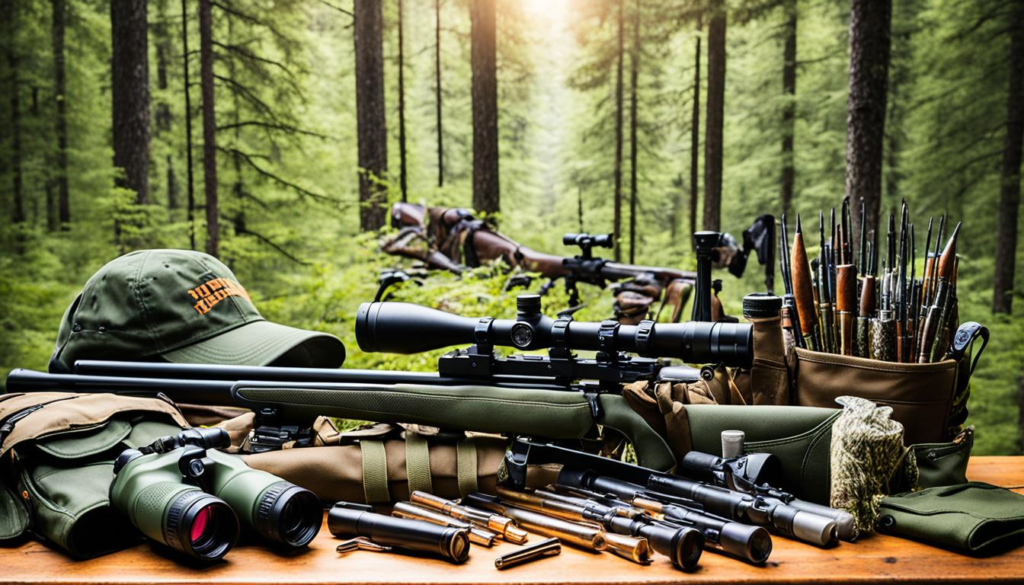
After successfully identifying the types of permits for different seasons in your country/location, you need to also identify the hunting equipment rules before you set out to choose your hunting gear. For starters, you should get a set of Firearm Safety and Archery Gear that fits the game you’re after.
Ensure that your guns are working well and you know how to use them. As a hunter, you should be prepared for any weather changes therefore, adding the right clothes and gear is necessary.
As part of your preparation, you should learn as much as you can about the Terrain you are going to hunt in. Foreknowledge of the what challenges you might face, will help you brace yourself accordingly.
To effectively do this, keep up with the weather forecast and be open to unexpected weather changes, as well. Be prepared, at all times!
Ethical Hunting
Ethical hunting are hunting practices that respect animal welfare and the environment. The aim of ethical hunters is to minimize suffering and operate within legal and fair regulations.
To ensure compliance with ethical hunting principles, we will examine a few things:
- On-Site Safety Protocols
First things first, don’t be a loner. In situations where you should be a loner, be sure to always tell a trusted friend your hunting plans, including when you’ll be back. This information could come in handy should anything unexpected happen.
While you may have informed a trusted person, it is still important to carry a phone or radio with you. These can be your link to help if an emergency comes up.
- Wildlife Preservation and Ethical Tenets
The actions (whether positive or negative) of hunters greatly affect wildlife conservation. If bag limits and hunting seasons are followed closesly, overhunting will be prevented and animal populations will be in a healthy balance.
- Respecting the Chronology of Hunting Seasons and Bag Limits
One of the most important things to do to protect biodiversity, is to learn about the the animals you hunt. This will prevent you from harming them by mistake.
Below are 3 key ethical hunting practices you can try:
Ethical Hunting Practices
- Seek humane and effective kills. This reduces suffering and waste.
- Focus on a specific quarry. This helps keep the ecological balance.
- Do not target one species too much. This helps protect the natural food chain, helping all wildlife thrive.
Now you are all equipped to effectively hunt but what happens when something goes wrong during a hunt? How do you deal with unforeseen circumstances that could affect either you or the animals you are hunting?
This is what we are about to learn:
Preparing for Emergencies
To effectively tackle emergencies while hunting, you need to have the right first aid skills. As a hunter, you should always have a good first aid kit, this is vital for treating minor injuries or helping until help arrives.
You should also learn some basic navigation tools like GPS or maps, this will help you find your way if you get lost. For easy reference, keep the 5 points below as a checklist to prepare for emergencies before going on a hunt.
- Learn basic first aid for minor injuries or emergencies that might happen while hunting.
- Know how to handle wildlife, like snake bites or aggressive animals.
- Learn about hypothermia, heat exhaustion, and other weather dangers. Know how to treat them.
- Make a clear plan with your hunting group, including how to communicate and who to call in an emergency.
- Get and learn to use basic navigation tools, like a compass, GPS, or map, to avoid getting lost.
When you are adequately prepared, you can have a safe and fun hunting trip without worrying about what to do in case of an emergency.
In this article, we have provided you with everything you need to do to ensure you are hunting ethically.
On your next hunt, remembe to use what you have learnt to ensure you make the right choices that will keep both you and the animals you hunt, safe for generations.
]]>You’ve most likely also thought about what makes hunting tools different or how you can pick the best one for you?If so, this guide is for you. In a few paragraphs, we’ll look at how your hunting goals, physical abilities, and local laws matter.
You’ll also get to learn about rifle calibers and traditional bows. This will help you make a smart choice for your hunting gear. By the time we are done, this will be your go-to resource for making the best choice for your next hunt.
Choosing The Right Rifle Calibers
Rifle calibers are measures of the internal diameter of the rifle barrel, which corresponds to the size of ammunition that can be fired through it. There are many options, each with its own benefits. But the top choices for deer hunting are the 30-30 Winchester, 30-06, and 308 Winchester.
These rifles are known for their reliable performance, easy handling, and wide ammo selection. Other rifles such as the 300 Winchester Magnum are great for long shots but have a stronger recoil.
Recently though, rifle calibers like the 6.5 Creedmoor and 6.5 Grendel are becoming increasingly popular for their accuracy and gentle recoil. The 7mm-08 Remington is also popular for its mix of power, precision, and easy handling.
In summary, to hunt effectively, you can choose from this list of rifle calibers:
- 30-30 Winchester: Perfect for close-range shots.
- 30-06: For various hunting scenarios.
- 308 Winchester: Perfect for long-range shots.
- 300 Winchester Magnum: Good for long-range performance (Nb: it has a more pronounced recoil).
- 6.5 Creedmoor and 6.5 Grendel: Newer rifles, praised for their accuracy, long-range potential, and light recoil.
- 7mm-08 Remington: Good to gain precise shots with manageable recoil.
While these are guidelines, you should know that choosing the right rifle caliber is a personal decision. Weigh your shooting skills, the terrain, and your preferences.
Choosing The Right Bow
Before you hunt, you have to think about arrow and broadhead types, bow weight, and how it fits you. There are different kind of bows, each with its’s own advantages. Consider these two:
- Recurve bows: These are good for hunting big game because of their power and accuracy.
- Longbows: These are known to be beautiful and work very well with arrows.
For both experienced and new archers, recurve and longbows have a special appeal. Your joy for hunting may be affected by your success in a hunt or otherwise.
We have outlined some factors to consider if you want to decide which equipment is best for your hunting expedition.
Choose Your Hunting Equipment: Rifle Or Bow?
We are just going to look at a few differences which will help you decide which equipment is best for you.
- The recoil factor: Rifles have more recoil which can affect your aim and control. Bows, on the other hand, are smoother and more comfortable for some hunters.
- The range factor: Rifles can shoot farther than bows.
- Accuracy factor: Both rifles and bows can be very accurate. But, the skill and practice needed can differ. Rifles might be easier for beginners.
While your preferance plays a key role in the hunting equipment you can use, legal rules are also important.
You should learn about hunting laws in your country or vicinity and ensure you are using the right hunting equipment and hunting.
That leads us to the next important thing when deciding to choose your hunting equipment.
Understanding Hunting Regulations
As a responsible hunter, knowing hunting rules in your country is key. Following these rules makes hunting safe, ethical, and legal.
Depending on your location, getting the right licenses, when you can hunt and how much you can hunt may vary. But it’s important to learn these rules to be a respected hunter.
As a general rule, ensure you have the following in order:
Licensing and Legal Requirements
Before you go hunting, make sure you have the right licenses and permits. You might need a basic hunting license.
Also be sure to know the hunting regulations, like when you can hunt, how much you can take, and how to hunt in your area/country. These rules change a lot by countries, states or even areas, so be sure to check the specific rules for where you’re hunting.
Verify the checklist:
- Get the needed hunting licenses and permits
- Learn about season dates, bag limits, and allowed hunting methods
- Keep up with any changes to hunting regulations in your area
Hunt responsibly and within the law for a safe and ethical experience.
Mastering Your Weapon
A key to succeeding as a hunter is to practice at the shooting range often. Whether you’re into rifles or archery, regular practice helps you get better at using your gear.
It’s the way to gain the skills needed for hunting well and ethically. Here are a few tips for improving your shooting skillset.
Shooting Positions and Stability
- Prone positions: These are the most stable for long-range shots.
- Standing position: This is quite tough and not the best for stable long-range shots.
- Sitting with support: Support like bipods or tripods, makes you more stable, helping with your precision.
- Kneeling position: With the right setup, kneeling can help you gain more accurate shots.
As a hunting enthusiast, you will have no problem spending time to improve your skills. Choosing the right rifle or bow will lead to more successful and rewarding hunting experiences.
So, get ready for your next hunting trip with the knowledge from this guide. Choose the best rifle or bow, improve your shooting skills, and follow ethical hunting practices.
Happy hunting!
]]>Here’s your ultimate guide to attracting whitetail deer without bait.
Understanding Whitetail Deer Behavior
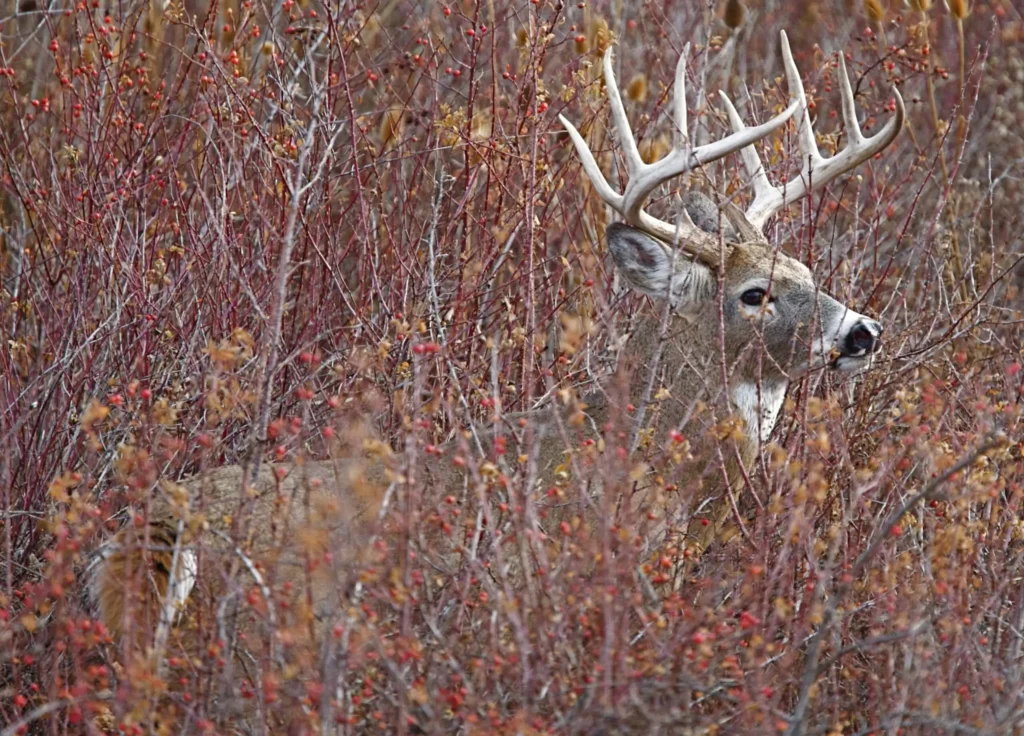
Whitetail deer are creatures of habit, often following the same trails and feeding patterns. They are also highly sensitive to their environment, relying on their keen senses of smell, sight, and hearing to stay safe.
Seasonal Patterns
- Spring and Summer: Whitetail deer focus on feeding to build up their energy reserves. They are often found in areas with abundant vegetation.
- Fall: This is the breeding season (rut), and bucks become more active and less cautious as they search for does.
- Winter: Deer seek out areas with good cover and food sources to survive the colder months.
How To Attract Whitetail Deer Without Bait
Natural Food Sources
One of the best ways to attract whitetail deer without bait is to provide natural food sources. This can be achieved by enhancing the habitat around your hunting area.
To do this, you can plant native or deer attracting vegetation such as Plant apple, persimmon, or oak trees. These produce acorns, a favorite food of deer. You may also plant shrubs like blackberry, raspberry which provide excellent forage.
Consider building food plots using plants like clover or alfalfa, which are highly attractive to deer. These can be planted in small clearings within the forest.
Maintenance Of Habitat
This can be done through several ways, which include:
- Timber Management: Thinning out certain areas can promote the growth of new vegetation, providing more food and cover for deer.
- Create Edges: Deer love edge habitats where forest meets field. Creating these transitions can make your land more attractive to them.
Cover and Shelter
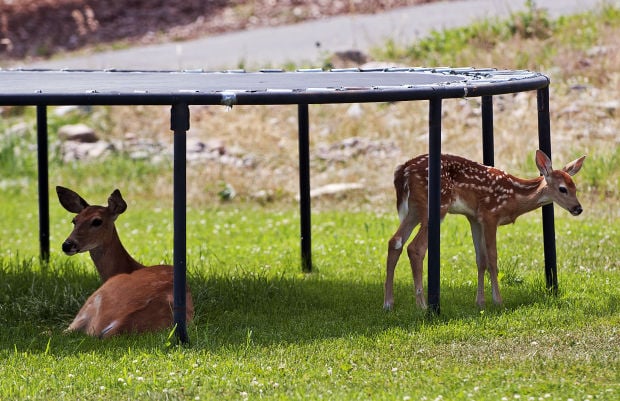
Deer need cover for bedding and protection from predators. Providing ample cover will make them feel safe and increase their likelihood of staying in your area, giving you easy access to them.
Consider making bedding in areas with thick underbrush, fallen trees, and dense shrubs. In colder climates, evergreen trees provide essential thermal cover during winter.
If these natural areas do not exist, you can create brush piles from fallen trees and branches. These can serve as alternate cover. You can also use the hinge cutting technique in creating low cover and promoting new growth.
Scent And Sound
Using scent and sound to your advantage can help lure deer into your hunting area without the use of bait.
You can use natural cover scents, such as earth or pine, to mask your human scent so deer do not smell you and run away.
When it comes to sound, learn to use deer calls effectively. Grunts, bleats, and rattling antlers can simulate the sounds of deer, all these can attract them to your location.
Sometimes, the best approach is to remain as silent as possible, allowing the natural sounds of the environment to take over and make deer feel safe, then you can make your move.
Strategic Hunting Locations
Choosing the right location for your hunt is critical. If you understanding deer movement patterns, you can position yourself in prime spots and make a good hunt!
Let’s examine the number prime spot:
Deer Trails and Travel Corridors
Look for well-worn paths through the woods, often marked by tracks, droppings, and rubs or natural funnels, such as narrow strips of woods between fields.
Mostly natural funnels force deer to move through certain areas, making those areas excellent hunting spots.
Patience and Persistence
Because attracting deer without bait is a more natural approach, it requires patience and persistence.
You will need to spend time scouting your hunting area to observe deer patterns and adjust your strategies accordingly.
While these strategies are good, you should be prepared to change your approach based on what you observe. Deer behavior can change due to various factors, including weather, pressure from other hunters, and changes in food availability.
Conclusion
Attracting whitetail deer without bait is all about working with nature. Doing this rightly pays. When you do find the deer, be sure to make ethical shots and aim for quick, humane kills.
Respect private property, follow local regulations, and ensure that you leave the environment better than you found it.
This ensures that the deer population remains healthy and sustainable and you get to enjoy more hunting seasons.
]]>Usually deer would visit your yard for three main reasons: they like certain plants, need water or are looking for lawn fungi.
So whether you want to make your yard less inviting or more inviting to deer, this article is for you.

Plants That Attract Deer to Your Yard
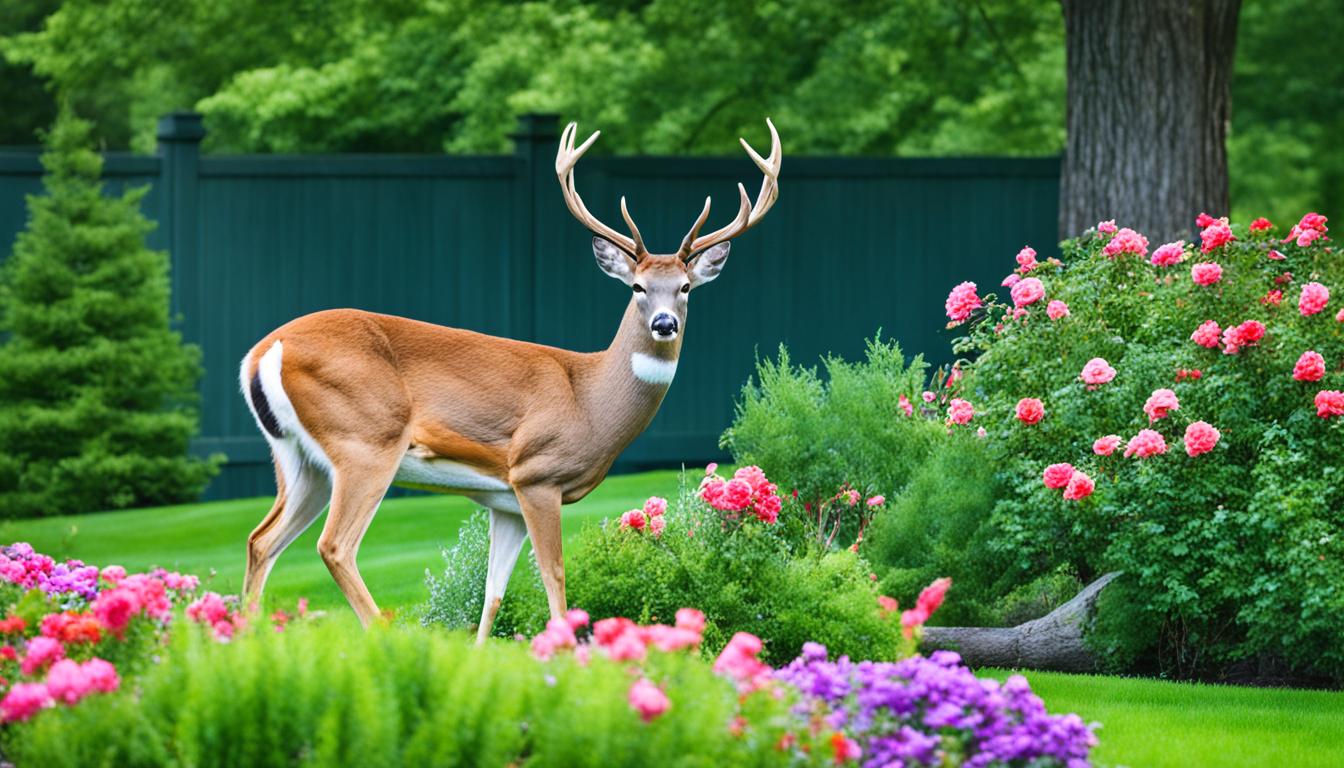
Most times deer are attracted to yards because of the plants they love. Everyday plants such as twigs, berries, fruits, and flowers serve as deer food. Since these plants are perfect for deer to eat, having them in your yard makes it a tempting spot for them.
Deer are drawn by the greenery and food in yards.
Twigs
Twigs are a good source of nutrients for deer, especially during seasons when other food sources may be scarce.
In the winter, when fresh green vegetation is not as readily available, deer will turn to browsing on twigs and branches to meet their nutritional needs.
Additionally, twigs help deer wear down their teeth, which continue to grow throughout their lives.
Blackberry
Deer are opportunistic feeders therefore will forage on a variety of plant materials depending on what is available in their environment. So when blackberry bushes are in season, you can be sure they will attract deer.
Blackberries are also rich in essential nutrients such as vitamins, minerals, and antioxidants, which can help deer maintain their health. Their high water content can also help keep deer hydrated, especially during dry periods.

Spicebush
Spicebush produces aromatic leaves and berries, which can be appealing to deer due to their taste and scent.In some cases, deer may also consume spicebush as a natural medicine.
Spicebush contains compounds that have been traditionally used for their medicinal properties, such as anti-inflammatory and anti-parasitic effects.
Like many other animals, deer have been observed to exhibit a form of self-medication by seeking out specific plants that can help with their health.
Flowers
While flowers are not typically a staple in a deer’s diet, they may consume them opportunistically, especially if other food sources are limited.
Some flowers contain sugars that can be appealing to deer due to their sweet taste. Deer may be attracted to flowers with bright colors and strong scents, as these characteristics can signal the presence of nectar or other food sources.
Additionally, flowers are often high in water content, which can help keep deer hydrated, especially during dry periods.
Rhododendrons
Deer are known to have a preference for eating rhododendrons because of their taste, toxin tolerance and availability.
- Taste: Rhododendrons have large, lush leaves that are flavorful and nutritious, making them a tasty treat for deer.
- Toxin tolerance: Deer have a higher tolerance for certain toxins found in rhododendron leaves compared to other animals. While rhododendrons contain toxic compounds called grayanotoxins, deer are able to consume them in small amounts without adverse effects.
- Availability: Rhododendrons are commonly found in landscaping and garden settings, making them easily accessible food sources for deer, especially when other preferred food sources are scarce.
These are a few tasty plants that are easy to plant in many yards. If you have these in your yard and stay close to deer, you are bound to find them there.
Aside from these plants, deer also need a lot of water, so they look for ponds, birdbaths, or even half-filled kiddie pools. These spots are perfect for them to drink and cool off, especially when it’s dry.
Plants That Deter Deer From Your Yard
Just as there are plants that attract deer, there are many plants that can keep them away. These plants are less appealing to deer because of their strong smells, rough textures, or poisonous parts.
Studies show deer prefer plants that have been fed more than those that haven’t. They also avoid plants with strong smells and prickly leaves. Some great plants that deer don’t like include:
Brunnera
The natural chemical composition, texture, taste, and aroma of Brunnera plants likely contributes to why deer do not typically eat or like these plants.
Let’s look at these in more detail:
- Toxicity: Brunnera plants contain compounds that are unpalatable or even toxic to deer. Certain tannins in the leaves or flowers of Brunnera plants may cause digestive issues or discomfort if consumed by deer.
- Texture and taste: The texture and taste of Brunnera leaves may not be appealing to deer. They have fuzzy or hairy leaves, which can deter deer from feeding on them.
These reasons make Brunnera a good choice for landscaping in areas where deer browsing is a concern.
Lily-of-the-valley
The combination of toxicity and bitter taste contributes to why deer do not like or eat Lily of the Valley plants.
Lily of the Valley (Convallaria majalis) is highly toxic to animals, including deer, if consumed in significant quantities. The plant contains cardiac glycosides, which can have serious effects on the heart and other organs if ingested.
Deer can instinctively avoid plants that are known to be toxic, and the presence of these compounds likely deters them from feeding on Lily of the Valley.
Aside from that, lily of the valley leaves also have a bitter taste, likely due to the presence of the toxic compounds. Deer, like many animals, have a sense of taste that helps them distinguish between safe and potentially harmful foods.
Deer will therefore avoid the Lily of the Valley plant because it is bitter.
Lungwort
The main reason deer will not eat Lungwort plants is because they contain alkaloids or saponins which can cause digestive issues, neurological effects, or other adverse reactions in deer.
Lungwort leaves may also leave a bitter taste when consumed. This makes them a plant that is avoided by deer.
Juniper
Deer tend to avoid eating Juniper plants for a few reasons, these include:
- Aromatic Resin: Juniper plants contain an aromatic resin that gives them their characteristic scent. This resin has a strong, pungent aroma that can be unappealing to deer. Deer rely on their sense of smell to detect potential food sources and may instinctively avoid plants with strong or overpowering scents like Juniper.
- Bitter Taste: Juniper foliage has a bitter taste that may deter deer from feeding on it. Like many animals, deer have taste preferences that help them avoid bitter or unpalatable foods.
- Prickly Texture: Juniper plants have needle-like leaves that can be prickly and difficult for deer to consume. The sharp needles of Juniper foliage can make it unappealing for deer to browse on, as they may cause discomfort or irritation to the deer’s mouth and digestive tract.
- Toxicity: Some species of Juniper, such as the Eastern Red Cedar (Juniperus virginiana), can be toxic to deer if consumed in large quantities.
Bee Balm
The major reason deer are less likely to feed on this plant is because Bee Balm plants have a distinctive and strong aroma that acts as a natural deterrent to deer.
Their leaves and flowers give off a pungent and spicy flavor that deer may find unpalatable.
You should know: No plant is completely safe from deer, but choosing deer-resistant plants helps a lot. By picking tough plants, you can have a beautiful garden without worrying about deer damage.
Conclusion
Depending on your preference, deer can either be big problems or lovely companions.
If you want to keep your yard deer-full, you now know what attracts them. If you want to keep your yard deer-free, you know what repels them.
Whichever way you choose, these plants can be helpful in making your outdoor space look appealing.
]]>Now pause for a minute, have you ever had sick fawns and wondered what you could have done differently to avoid them falling sick. Or perhaps thought “What should I feed my fawn for its health and growth?”
That is what this blog post is about. We’ll look into what makes up a fawn’s diet. Helping you keep your fawns healthy and strong.
Introduction to Deer Fawn Nutrition
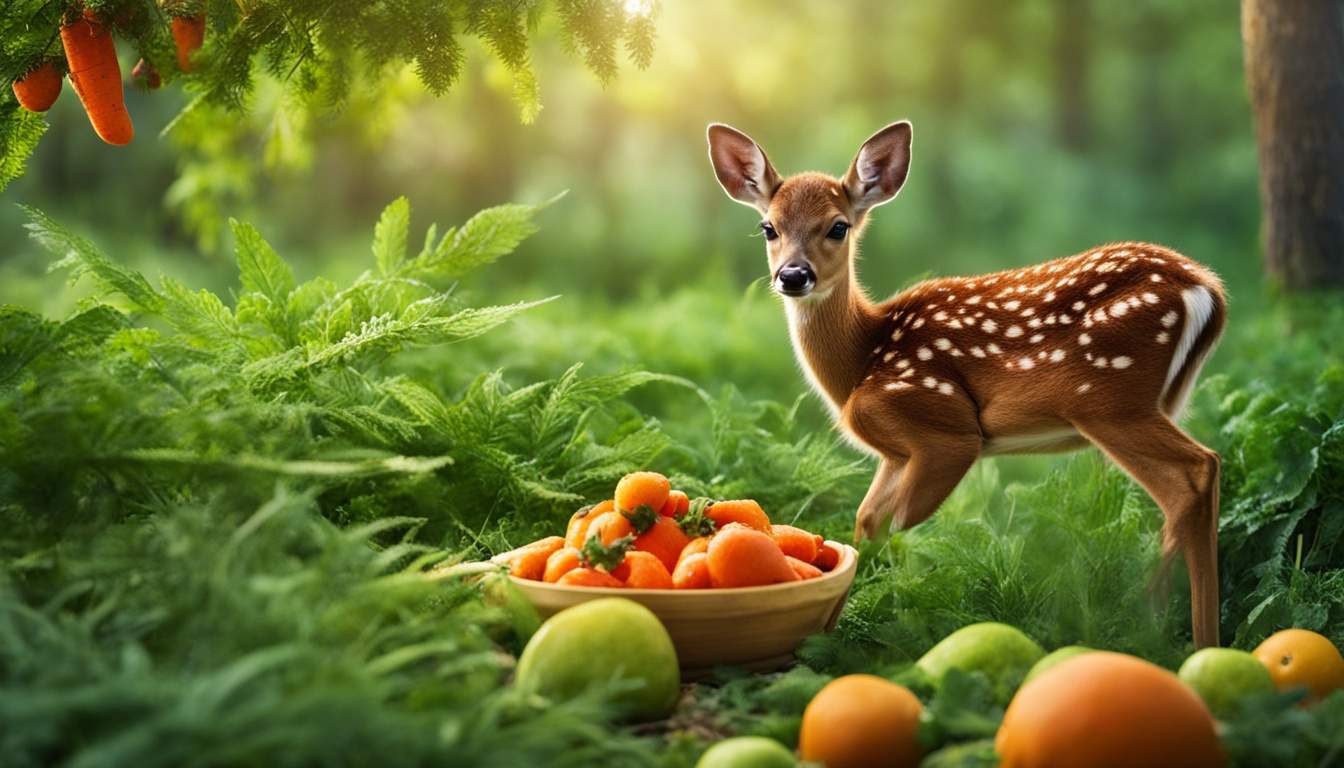
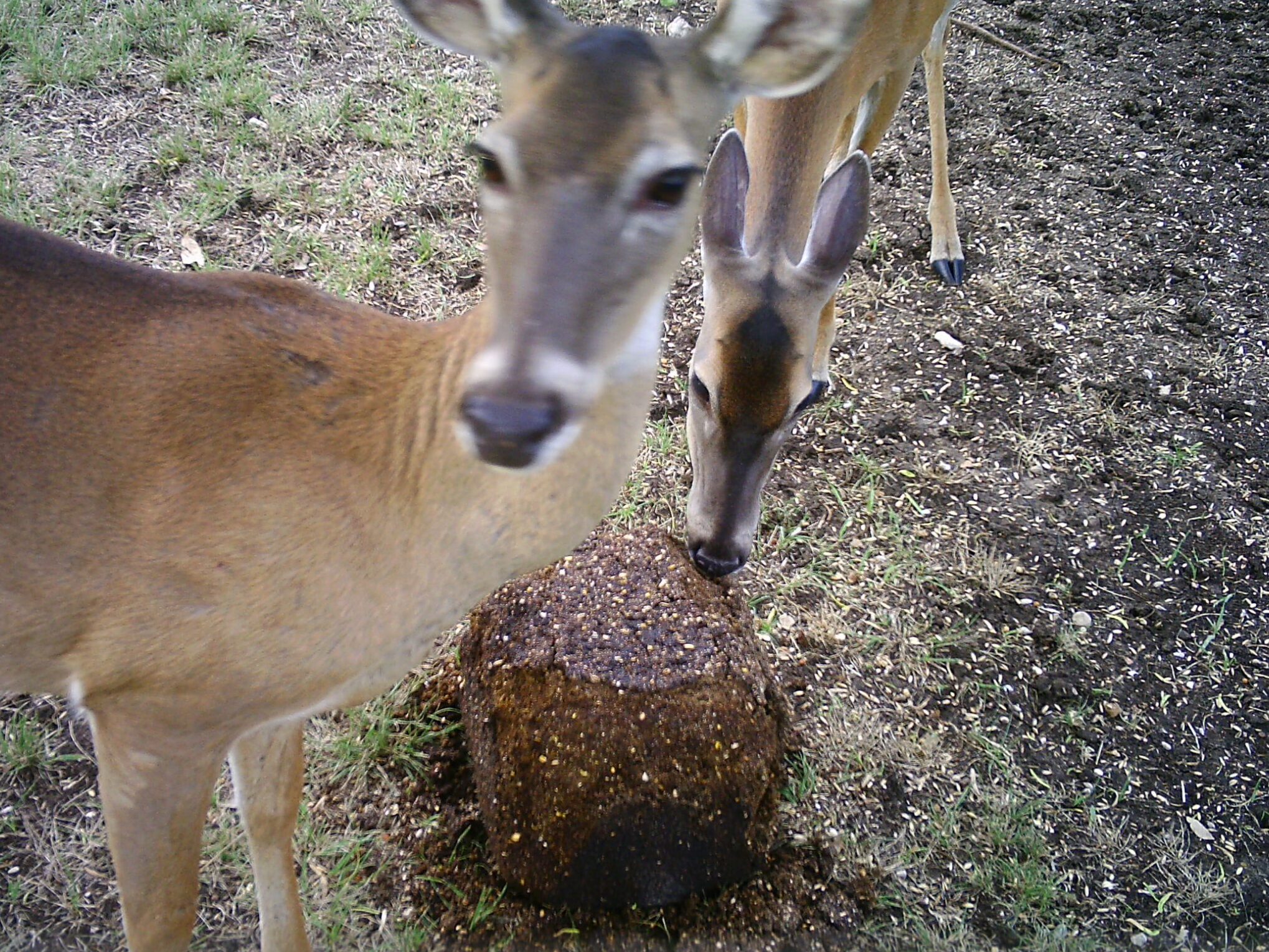
Deer fawns are very fragile when they’re young therefore giving them the right food is key to their survival and growth. To achieve optimal fawn health, you’ll need to know the role colostrum, solid food and supplements play in the fawn’s diet.
The milk of a doe is called colostrum. Newborn deer fawns depend a lot on this milk,in the first days. Colostrum is full of antibodies and nutrients that help the fawn fight off diseases and grow strong. If fawns don’t get enough colostrum, they could get sick and may die.
As deer fawns get older, they start eating solid foods instead of just milk. This usually happens around two weeks old. You must ensure that you introduce solid foods at the right time to help them grow well.
Supplements can also be important for deer fawns, especially when food is hard to find or not good enough. The right mix of protein, energy, and other nutrients can help fawns grow strong and survive better.
Optimal Fawn Health: Foods Fawn Eat
Colostrum: A Vital Necessity
Colostrum is key for a deer fawn’s survival and health. It’s the first milk from the mother deer, full of antibodies, nutrients, and laxatives which are extremely vital in the first days of a fawn’s life.
People call colostrum “liquid gold” because it’s loaded with immunoglobulins that help build the fawn’s immune system. This protects it from diseases and infections.
Colostrum also gives the fawn the nutrients it needs for fast growth and development. Its laxative effects help with waste elimination, preventing constipation in newborns.
For fawns without mothers, getting colostrum is still crucial. In such instances, frozen colostrum from ewes or goats can be kept for later use. You can use these to feed vulnerable fawns in their first hours of life.
Looking after a fawn’s colostrum needs can be the difference between life and death early on. By knowing how vital colostrum is and acting on it, those who care for deer fawns can help them start strong and healthy.
Solid Foods
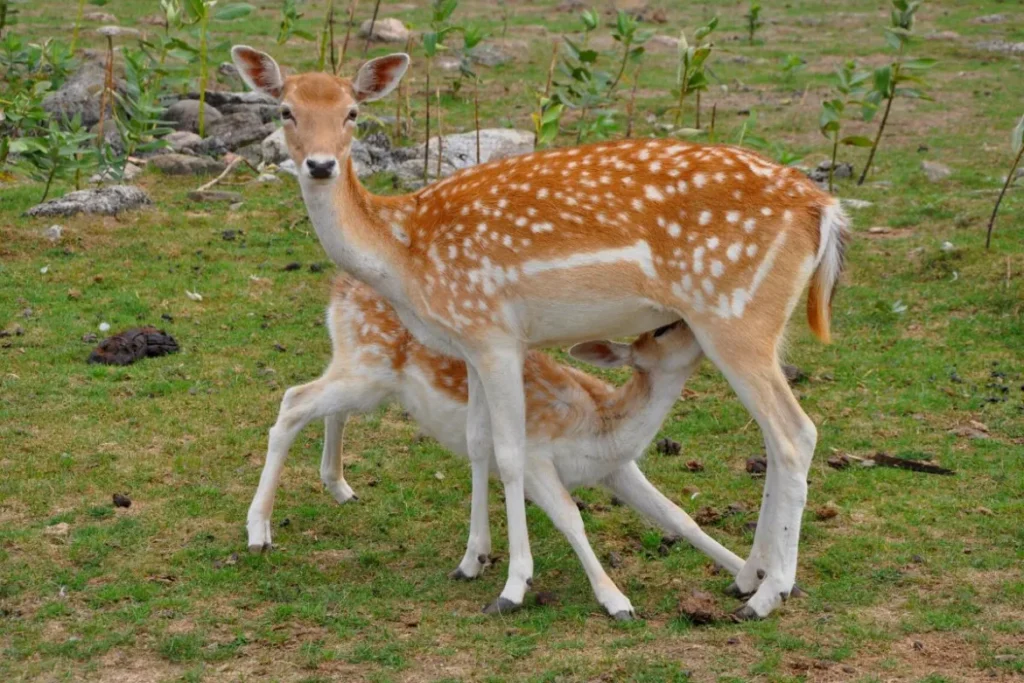
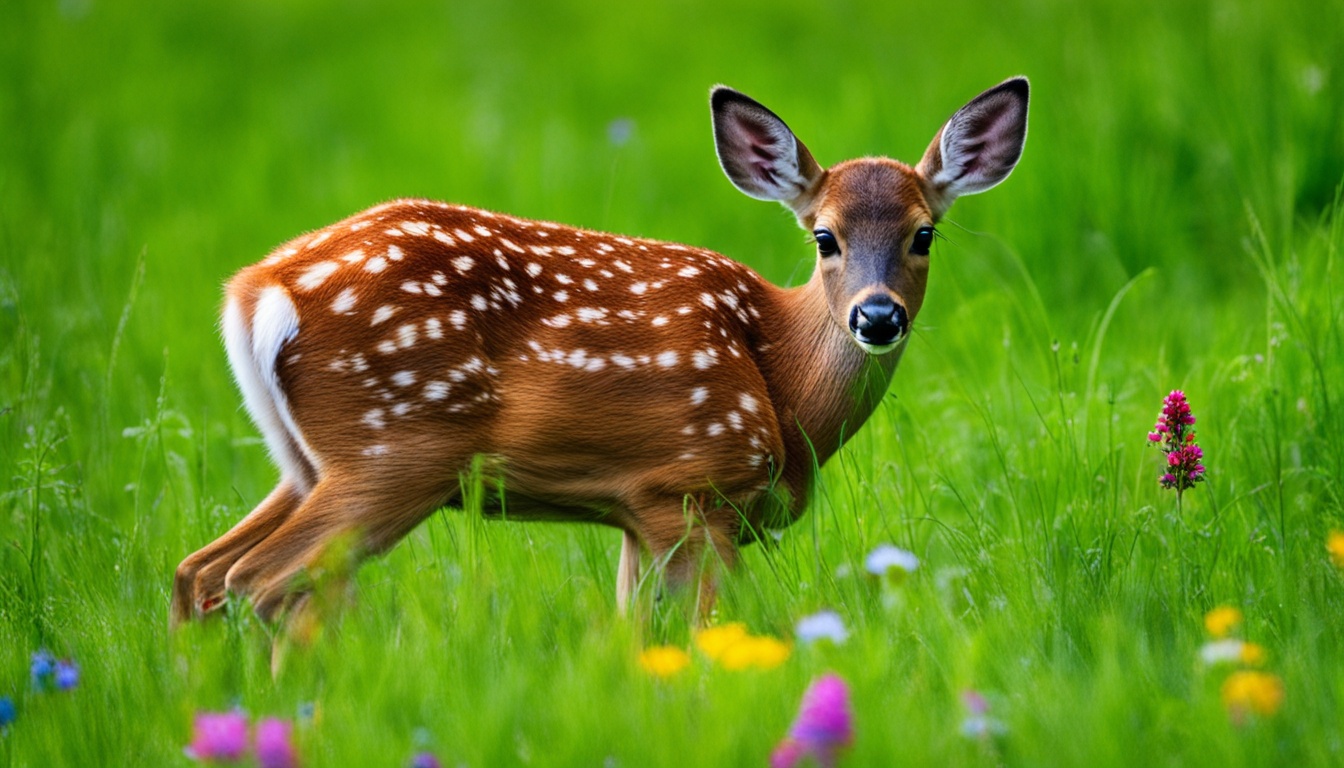
Fawns typically start to eat solid food around 2-3 weeks of age, as they transition from relying solely on their mother’s milk. They nibble on grasses, leaves, and other vegetation in their environment.
Because of their specialized stomachs they can digest both milk and solid foods, which helps them adapt to their changing diet as they grow. Deer are selective browsers, so they will often try different types of plants to see what they like best.
The transition to solid food is a crucial step in a fawn’s development because it provides them with the nutrients they need to thrive in the wild.
It is interesting to note that fawns will continue to nurse from their mothers while supplementing their diet with solid food until they are weaned, which typically occurs around 2-4 months of age.
Supplements For Fawn Optimal Health
Supplements can be beneficial for deer to support their overall health and well-being, especially in cases where their natural diet may lack certain nutrients.
However, it’s important to be cautious and consult with a wildlife expert or veterinarian to ensure that the supplements are appropriate and safe for the specific needs of the fawns.
For a fawn supplement to be effective and ensure your fawns are healthy, they must contain a variety of minerals such as calcium, phosphorus, magnesium, Vitamin E, Vitamin D and protein.
You may consider these examples in certain situations:
- Milk Replacers: In cases where a fawn is orphaned or abandoned and cannot nurse from its mother, a milk replacer contains a balanced combination of proteins, fats, vitamins and minerals to mimic the composition of deer milk.
- Deer Pellets: Pellets are supplements designed to provide a balanced diet and may contain a mix of grains, protein sources, vitamins, and minerals.
- Mineral Blocks: Mineral blocks are typically made of a mix of minerals like calcium, phosphorus, and salt. To ensure fawn optimal health, they are necessary because they contain essential minerals that may be lacking in their natural diet.
Fawn Foods: Understanding Nutrient Measurement
Deer Milk: Deer milk is special, with about 8.9% fat and 8.2% protein. In cases where you have to match deer milk, you should ensure fawn milk replacers have 30-35% protein and 30-35% fat. These levels are vital for fawns’ fast growth and development.
Generally, fawns are weaned at 10 to 12 weeks old when they eat starter feed well. In some cases, orphaned fawns are weaned between three to six months old. For any of these two classes, ensure they eat 2% or more of their body weight in starter feed at weaning.
Pellets: Feeding fawns pellets, especially high-protein pellets or a mix of corn and protein helps them grow and survive. They should eat 0.25 to 0.50 lbs daily. This plays a crucial role in the optimal fawn health.
When done rightly, fawns can grow into bigger, more productive deer, evidenced by their antler size, fawn production, or body size. Over time, fawns grow to produce healthier, stronger deer populations.
Planting Food Plots
Strategically planted food plots are great for deer fawns. They offer a mix of nutrients important for their growth and health.
For optimal fawn health, you need to consider making food plots with plants that have high protein, vitamins, and minerals.
Good choices include:
- Clover: It’s full of protein and calcium, helping with bone and muscle growth.
- Chicory: This plant is tasty and gives deer fawns vitamins A, C, and K.
- Brassicas: Like turnips, kale, and radishes, they’re full of nutrients and easy to digest.
- Grains: Corn and soybeans give fawns carbs and energy.
These plants are not only nutritious for deer fawns but tend to thrive in the same environments as deer, such as open areas with good drainage. This makes planning and keeping up with these food plots effective since deer easily have access to them.
Seasonal Nutritional Requirements To Obtain Optimal Fawn Health
Deer fawns have different nutritional needs throughout the year. These needs change based on growth, weather, and what resources are available.
To provide them with the right nutrients for each season, it’s important to know what they need. Let’s take a look at four different seasons.
Spring
In spring, fawns need a diet rich in protein. This helps them grow and supports their antlers. They look for plants that are full of protein, like fresh green leaves. It’s key to make sure they have access to these plants.
Summer
As summer comes, fawns still need a lot of protein to keep their energy up and stay healthy. They also need calcium and phosphorus for their bones. A balanced diet with different plants can help them get what they need.
Fall
In fall, fawns need more fats and carbs to get ready for the rut and winter. Foods like soybeans, corn, nuts, and acorns are good for them at this time.
Winter
During winter, fawns need carbs and fats to keep warm and healthy. They use their fat reserves and look for grains in fields. Adding the right foods to their diet can help them make it through the cold months.
Conclusion
Proper nutrition is key for deer fawns’ health and growth. While giving them the right mix of colostrum, milk replacer, and solid foods is important, you can also work with local wildlife experts and vets.
They can help you tailor your deer fawn nutrition, care, and feeding to your herd’s needs. Keep an eye on the seasons, check the body condition of your fawns regularly and adjust their feed as needed.
This way, you can be assured of optimal fawn health for a long time!
]]>These beautiful creatures are known for their amazing speed, reaching up to 40 miles per hour.
But can you beat a whitetail deer in a race? This question is what we’ll explore in this article, looking into the speed of these iconic deer.
Whitetail Deer’s Incredible Running Velocity
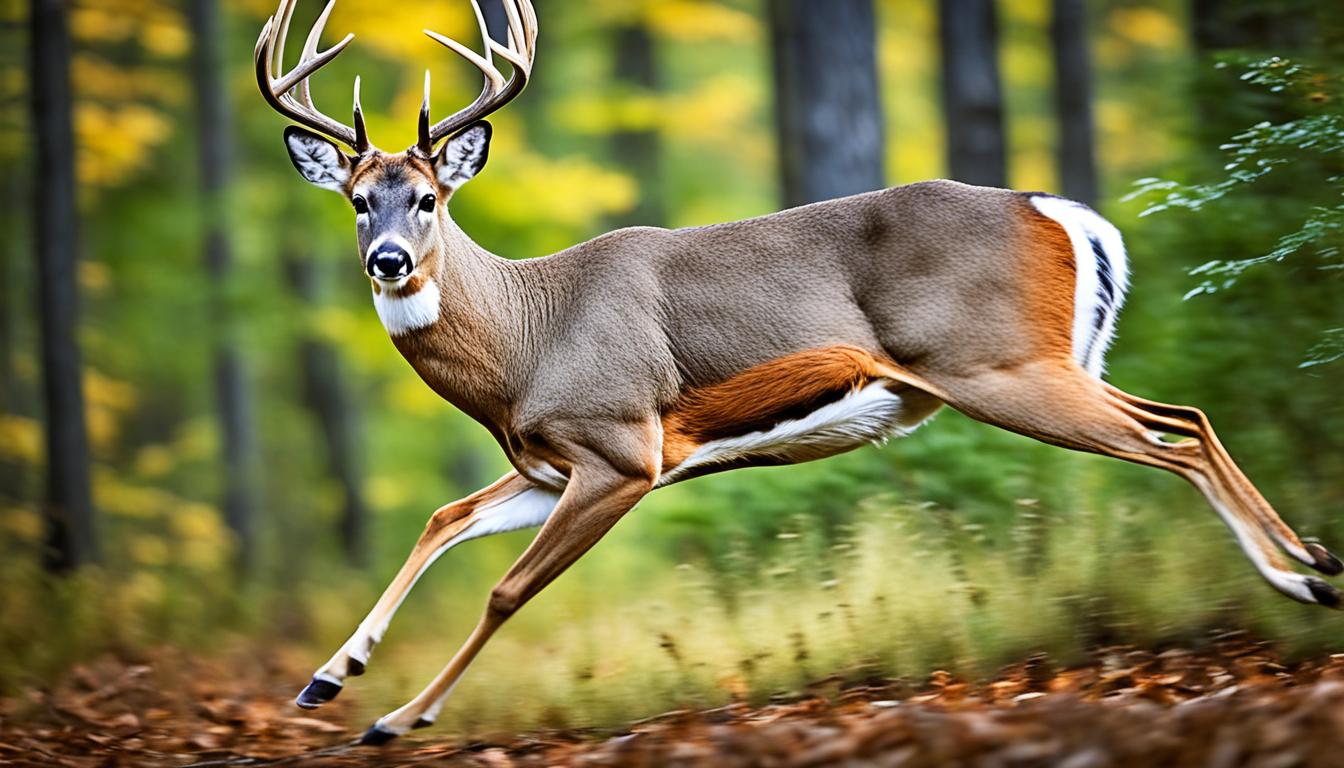
Whitetail deer are the most common deer in North America. They can run as fast as 35 to 40 miles per hour. This speed lets them outrun even the fastest human, most horses, and all their natural predators.
Their speed shows their amazing athleticism and how well they’ve adapted to their environment. There are several factors that help deer run fast, these include:
- Powerful hindquarters: Their strong back legs give them the power for quick sprints.
- Unique front leg attachment: This special setup lets them move fast and change direction easily.
- Lightweight build: Being lean helps them run faster and be more agile in the wild.
With their strong body and sharp senses, whitetail deer have amazing deer sprinting capabilities. Seeing them run is truly impressive.
Top Speed Of A Whitetail Deer Vs Other Deer Species
Whitetail deer are incredibly athletic. Their strong back legs and special front leg setup let them change direction quickly. This makes them faster than many other agile animals.
Even though they’re not the fastest deer, their white-tailed deer athleticism helps them survive and escape danger. Species like the caribou, elk, and mule deer can run faster over longer distances, than the whitetail.
Whitetail Deer Vs Caribou
The caribou, also known as reindeer in some regions, is known as the top speedster among North American deer.
It can run up to 50 mph and during seasonal migrations, they cover vast distances in search of food and suitable breeding grounds.
While caribou may not be as fast as white-tailed deer in short bursts, they are known for their stamina and ability to sustain a steady pace over long distances.
They can travel at speeds of around 15-20 miles per hour (24-32 kilometers per hour) for extended periods like migrations.
Here are 2 key points to to note about the running capabilities of caribou:
- Endurance: Caribou can travel hundreds of miles across rugged terrain, boreal forests, and mountainous regions. This endurance allows them to reach their seasonal calving grounds, where they can give birth and find optimal foraging areas.
- Adaptations: Caribou have evolved physiological adaptations that help them excel in their long-distance movements. Their specialized hooves are well-suited for running through various terrains, including snow, ice, and rocky surfaces. Additionally, they have a large lung capacity and efficient circulatory system, enabling them to sustain their physical exertion over extended periods.
In summary, while both white-tailed deer and caribou are deer species, they differ in terms of habitat, physical characteristics, migration behavior, and diet. Each species has evolved to thrive in their respective environments and exhibit unique adaptations to survive in their ecosystems.
Whitetail Deer Vs Elk
In general, elk are faster than white-tailed deer when it comes to running speeds. They are known for their ability to reach speeds of up to 45 miles per hour (72 kilometers per hour) in short bursts.
Their speed allows them to quickly escape predators or navigate challenging terrain. Their larger size and powerful build contribute to their speed and agility.
The top speed of a white tailed deer will typically be around 30-35 miles per hour (48-56 kilometers per hour). See the difference?
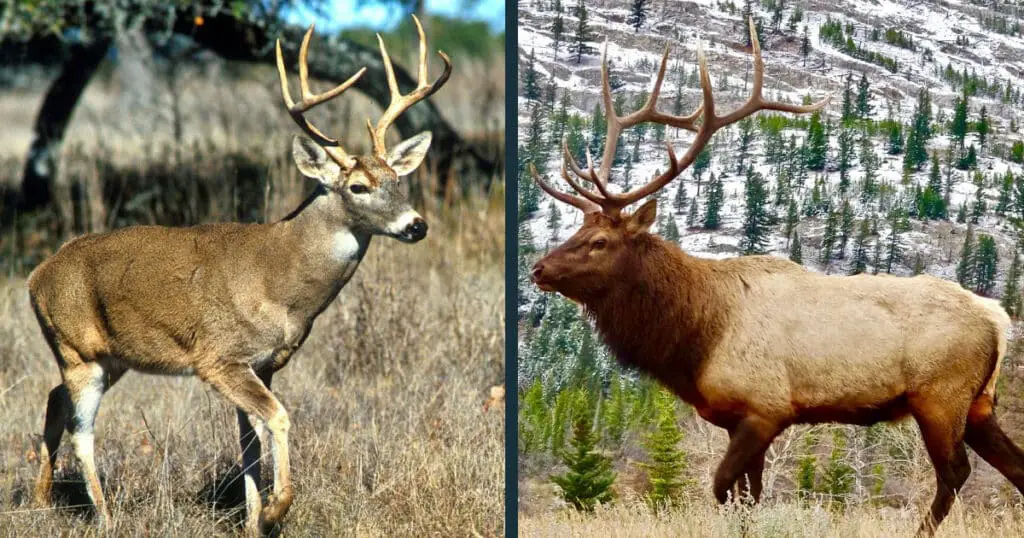
But while the top speed of a white tailed deer may be far less than that of an elk. White-tailed deer are known for their agility and quick acceleration, which helps them evade predators in their forested habitats.
Both elk and white-tailed deer have adapted their speed and agility to survive in their respective environments.
While Elk’s greater speed may give them an advantage in open habitats or when covering long distances quickly, the white-tailed deer’s agility are well-suited for navigating dense forests and evading predators in wooded areas.
White tail Deer Vs Mule Deer
Mule deer are closely related to white-tailed deer and are also known for their agility and speed. They are capable of reaching speeds of up to 45 miles per hour (72 kilometers per hour) in short bursts.
This speed allows them to quickly evade predators and navigate their varied habitats, which range from forests and mountains to deserts and grasslands.
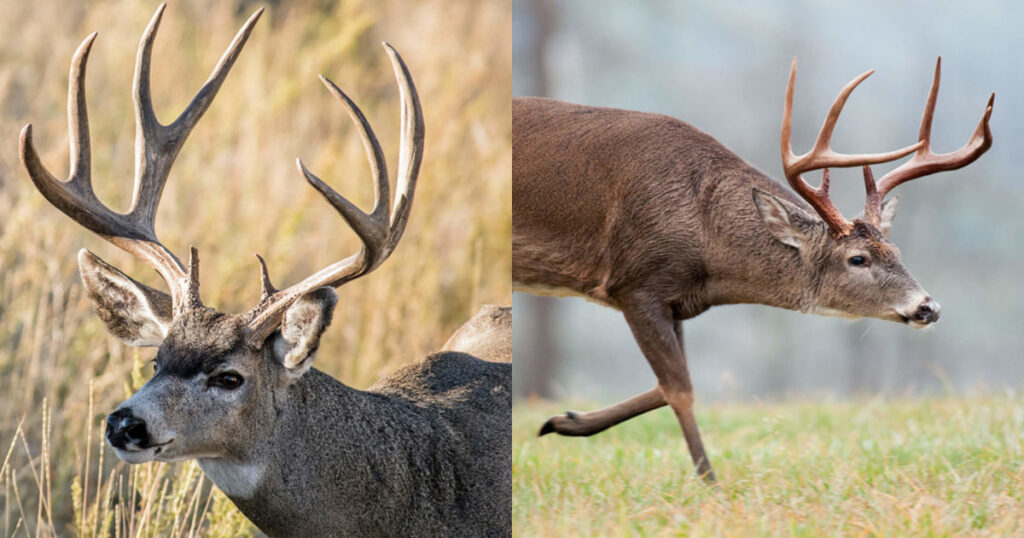
Let us consider the following:
- Adaptations for Speed: Mule deer have evolved physical adaptations that support their speed and agility. Their muscular bodies, powerful hind legs, and large hooves are well-suited for running and jumping. They also have a keen sense of sight, smell, and hearing that help them detect predators and react swiftly to threats.
- Escape Behavior: When faced with danger, mule deer rely on their speed and agility to escape. They can quickly accelerate to top speeds and change direction to evade predators such as coyotes, mountain lions, and wolves.
Overall, the speed of mule deer is a key feature that enables them to thrive in diverse habitats and avoid predators. Their combination of speed, agility, and alertness showcases their adaptations for survival in the natural world
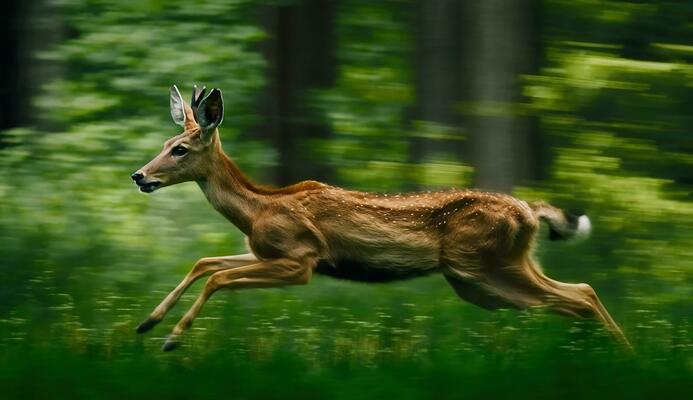
Although the whitetail deer may not be the fastest, it is still a great runner. It can reach speeds of up to 35 mph. This lets it outrun many predators and stay safe easily. Its speed and agility make it a strong hunter in the wild.
Top Speed Of A Whitetail Deer Vs. Their Predators
The top speed of a Whitetail deer is worthy of praise, however, they still face tough competition from other animals in the wild, particularly their predators.
Predators like bears, wolves, and mountain lions can also run very fast, from 35 to 50 mph. So, whitetail deer can’t just rely on speed to escape these skilled hunters. A healthy adult deer might outrun a wolf or bear.
But, mountain lions are a bigger threat because they can hit speeds up to 50 mph for short distances.
Speed is a critical component of the white-tailed deer’s defensive strategies against predators. Their ability to run fast and navigate obstacles in their environment plays a vital role in their ability to survive and thrive in the face of predator pressure.
More Than Just Raw Speed
Aside from the amazing top speed of a whitetail deer, they can also zig-zag, jump, and dodge with amazing precision. Their quick reflexes let them dodge threats almost instantly.
For example, while sound travels at about 1,100 feet per second, an arrow shot from a bow moves at around 200 feet per second. This shows how fast deer can react.
Hunter Tips
Deer react less when they’re with friends, busy, or in certain weather conditions. But their agility and speed are key to their survival. They use these skills to stay safe and fast.
Humans vs. Whitetail Deer: The Race Is On
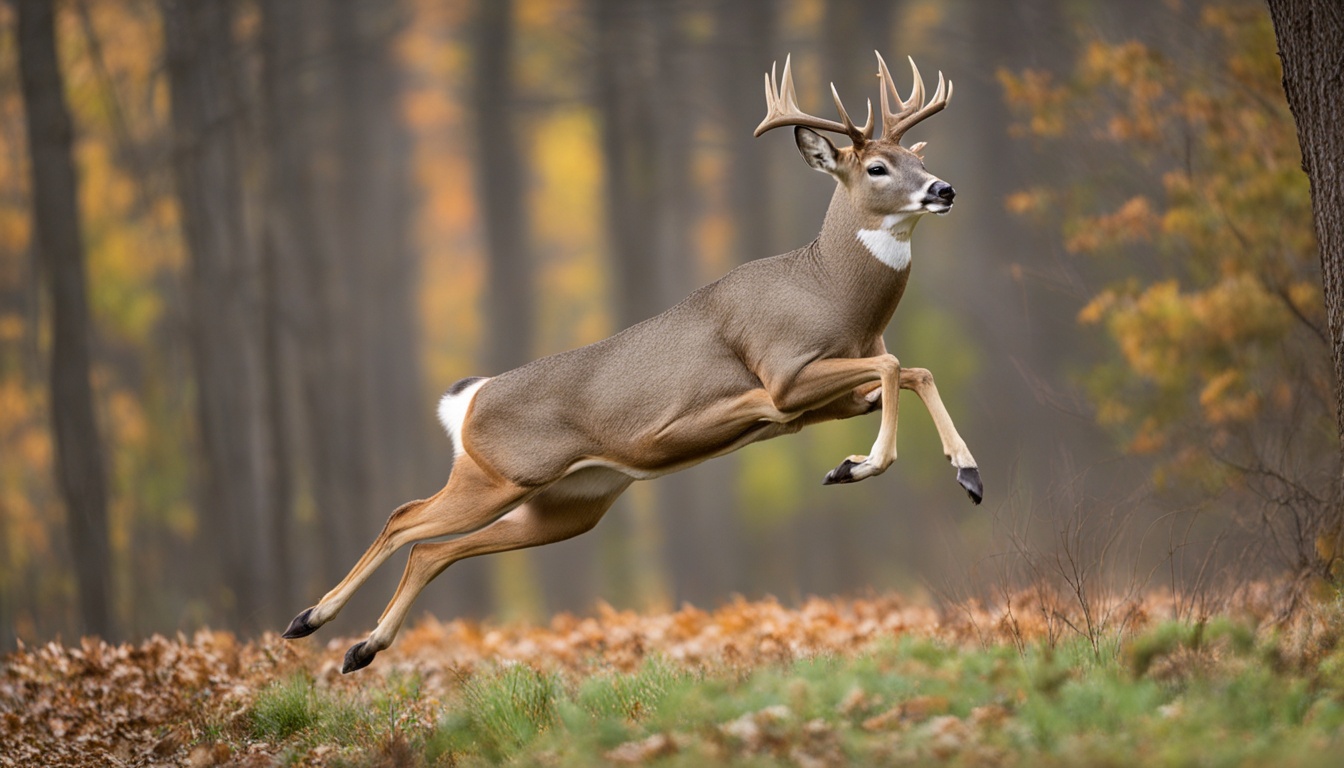
The top speed of a whitetail deer is between 35-40 mph. This makes them faster than even the fastest human, Usain Bolt, who tops out at about 27 mph.
This means if Bolt and a deer were racing, the deer would win, easily. Most humans run at less than 15 mph but human bodies have evolved to help catch deer by running them down. This method is called “persistence hunting,”.
Persistence hunting is still practiced by some groups, like the Kalahari bushmen. In an experiment in New Mexico, people were able to almost catch a pronghorn after chasing it for nearly 20 miles. This shows how effective this hunting method can be.
Harvard research shows that while deer are faster, humans can keep up for longer thanks to our sweat system. Humans have an edge in endurance running, which is helpful for catching fast prey like deer.
So while in a short race, the deer would win easily. Over a long distance, a human’s endurance might beat the deer’s speed.
Conclusion
The top speed of a whitetail deer is truly impressive. They may not be the fastest deer but they can outrun most predators and even the fastest human runners.
All these and many more make deer amazing creatures. They are a true wonder of the natural world.
]]>