Table of Contents
Have you ever walked your property at dawn, only to find fresh deer tracks leading straight to where your lilies used to stand? For hunters and deer enthusiasts, that sight sparks one question: are lilies deer resistant, or is lily deer resistant status just another gardening myth hunters and growers debate?
The truth is, deer feeding patterns aren’t carved in stone. While some plants earn the “deer resistant” badge (see full list of deer-resistant plants), lilies often sit in a gray zone — ignored one season, wiped out the next. Factors like rut timing, food shortages, and even local herd habits can decide whether your lilies remain standing.
In this guide, we’ll cut through the myths with a hunter’s field‑tested take on lily browse resistance, unpack why deer make the choices they do, and share practical protection strategies that actually work in the field. Whether you’re managing food plots or simply defending the few ornamental plants you keep, you’ll walk away knowing exactly where lilies stand in the deer menu.
Understanding the Relationship Between Deer and Lilies
Deer love lilies — which is why true lily deer resistant is so rare — because they are soft, moist, and easy to chew. For deer, lilies are a fresh and tasty snack in the wild. This is why people often wonder, are lily deer resistant?
On Rutgers University’s deer resistance scale, lilies are rated “Occasionally Severely Damaged.” In simple terms, deer may skip them sometimes, but when they eat them, the harm can be serious.
Damage also depends on what deer bite. If they nibble leaves or buds, lilies may recover. But if they dig into the bulbs or eat whole plants, the lilies usually die.
So, while a few varieties show better resistance, most lilies are not deer resistant. Without some protection, deer can quickly wipe out a patch of lilies.
Are Lily Deer Resistant? The Truth from the Field
From a hunter’s perspective, “deer‑resistant” means plants deer usually avoid — but not guaranteed protection. They’re lower on a deer’s “menu,” often because of scent, taste, texture, or mild toxicity. Still, hungry deer in tough seasons may sample them, so resistance is about reduced risk, not complete immunity.
However, there are some important exceptions. Within the lily family, certain types have natural traits that make them less appealing. Tiger lilies, with their spotted orange blooms, are less attractive to deer. Calla lilies contain toxins that make them distasteful. Other related bulbs, like ornamental onions (Allium) and fritillaria, are also more likely to be left alone.
Knowing the difference between deer-resistant lilies and those that are highly vulnerable is important, especially in areas where deer are common. Choosing the right type can reduce damage and help preserve your plants. While no lily is completely safe, some options stand a better chance against hungry deer.
Lily Deer Resistant Types
Not all lilies are easy targets for deer. A few kinds are more lily deer resistant and can survive better in areas where deer are common.
Tiger Lilies

These lilies stand out with their bright orange petals covered in spots. Deer usually ignore them, making tiger lilies one of the best options for those looking for lily deer resistant varieties.
Calla Lilies

Calla lilies are not only elegant but also protected by nature. Their bulbs and leaves contain toxins called calcium oxalate crystals. These make them taste unpleasant, so deer avoid them.
Other Resistant Members of the Lily Family
Resistant Members of the Lily Family
- Ornamental onions (Allium species): Their strong smell keeps deer away.
- Camassia and squills (Scilla): Both are hardy and less attractive to deer.
- Fritillaria: Known for their unusual flowers and natural resistance.
- Grape hyacinths (Muscari): Small but tough, and generally left alone.
- Squid lilies (Lycoris): Striking flowers that deer tend to avoid.
While no plant is 100% safe, these lilies and related bulbs give you a better chance of keeping blooms out of a deer’s reach.
Strategies to Protect Lilies from Deer
Building a truly lily deer resistant setup means more than just one barrier — it’s about understanding deer habits and adapting defences to the season, herd pressure, and terrain. Here’s what consistently works in the field:
1. Physical Barriers
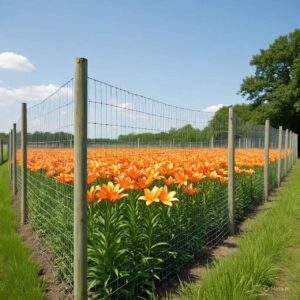
The most effective defense against deer is a physical barrier like a fence, even for plants like the lily deer resistant varieties that are less appealing to them.
2. Repellents
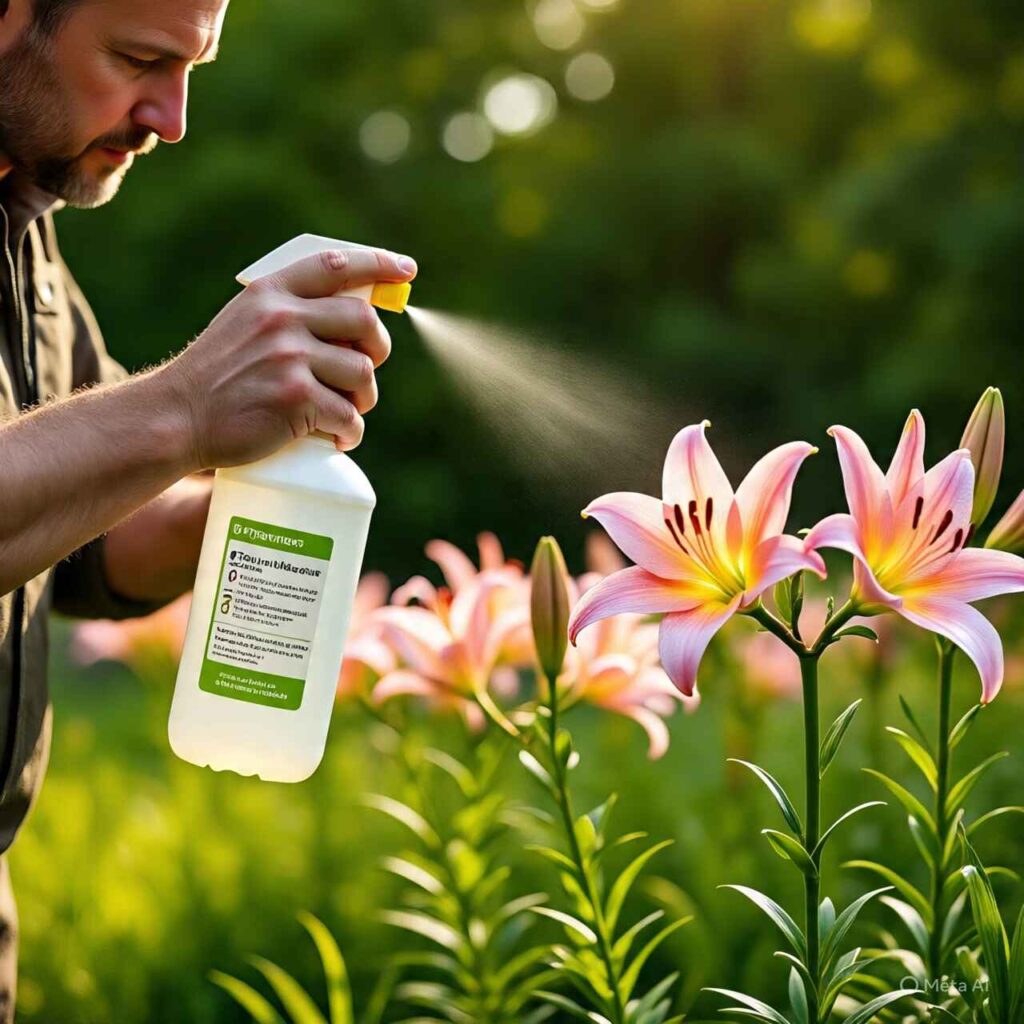
Use sprays like Plantskydd on bulbs and leaves. Homemade deterrents—garlic, eggs, or soap shavings—can help too. Reapply often, especially after rain.
3. Strategic Planting
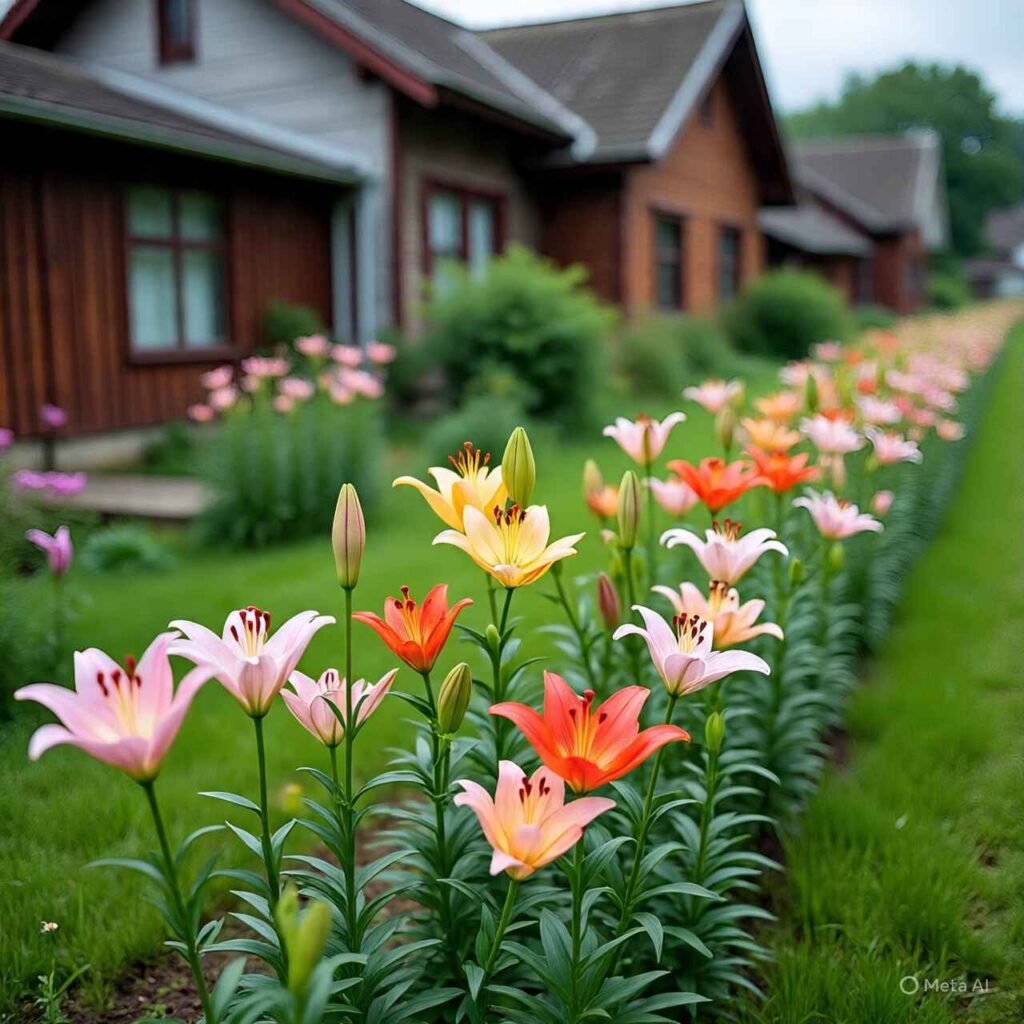
Place lilies close to houses, patios, or in raised beds. Plant them in spots that are harder for deer to reach.
4. Companion Planting

Grow lilies beside plants deer dislike, such as lavender, rosemary, or daffodils. Their strong scents make deer avoid the area.
With barriers, repellents, and smart planting, even vulnerable lilies can be protected from hungry deer.
Practical Tips from a Hunter’s Perspective
Hunters in the field often observe that even so‑called “lily deer‑resistant” plants aren’t completely safe. When natural food sources are scarce, deer will browse almost anything, including plants they usually ignore. This is why calling any lily deer resistant is never a guarantee — seasonal deer feeding patterns and behaviour can quickly change a plant’s chances of survival.
Seasonal Risks
Lilies face the most danger in spring and summer. At this time, deer search for tender new growth, and lilies provide exactly that.
Natural Deterrents in the Wild
In the wild, I notice deer avoid areas with strong scents or thick natural barriers. Using scent masking, like planting rosemary or lavender nearby, can help. Thick hedges, tall grass, or fencing also make deer think twice before coming close.
By paying attention to feeding patterns and seasonal changes, you can better understand how to protect lilies from deer.
Common Myths About Lily Deer Resistance
There are many myths about lilies and deer resistance. Believing them can leave your plants unprotected.
Myth 1: All lilies are safe from deer
This is false. Most lilies are not genuinely lily deer resistant, and deer see them as food, especially when they are fresh and moist. Only a few types, like tiger lilies or calla lilies, are less appealing.
Myth 2: Repellents work permanently
Repellents are useful, but they do not last forever. Rain, sun, and time wash them away. They must be reapplied often to remain effective.
Myth 3: Deer avoid all toxic plants
Deer usually stay away from toxic plants, but hunger can change that. In tough seasons, they may still nibble even on plants that normally deter th
Conclusion
Most lilies are not truly deer resistant, though a few—like tiger lilies and calla lilies—are less appealing to deer. Hungry deer may still sample even resistant plants, which is why protection is important. Barriers, repellents, and companion planting all help reduce damage.
The key takeaway is simple: while some varieties show better resistance, no lily deer resistant claim is absolute. With the right strategies, you can give your lilies the best chance to thrive, even in deer-prone areas.
Love lilies but worried about deer? Start by choosing resistant types like tiger lilies or calla lilies and use simple protection methods to keep them safe. For more easy tips and guides, follow my blog and keep your blooms thriving.

In recent years, the growing presence of deer in urban and suburban areas has become a topic of increasing concern for wildlife managers, ecologists, and even local residents. While urban deer populations may seem like a distant issue for hunters who primarily focus on rural or wilderness areas, the reality is that this phenomenon has significant implications for hunting traditions, wildlife management, and conservation efforts. Hunters, as stewards of the land and key players in wildlife population control, should pay close attention to the rise of urban deer and the challenges it presents.
The Rise of Urban Deer Populations
Deer are highly adaptable creatures, and their ability to thrive in urban environments is a testament to their resilience. As cities and suburbs expand into previously rural areas, deer have found new habitats that provide ample food, shelter, and protection from predators. Landscaped gardens, ornamental plants, and the absence of natural predators make urban areas an ideal refuge for deer. This has led to a surge in deer populations in places where they were once uncommon.
While this might seem like a positive development for wildlife enthusiasts, the overpopulation of deer in urban areas has created a host of problems. From increased vehicle collisions to the destruction of gardens and ecosystems, urban deer are becoming a nuisance for many communities. However, the implications for hunters are equally significant.
Challenges for Hunters
- Limited Access to Hunting Opportunities
Urban deer populations are often located in areas where hunting is either restricted or entirely prohibited due to safety concerns and local ordinances. This means that hunters have limited opportunities to participate in managing these populations, even though they are often the most qualified to do so. As a result, deer in urban areas continue to grow unchecked, leading to overpopulation and its associated problems. - Public Perception of Hunting
The presence of urban deer has sparked debates about how to manage these populations. While hunting is one of the most effective and sustainable methods of controlling deer numbers, it is often met with resistance in urban areas. Many residents who are unfamiliar with hunting view it as inhumane or unnecessary, preferring alternative methods such as sterilization or relocation. However, these methods are often costly, less effective, and impractical for large-scale population control. This disconnect between hunters and urban residents can further erode public support for hunting as a legitimate wildlife management tool. - Ecological Imbalance
Overpopulated deer herds can have devastating effects on local ecosystems. In urban areas, deer often overgraze on native plants, leading to a loss of biodiversity and the degradation of habitats for other wildlife species. This ecological imbalance can extend beyond urban boundaries, affecting rural areas where hunters traditionally operate. For example, if urban deer populations are left unmanaged, they may eventually migrate to nearby rural areas, putting additional pressure on already strained ecosystems. - Disease Transmission
High deer densities in urban areas increase the risk of disease transmission, such as chronic wasting disease (CWD) and Lyme disease. These diseases threaten deer populations and pose risks to humans and other animals. Hunters, often on the front lines of monitoring and managing wildlife health, may deal with the consequences of unchecked urban deer populations.
Opportunities for Collaboration
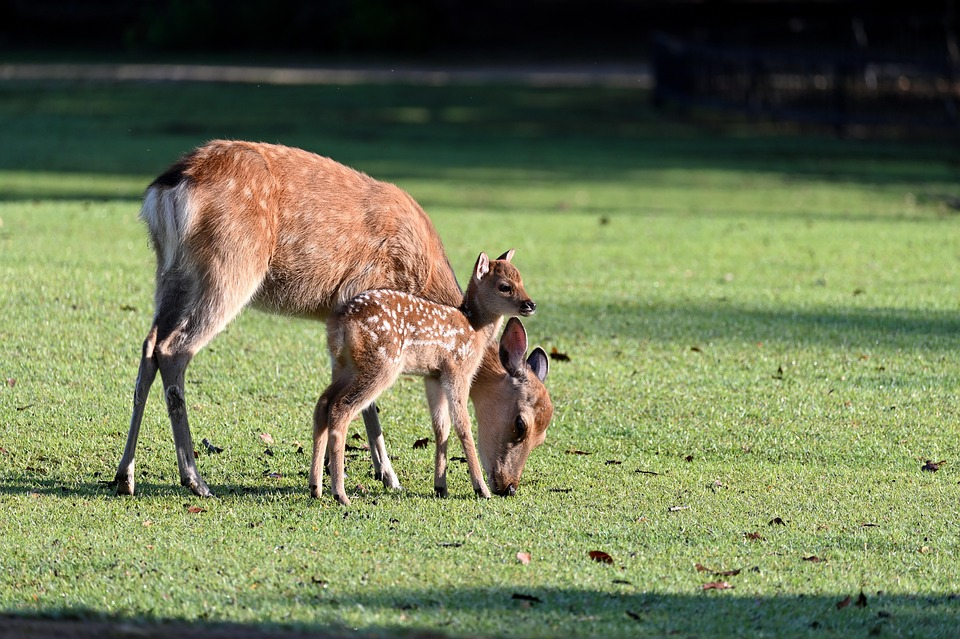
Despite these challenges, the rise of deer also presents an opportunity for hunters to engage with their communities and advocate for responsible wildlife management. By working with local governments, wildlife agencies, and urban residents, hunters can help bridge the gap between rural traditions and urban realities.
- Education and Outreach
Hunters can play a crucial role in educating the public about the importance of hunting as a tool for wildlife management. By sharing their knowledge and experiences, hunters can help dispel misconceptions and build support for sustainable hunting practices in urban areas. - Advocating for Controlled Hunts
In some urban areas, controlled hunts or culls have been implemented as a way to manage deer populations. Hunters can advocate for these programs, emphasizing their effectiveness and safety when conducted by trained professionals. By participating in or supporting controlled hunts, hunters can demonstrate their commitment to responsible wildlife management. - Promoting Conservation Efforts
Hunters have long been champions of conservation, funding many wildlife management programs through licenses and fees. By highlighting the role of hunting in conservation, hunters can strengthen their position as key stakeholders in addressing urban deer issues.
Conclusion
The rise of urban deer populations is a complex issue that requires careful consideration and collaboration. For hunters, it represents both a challenge and an opportunity to reaffirm their role as stewards of the land. By engaging with urban communities, advocating for responsible management practices, and promoting the benefits of hunting, hunters can help address the problems associated with urban deer while ensuring the sustainability of their traditions. The future of hunting depends on our ability to adapt to changing landscapes, both literally and figuratively, and urban deer are a reminder of the importance of this ongoing effort.
As hunters, we must recognize that the boundaries between urban and rural are becoming increasingly blurred. By taking an active role in addressing deer populations, we can protect our hunting heritage, support conservation efforts, and foster a greater understanding of the vital role hunters play in maintaining healthy ecosystems
]]>
Introduction
Mindfulness is a deeply spiritual and mental practice that connects us with nature. For many hunters, the pursuit of deer is not just about the harvest but about the experience of being in the wild, observing animal behavior, and finding inner peace.
Mindfulness—being fully present in the moment—can transform your hunting experience. You can become a more ethical, patient, and successful hunter by cultivating mental preparation and a deep respect for nature. In this post, we’ll explore how mindfulness enhances deer hunting, techniques for mental preparation, and how to develop a harmonious relationship with the natural world.
The Role of Mindfulness in Hunting
Mindfulness is often associated with meditation, but it is equally valuable in hunting. It involves:
- Being fully present – Instead of letting your mind wander to distractions, focus on the sights, sounds, and smells of the forest.
- Controlling emotions – Hunting can be frustrating when deer don’t appear. Mindfulness helps manage impatience and disappointment.
- Enhancing awareness – A mindful hunter notices subtle signs—a snapped twig, a flick of a deer’s ear, or a change in wind direction.
Benefits of Mindful Hunting
- Improved Patience – Deer hunting requires long hours of waiting. Mindfulness teaches acceptance of the moment rather than frustration over lack of action.
- Better Decision-Making – A calm, focused mind makes ethical shots and avoids rushed mistakes.
- Deeper Connection to Nature – Instead of just “taking” from nature, mindfulness helps hunters appreciate the ecosystem and their role within it.
Mental Preparation Before the Hunt
A successful hunt begins long before you step into the woods. Mental preparation is just as important as physical readiness.
1. Set Intentions, Not Expectations
- Instead of fixating on bagging a deer, focus on the experience. Ask yourself:
- Why am I hunting? (Food, conservation, tradition)
- How can I honor the animal and the land?
- This mindset reduces frustration and increases gratitude.
2. Visualization Techniques
- Imagine yourself in the stand or blind:
- Picture the surroundings—the trees, the wind, the sunrise.
- Visualize a deer approaching and executing a calm, ethical shot.
- This mental rehearsal improves focus and confidence.
3. Breathing Exercises for Calmness
- Deep, controlled breathing lowers stress and sharpens focus.
- Try the 4-7-8 technique before and during your hunt:
- Inhale for 4 seconds
- Hold for 7 seconds
- Exhale for 8 seconds
- This regulates your heart rate, keeping you steady when a deer appears.
Mindfulness in the Field
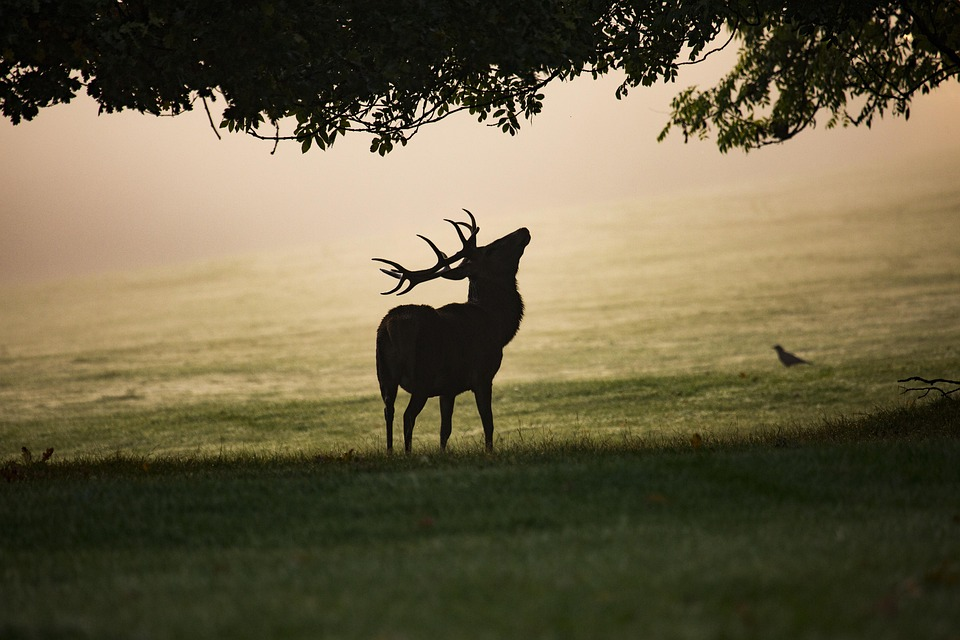
Once you’re hunting, staying present is key. Here’s how to practice mindfulness while in the woods:
1. Engage Your Senses
- Listen – Instead of just waiting, actively tune into sounds: rustling leaves, bird calls, distant footsteps.
- Observe – Study deer body language. A flicking tail or raised head signals alertness.
- Feel – Notice the temperature, the texture of your gear, the wind on your face.
2. Let Go of Distractions
- Avoid checking your phone or dwelling on unrelated thoughts.
- If your mind drifts, gently bring it back to the present moment.
3. Practice Gratitude
- Whether or not you harvest a deer, appreciate:
- The beauty of the wilderness
- The opportunity to be outdoors
- The skills you’re developing
Ethical Hunting: Honoring the Animal
Mindful hunting goes hand-in-hand with ethical hunting. Consider:
- Shot Placement – Take only high-percentage shots to ensure a quick, humane harvest.
- Tracking with Respect – If you make a shot, follow up diligently. Use mindfulness to stay focused during tracking.
- Expressing Gratitude – Many cultures have traditions of thanking the animal for its life. A moment of silence or a spoken thanks fosters respect.
Post-Hunt Reflection
After the hunt, take time to reflect:
- What did you learn?
- How did mindfulness affect your experience?
- How can you improve next time?
Journaling about your hunts helps deepen your connection to the process.
Conclusion: Becoming One with Nature
Deer hunting is not just about the harvest—it’s about the journey. By practicing mindfulness, you cultivate patience, awareness, and a profound respect for nature. When you approach hunting with a peaceful mind, you become more than a hunter; you become a steward of the wilderness.
Next time you head into the woods, leave behind distractions, breathe deeply, and embrace the stillness. The deer will come when the time is right, and you’ll find that the true reward is the harmony you’ve built with the natural world.
Happy hunting, and may your mind be as sharp as your aim.
]]>
When most people think of hunting, images of rugged landscapes, camouflage gear, and the thrill of the chase often come to mind. However, what many don’t realize is that hunters play a critical role in supporting deer health and broader conservation efforts. Far from being just a recreational activity, responsible hunting is a cornerstone of wildlife management and ecosystem balance. In this blog post, we’ll explore how hunters contribute to the health of deer populations and the environment as a whole.
The Role of Hunters in Population Management
One of the most significant ways hunters support deer health is through population control. Deer populations can grow rapidly when left unchecked, leading to overpopulation. While this might sound harmless, an overabundance of deer can have devastating effects on both the environment and the deer themselves.
Overpopulated deer herds often exceed the carrying capacity of their habitat, meaning there isn’t enough food or shelter to sustain them. This leads to malnutrition, disease, and increased mortality rates. Additionally, overgrazing by deer can damage forests, reduce plant diversity, and harm other wildlife species that depend on the same habitat.
Hunters help maintain a balanced deer population by harvesting a regulated number of animals each year. State wildlife agencies set specific hunting seasons and quotas based on scientific data to ensure that deer populations remain healthy and sustainable. By adhering to these regulations, hunters prevent overpopulation and its associated problems.
Funding Conservation Through Hunting
Another critical contribution hunters make to deer health and conservation is financial. Hunting licenses, tags, and permits generate significant revenue that funds wildlife management programs. In the United States, for example, the Pittman-Robertson Act imposes an excise tax on firearms, ammunition, and archery equipment. This tax, along with hunting license fees, provides billions of dollars for conservation efforts, including habitat restoration, research, and education.
These funds are used to improve deer habitats, monitor disease outbreaks, and implement programs to combat threats like chronic wasting disease (CWD). Without the financial support of hunters, many of these initiatives would struggle to exist, leaving deer populations vulnerable to decline.
Promoting Habitat Conservation
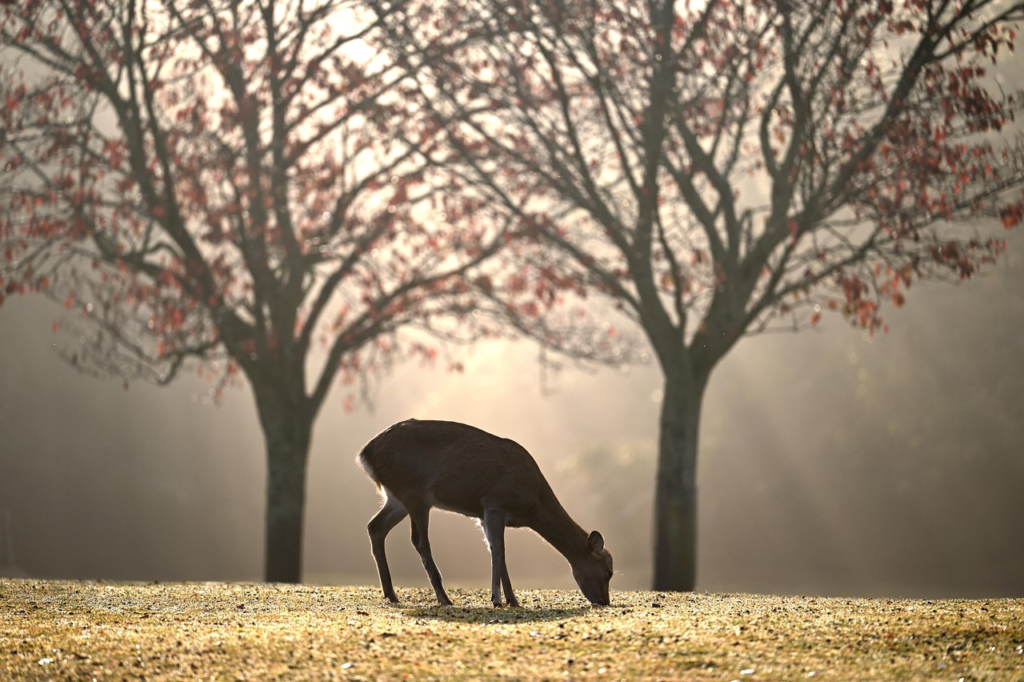
Hunters are often among the most passionate advocates for habitat conservation. Healthy deer populations depend on thriving ecosystems, and hunters understand the importance of preserving natural landscapes. Many hunting organizations and individual hunters actively participate in habitat restoration projects, such as planting native vegetation, creating water sources, and removing invasive species.
By maintaining and improving habitats, hunters ensure that deer have access to the resources they need to thrive. This not only benefits deer but also supports a wide range of other wildlife species, contributing to overall biodiversity.
Combating Disease and Supporting Research
Deer health is increasingly threatened by diseases like chronic wasting disease (CWD), a fatal neurological disorder that affects deer, elk, and moose. Hunters play a vital role in monitoring and controlling the spread of such diseases. Many states require hunters to submit harvested deer for testing, providing valuable data that helps researchers track the prevalence and spread of CWD.
In addition to disease monitoring, hunters contribute to scientific research by participating in surveys and providing samples. This information is used to develop strategies for managing deer populations and mitigating the impact of diseases. By working closely with wildlife agencies, hunters help ensure that deer populations remain healthy and resilient.
Ethical Hunting Practices
Responsible hunters prioritize ethical practices that respect both the animal and the environment. This includes following fair chase principles, using humane methods to harvest deer, and minimizing waste by utilizing as much of the animal as possible. Many hunters also practice selective harvesting, targeting older or weaker animals to strengthen the overall health of the herd.
Ethical hunting not only supports deer health but also fosters a deeper connection between hunters and the natural world. This connection often translates into a lifelong commitment to conservation and stewardship.
Hunters are far more than just participants in a time-honored tradition; they are essential partners in wildlife conservation. Through population management, financial contributions, habitat restoration, disease monitoring, and ethical practices, hunters play a vital role in supporting deer health and ensuring the sustainability of ecosystems.
The next time you hear about hunting, remember that it’s not just about the pursuit—it’s about preserving the delicate balance of nature. By supporting responsible hunting practices, we can all contribute to the health of deer populations and the conservation of our natural heritage. Whether you’re a hunter or simply a nature enthusiast, there’s no denying the positive impact hunters have on the world around us.
]]>
Starting your deer hunting journey can seem daunting. This beginner guide simplifies deer hunting basics to build your confidence.
It covers everything from hunting introduction to essential tips for beginners, ensuring you’re prepared for your first hunt.
A serene outdoor scene with a camouflaged hunter in the foreground, blending seamlessly into the lush, verdant forest landscape. Dappled sunlight filters through the canopy, casting a warm, natural glow. In the middle ground, a mosaic of earthy tones and textures – tree bark, fallen leaves, and undergrowth – creates a complex, organic pattern that enhances the camouflage effect. The background features a dense, layered forest with towering trees and vibrant foliage, suggesting a tranquil, secluded setting ideal for a first-time deer hunt. The overall composition emphasizes the importance of blending in with the environment, a fundamental principle of successful deer hunting for beginners.
Essential Gear for Your Debut Hunt
For beginners, the right gear is key. You’ll need a good rifle or bow clothes for the weather, and safety items. Don’t forget camouflage basics like the right patterns and layers to stay hidden.
Use scent control products to avoid being found. Look for affordable brands like Real tree or Sitka. They offer quality without breaking the bank.
Understanding Hunting Regulations and Licensing
First, get your deer hunting licenses from your state’s wildlife agency. Learn the hunting rules to avoid trouble. This includes knowing bag limits and what guns you can use.
Many states require a hunter education course before you can buy a license. This makes sure you’re ready to hunt legally.
Choosing the Right Hunting Season and Location
Find out when hunting seasons are in your area on your state’s DNR website. Beginners should start with bow seasons to learn the ropes. Use online maps or local guides to find the best places to hunt.
Public lands like national forests are great for beginners because they’re affordable. But, hunting on private land needs permission from the landowner.
Physical and Mental Preparation
Getting ready for hunting means building up your stamina for long sits and cold weather. Practice shooting at a range to get better. This will help you hit your target.
Mentally, focus on staying safe and making the right choices in the field. Learning to manage stress helps a lot during important moments.
Mastering Field Skills and Hunting Techniques
Understanding deer behavior is crucial for hunting success. Watch how deer move at dawn and dusk. They follow paths and change their ways with the weather.
Learning to read wildlife signs like tracks and rubs is important. These signs help predict where deer will go next. By tracking these signs, you can guess deer paths.

Tracking deer signs in a lush, verdant forest. A sunlit trail winds through dense undergrowth, where fallen leaves and broken twigs hint at the passage of a deer. Detailed close-ups of hoof prints, rubbed trees, and disturbed vegetation, with a high-resolution camera lens to reveal the intricate patterns and textures. The lighting is soft and diffused, casting long shadows and highlighting the earthy tones of the natural environment. An atmosphere of quiet observation and careful attention to the signs that a skilled hunter must learn to interpret.
Decide between stand hunting or still hunting based on your surroundings. Use tree stands in thick woods for a surprise attack. Or, move quietly in open areas during still hunting.
Both methods need patience and knowledge of deer behavior to stay hidden.
Mastering shot placement is key for quick, humane kills. Practice at distances you might face in the field. Always aim for vital spots with confidence. Remember, ethical hunting means respecting wildlife and nature.
Develop hunting field skills like knowing the wind direction. Wear scent-control clothes and hunt downwind. Learn the terrain to find deer paths and where they rest.
Success in the field also means staying calm. Practice breathing exercises to control “buck fever.” Keep improving your tracking deer and hunting strategies with each hunt. You’ll learn more about deer and how to adapt to the field.
Conclusion: Building on Your First Hunting Experience
Every deer hunting experience shapes your journey, whether your first attempt succeeded or not. After the hunt, proper field dressing basics and meat processing are vital steps. These steps show respect for the resource and improve your skills.
If you didn’t harvest a deer, analyze your approach to improve. Keeping a journal of decisions made during the hunt helps. Note environmental factors, location choices, and strategies to pinpoint areas for growth in future seasons.
Engage with the hunting community through organizations like the National Wild Turkey Federation or Quality Deer Management Association. These groups promote conservation ethics and preserve hunting traditions. Mentorship programs and education events provide resources to deepen your understanding of the sport’s values.
Hunting traditions and conservation ethics define the sport’s legacy. Embrace this path as a lifelong pursuit, where every season offers lessons. Prioritizing ethical practices ensures your role in sustaining wildlife populations and the outdoor heritage you’ve begun to explore.
]]>
This is a step-by-step to mastering still hunting. Imagine standing still in a thicket, holding your breath as a deer stops 30 yards away. Its ears move, checking the forest. This is still hunting.
For generations, hunters have used this method to stalk game without modern tools. It shows that still hunting techniques are still crucial today.
This guide will make your hunting skills top-notch. You’ll learn to track whitetail deer in Wisconsin or elk in Colorado’s high country. You’ll move like a shadow and read the landscape like a pro.
Still hunting is more than a method; it’s a mindset. It requires control over every step, breath, and glance.
You’ll learn to master the stalking game through terrain analysis, scent control, and animal behavior psychology. We’ll share professional hunting methods, like silent foot placement and reading wind patterns. Each lesson aims to turn instinct into expertise.
By the end, you’ll see why still hunting is key to ethical hunting. It’s not just about tagging game; it’s a test of perseverance and a connection to the wild. Are you ready to learn the secrets of moving unseen?
Understanding the Fundamentals of Still Hunting
Still hunting is a skill that mixes patience with keen observation. It’s different from stand or drive hunting because you move quietly. You watch for signs of the game as you go.
This method blends stealth with smart movement. It stands out from just sitting still or rushing around.
What Sets Still Hunting Apart from Other Hunting Methods
Traditional hunting often means waiting in one spot or using dogs and callers. Still hunting, though, is about slow, careful steps. It helps you move without being seen.
This approach beats using trail cameras or decoys. It’s simple and relies on natural instincts, not just gear.
The Historical Evolution of Still Hunting Techniques
Indigenous people first used still hunting to understand landscapes and animal behavior. Early settlers adopted it too. Over time, it evolved but kept its core principles.
Today, hunters mix old wisdom with new knowledge of animal behavior. This shows that quiet methods can outdo loud ones in the right places.
Why Still Hunting Remains Effective in Modern Times
Still hunting is cost-effective and works on many terrains. It’s great for dense forests or open fields, where patience wins over technology. Learning these basics gives you a valuable skill for places where other methods fail.
Essential Gear for Successful Still Hunting
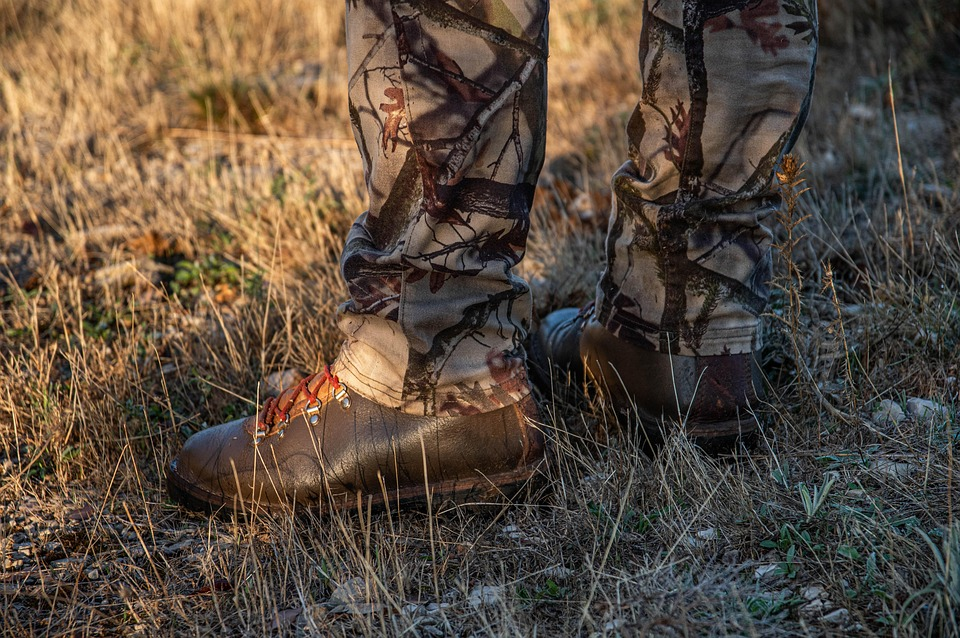
Choosing the right still hunting equipment is key to creeping and staying hidden. Start with footwear designed for silent steps. Boots like LaCrosse’s UltraLight or Danner’s Hale Storm are great. They keep you steady on different terrains without weighing you down.
A rugged, well-equipped hunting setup rests in a secluded forest clearing. In the foreground, a weathered leather backpack and a sturdy rifle with a telescopic sight stand ready. Beside them, a camouflage-patterned jacket and pants hang neatly. In the middle ground, a pair of comfortable hiking boots and a pair of binoculars lie on a moss-covered log. The background features a dense canopy of towering evergreen trees, casting a serene, dappled light across the scene. The overall atmosphere evokes a sense of preparedness, patience, and a deep connection with the natural world.
Camouflage clothing is also crucial. Look for layering systems from Sitka or Real Tree. These offer modern moisture-wicking fabrics and patterns that blend with your surroundings. Choose materials that reduce rustling, like Primal insulation or wind-resistant outer layers.
Scent control products are essential. Use sprays and clothing treatments from Scent Blocker or Primos to hide your scent. Carry scent-neutralizing packs in your pack to refresh your cover during long sits.
Compact optics like Bushnell’s Legend Ultra HD binoculars are great for scanning without bulk. For weapons, consider a lightweight crossbow or bow. Mathews’ Axis X is agile, while a rifle like the Remington 700 in .243 calibers balances power and portability.
Accessories can make a big difference. Shooting sticks from Tink’s reduce noise, and silent slings from Tenkara USA keep gear secure. Invest in scent-free packs and lightweight calls tailored to your target species.
Mastering the Art of Still Hunting: A Step-by-Step Guide
Success in still hunting comes from mastering key skills. This guide will help you improve your abilities. It turns theory into action.
Developing the Right Mindset for Still Hunting
Still hunting requires patience. Start by training your focus during everyday activities. Slow your breathing and notice small details in the city.
Practice tracking animal signs in your backyard. This prepares you for hunting. Discipline and calmness are essential for success.
Perfecting Your Movement Techniques
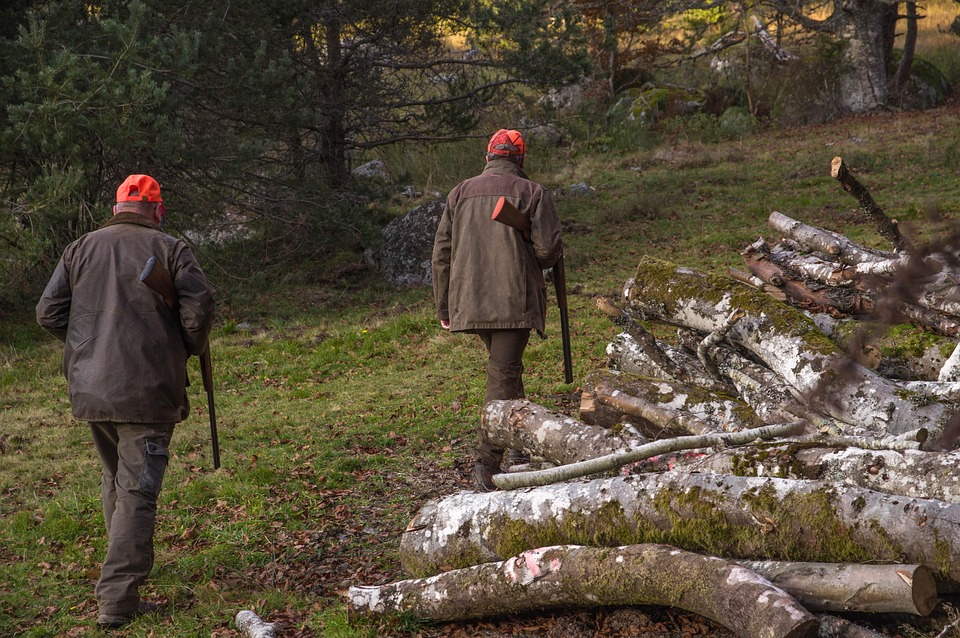
Good still hunting involves controlled movement. Take two steps, pause, and freeze if you see the game. Step softly and test the ground before moving.
Use natural barriers like rocks to hide your sound. Practice in different terrains to build muscle memory.
Controlling Your Scent and Sound
Start scent control by washing gear in unscented detergents like Nikwax Tech Wash. Shower with scent-free soap before hunting. Always approach the game from downwind.
Use wind vanes to track the wind. Spritzing Scent Stop UV adds an extra layer of protection.
Optimizing Your Visual Awareness
Sharpen your visual skills by scanning systematically. Look from left to right at different heights. Train to spot deer ears or antlers in trees.
Use your peripheral vision to spot movement without moving your head. Practice in wooded areas to improve your skills.
Weather Conditions and Their Impact on Still Hunting Success
Weather plays a big role in every still hunt. Learning to adapt to different weather conditions can turn challenges into advantages. This section will show you how to use wind, rain, and temperature to your advantage.
Hunting in Wind, Rain, and Snow
When hunting in the wind, it’s key to face it to hide your scent. If there’s a crosswind, you’ll need to move to stay hidden. Rain can help mask your movements, but watch out for muddy spots.
Tracking in the snow is all about following prints. But move slowly to avoid sinking or making too much noise.
Temperature Considerations for Different Game
Temperature affects how game behaves. Whitetail deer are more active when it’s below 50°F. Elk tend to stay quiet during the hottest part of the day.
Adjust your hunting strategy based on the species you’re after. Cold mornings can be great for spotting animals, while very hot days make them less active.
Using Weather Forecasts to Plan Your Hunt
Weather forecasts can help you plan your hunt. Look for times when animals are more active, like before a storm or after the weather has changed. Plan your hunt for cool, calm days after rain or snow for the best chance of success.
Terrain Analysis for Strategic Still Hunting
Learning about hunting terrain features begins with map study. Spot ridges, draws, and valleys to guess where animals move. Topographic layers show where game paths are, helping you pick better spots.
GPS apps like OnX Hunt or DeLorme help find game travel corridors. Look for narrow passes or stream crossings where animals gather. These spots increase your chances of success.
Focus on habitat edge hunting where forests meet meadows or thicket border fields. Animals often stop at these edges, giving you a clear shot. Stay downwind of these areas.
Study elevation changes to guess animal paths. Animals prefer easy routes—ridges for warmth, creek bottoms in rain. Use natural cover like boulders or fallen logs to hide.
Practice scouting with aerial maps. Note pinch points and funnels. When hunting, move along contour lines to stay hidden. Analyzing terrain turns it into your ally, not a barrier.
Tracking and Sign Reading Essentials

Learning to track and read signs turns the forest into a map. Begin with animal track identification to understand movement. Look at track depth and mud to guess how old they are. A fresh print with sharp edges means recent activity.
Study the direction of claw marks or hooves to guess where animals are going.
Identifying and Interpreting Animal Tracks
Track patterns show how animals behave. Deer tracks pointing inward mean they’re running away. Tracks pointing outward mean they’re coming towards you.
Use a stick to measure track size—deer hooves are usually 2-4 inches. Look for tracks in mud or snow for animal track identification. Practice drawing tracks in a journal to get better.
Understanding Feeding Signs and Patterns
Deer feeding signs show torn leaves above 18 inches. Elk or moose make taller breaks. Look at chew marks: rough edges mean recent eating.
Rub lines on trees with game trail patterns near food show active areas. Track when leaves are stripped at dawn or dusk for ambush times.
Recognizing Bedding Areas and Travel Routes
Wildlife bedding areas are hidden in thickets with flattened plants. Look for hair on branches or faint game trail patterns leading away. Primary trails show where animals go to water, food, and cover.
Use these signs to set up stands where trails meet wildlife bedding areas.
Developing Stealth: The Silent Hunter’s Approach
Stealth is key to still hunting success. Mastering silent hunting movement and stealth hunting techniques takes practice. Start by controlling your body’s presence in the field.
Learn to shift your weight slowly and place each footfall with care. Pause between steps to freeze, like wildlife does.
Body Control and Movement Techniques
Take slow, quiet steps to avoid making noise. Practice slow hunting approach by moving 10 yards and then pausing for 60 seconds. Adjust your foot placement on different terrain to reduce sound.
Use your knees to absorb shock, which helps prevent vibrations that could scare game.
Breathing and Mental Discipline
Controlled breathing helps you stay still. Inhale slowly through your nose and exhale in short bursts. This keeps your body steady.
Do mental focus exercises like counting tree rings or tracking sounds. This keeps your mind sharp without getting tense. Use a metronome app daily to improve your rhythm and calmness.
Clothing and Equipment Noise Reduction
Test your gear weekly with the “quiet test”. Lay on a carpeted floor and move like you’re hunting. Listen for any noise from zippers, buckles, or fabric.
Use hook-and-loop straps instead of snaps, and line your packs with fleece. Choose boots with rubberized soles, like LaCrosse or Sloggi, for wetland hunting. Attach drawstrings to hood edges to stop them from flapping.
Seasonal Adaptations for Year-Round Still Hunting
Mastering seasonal hunting strategies means adjusting to nature’s cycles. In early-season hunting, look for food sources like cornfields or acorn drops. Animals tend to gather there. Move slowly along field edges at dawn or dusk when deer are active but still hidden by vegetation. Also, adjust scent control as wind patterns change with cooler mornings.
Rut hunting tactics change as autumn reaches its peak. Look for rub lines and scrape lines made by bucks chasing does. Move quietly near these spots, using grunt calls or doe bleats to get a reaction. Hunt travel corridors between doe groups and bedding zones during the pre-rut phase. During the chase phase, position yourself where does gather to intercept chasing bucks.
In late season still hunting, adapt to winter’s open landscapes. Focus on areas with lots of browse, like cedar thickets or hardwood draws. Use terrain features like ridges to stay upwind of feeding zones. Post-rut bucks are wary, so stalk slowly in a zigzag pattern to avoid predictable trails. Snow conditions let you follow tracks directly to bedding areas at first light.
Time your movements with light: hunt midday in the early season when animals feed actively, but switch to twilight hours during the rut. Late-season success often comes at dawn or in the late afternoon when deer seek shelter from the cold. Every season demands patience, but these shifts in timing and location make still hunting effective year-round.
Game-Specific Still Hunting Strategies
Successful hunting depends on matching tactics to the animal’s instincts.
Each species needs its own deer-hunting techniques, elk-hunting strategies, or small-game hunting methods to succeed.
Whitetail Deer Tactics
Whitetail deer use edge zones between open fields and thickets. Move parallel to these areas, staying low to avoid detection. On public land, vary paths weekly to confuse pressured deer. Pause frequently to scan for tail flicks or ear movements.
Elk and Moose Approaches
Elk hunting strategies require vocalizations during the rut. Bugling can draw bulls into view. Moose in open country need wider field-of-view scans—watch for antler shadows against slopes. Hunt elk herds cautiously, avoiding sudden movements that spook cows.
Small Game Methods
Small game hunting methods prioritize speed and sound mimicry. Move faster than with big game but stay alert for rustling leaves or bird alarms. Use twig-snapping sounds to mask approach noises. Rabbits freeze when spotted—freeze too, then advance slowly.
Species-specific hunting thrives when you blend biology with patience. Observe how each animal uses terrain, and adjust every step to its behavior.
Ethical Considerations and Shot Placement
Still hunting lets hunters get close to their prey, making shots easier. But, it’s crucial to follow ethical hunting rules. Every shot you take shows your commitment to hunting responsibly.
When hunting deer, aim for the heart-lung area. Shots angled at 30 degrees or less are okay if you’re sure of your aim. But, avoid shots that could harm the spine or non-vital areas, causing the animal to suffer.
It’s better to wait for a clear shot than to rush. Make sure you have a good view of the animal’s body before shooting. If the angle is tricky, aim higher to hit the lung area.
Always carry a rangefinder to check distances accurately. Knowing how to track animals is as important as knowing how to shoot. Learn to follow blood trails to find animals quickly and humanely.
Use bullets or broadheads that cause quick blood loss. For example, bonded bullets work well even at steep angles. Don’t take shots you’re not sure about. Practice at 3D targets to build your confidence.
Responsible hunters care more about the animal’s welfare than trophies. This approach helps conservation and shows respect for wildlife.
Troubleshooting Common Still Hunting Challenges

Still, hunting requires quick thinking when things go wrong. If you spot deer, stay calm. Freeze instantly to avoid sudden movements.
Use terrain features like brush or elevation changes to break the line of sight. If detected at close range, consider retreating slowly to avoid pursuit risks. Carry calls to mimic animal sounds and distract the deer’s attention.
Adaptive hunting methods are key when the game acts unpredictably. If deer approach directly, stay absolutely still and let them pass. Non-target animals like turkeys or birds can alert prey—adjust routes to avoid flushing them.
For pressured animals showing altered behavior, shift tactics: hunt later in the day or target less-frequented areas. Learn from patterns to predict shifts in movement.
Hunting mental stamina keeps you sharp during long sits. Combat fatigue by setting small goals: track time in 30-minute intervals. Use physical checks—adjust clothing, reset stance—to stay present.
Mental drills like counting tree rings or estimating distances keep focus. Manage discomfort by hydrating early and using padded gear to prevent aches from slowing reactions.
Conclusion: Becoming a Still Hunting Expert Through Practice and Patience
Still hunting is all about patience and precision. It needs both mental and physical focus. You start with the basics like scent control and terrain analysis.
Getting better takes time and practice. You’ll learn to read the wind and understand animal tracks. This journey is about setting goals and improving with each hunt.
Keep a journal to track your progress. Write down what you learn from each hunt. Every mistake is a chance to get better.
Start small by spending hours in the woods without a gun. Learn to move quietly and mask your scent. Still hunting is a long-term journey, not a quick fix.
Begin your journey today. Choose a familiar place and practice holding your breath or mapping trails. Every step you take brings you closer to becoming an expert.
]]>You probably keep asking yourself, is milkweed deer resistant? How can I keep my plants untouched by the local deer population? One of the persistent challenges that gardeners face is the ability to deal with deer.
Milkweed, with its vibrant and aesthetic charm, contains some secret that offers unique advantages with its natural deer resistant properties.
In this post, we shall explore Milkweed deer resistant plants, powerful guides, and solutions to help preserve your garden and enjoy its blossomness.
Is Milkweed Deer Resistant?
Yes, Milkweed is widely known as a deer resistant plant.
Milkweeds are classic American flowers that can make lovely additions to a garden. The plant has a compelling fragrance that makes it easy to attract different species of butterflies.
Milkweed has milky sap that contains bitter and mildly toxic compounds which can deter deer. It has a bitter taste and tough or hairy texture, which also deter deer from consuming them.
Types Of Milkweed That Are Deer Resistant.
Milkweed has many varieties and each one has its own unique traits. This plant is generally not good for foraging animals, here are 3 types that easily deter deer.
1.Common Milkweed.
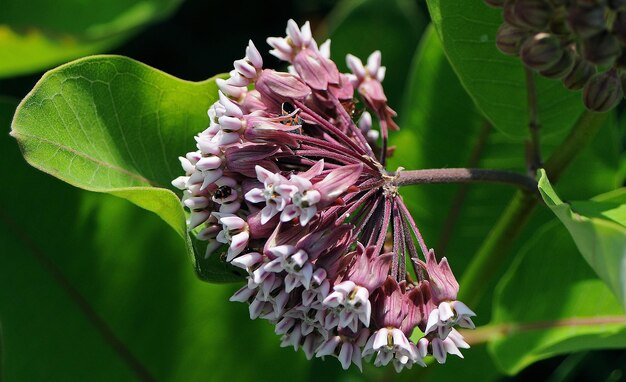
This plant is known as (Asclepias syriaca). Common milkweed is a gorgeous plant that produces purple/pink flower clusters loved by wildflower gardeners and it spreads so quickly.
It is a perennial flower that provides a primary food source for the Monarch butterfly, large leaves for caterpillars and big pink globe-like flowers that provide nectar for the adult butterflies.
Common milkweed has bitter taste and milky sap, and is very rich in toxic compounds which makes it unappealing to deer and able to keep deer away.
It easily attracts monarch butterflies and therefore a good choice for gardeners seeking pollinator support.
2. Swamp Milkweed
Swamp Milkweeds are also known (Asclepias incarnata). They have milky sap and slightly bitter taste which are basically not deer’s first choice.
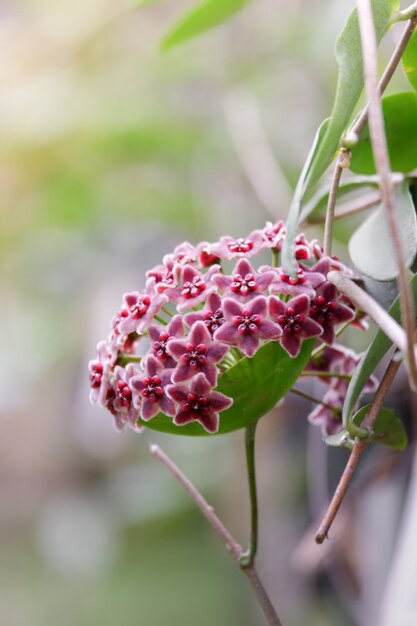
Swamp milkweed excels in moist or wet soils, which makes it a good choice for rain gardens and areas with poor drainage.
These plants are beloved by many for their striking pink flowers and their role in supporting pollinators like butterflies
3. Butterfly weed.
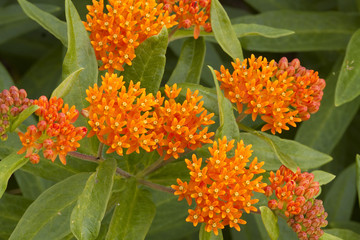
Also known as (Asclepias tuberosa). It is mostly distinguished for its fiery orange blossoms and compact growth habit, it has large, flat-topped clusters of bright-orange flowers
This Milkweed variety lacks milky sap, but then it has tough leaves that deter deer. It is able to grow and excel in dry and sandy soil and its brilliant flowers attract butterflies.
Although, all milkweed varieties have some uniqueness that deter deer due to their toxic compounds. These three above are notable for their effectiveness, especially common milkweed and butterfly weed.
How To Enhance Your Garden Success With Milkweed
Aside from its ability to beautify your garden, milkweed deer resistant plants are not only for deterring deer. It is a powerhouse that supports pollinators and creates a thriving and balanced ecosystem.
If the plant is well integrated, it can improve your gardens’ health and prevent deer intrusion into your garden.
Key Tips For Growing And Keeping Milkweed To Enhance Your Garden Success
- Choose the Right Milkweed Variety
Research milkweed species native to your region, such as Asclepias tuberosa (Butterfly Weed) or Asclepias incarnata (Swamp Milkweed). Native varieties are easier to maintain and attract local wildlife.
- Where to plant your milkweeds
Most milkweeds require good sunlight to thrive well, thus at least 6 to 8 hours of sunlight a day will keep your plants healthy.
Milkweeds are self-seed readily, it is recommended therefore to locate such plants in a part of the garden where you can control their rampant seed spread better.
- Soil
The different varieties of milkweed have different preferences, but then the best soil type for milkweed often depends on its native habitat.
This plant generally will grow well in well-drained and in average garden soil. Swamp Milkweed however, requires moist, humus-rich soil.
- When to plant Milkweed
Always try to plant your milkweed seed outdoors in the fall to give them a period of stratification. This season also allows milkweed pods to open and disperse seeds naturally to support future growth.
However, If you purchase starter plants, plant them in the spring after the danger of frost has passed.
- Spacing
Plant milkweed with adequate spacing to prevent overcrowding and ensure good air circulation, which helps reduce disease risk.
You can plant milkweed in groups of six or more to attract multitudes of monarchs to your garden. Space plants are about 6 to 24 inches apart, depending on the species.
- Watering the Milkweed
These plants normally require some consistent water especially in its early stages to be able to develop and establish roots.
Varieties such as butterfly weed and common milkweed, are drought-tolerant and require minimal watering.
- Milkweed Integration
You don’t just plant only milkweed and expect your garden to be protected. Create a diverse landscape with complementary deer-resistant plants to further enhance your garden’s resilience and beauty. You can review some deer resistant plants and add as many as you want.
Is Milkweed deer resistant now? Find additional information on Plants Addict.
How Milkweed Support Pollinators
There are several ways that milkweed support Pollinators, some are listed below
- Nectar
This plant produces nectar-rich flowers that makes it attractive to bees, moths and butterflies.
- Host plant
Aside from attracting Pollinators, Milkweed is the host plant the monarch butterflies use to lay their eggs.
- Seed Pods
Mostly, Milkweed flowers turn into seed pods that birds can eat, birds like American tree sparrows and finches are likely to eat these seed pods.
Other ways through which milkweed supports pollinators are Pollen and Bumble bees.
Additional Tips for Garden Success
- Companion Planting: Surround milkweed with herbs like sage or rosemary, which emit strong scents that repel deer.
- Encourage Natural Defences: Let milkweed self-seed to create a robust, natural-looking garden that’s less attractive to deer.
- Pollinator-Friendly Practices: Avoid using pesticides that can harm bees and butterflies; instead, opt for organic pest control solutions.
To sum up
Milkweed deer resistant plants are an additional beauty to your garden. It’s a natural ally in keeping deer away from your garden.
By prioritising milkweed and following these best practices, you can cultivate a great, low-maintenance garden that resists deer and fosters a rich habitat for pollinators. The result? A lush, vibrant outdoor space that’s as functional as it is beautiful.
Explore more about the deer lifestyle at Deer Hunting Gateway.
]]>
Have you ever wondered why some hunters always seem to bag the biggest bucks, while others come back empty-handed?
The difference often lies in understanding the basics of deer behavior, particularly during the most exciting time of the year, the deer breeding season, also known as the rut.
For any hunter, this is the gateway to the ultimate hunting experience. If you’re serious about improving your chances this season, mastering the basics of hunting during the rut is crucial.
In this article, we’ll break down everything you need to know about hunting during deer breeding season.
If you’re a seasoned hunter looking for a refresher or a newbie hoping for some hunting tips, you’ll find valuable insights to guide you through your next adventure.
Keep reading, because what’s coming next could change your entire approach to deer hunting.
The Basics of the Rut: The Key to Deer Hunting Success
Before we dive into the hunting tips and tricks, let’s start with the basics.
The rut is the period when deer, especially bucks, are most active because they’re searching for does to breed with.
This makes them far less cautious than usual, offering hunters a unique window of opportunity. Deer that are normally elusive become more visible and approachable, making this the perfect time to plan your next hunt.
What is the Rut?
In simple terms, the rut is the deer mating season.
During this time, bucks are primarily focused on finding and mating with does.
This behavior shift makes them less concerned about human activity, which means they’re more likely to venture out into open areas, travel longer distances, and make more mistake mistakes that experienced hunters use an opportunity to capitalize on.
Understanding how deer behave during the rut can be the ultimate guide difference between a successful hunt and an empty freezer.
Why the Rut is the Best Time to Hunt Deer
Last weekend, I decided to head out to the national forest for some epic Montana hunting.
I met up with my buddy Bob at the camp, and we were pumped to hunt big game like elk and mule deer.
The plan was to explore the backcountry and find ourselves a good buck. We packed our tent and all the finest gear, including our archery equipment, and hit the road early in the morning.
The mountain views were stunning, and there was a good chance we’d spot some whitetail deer or even a black bear if we were lucky.
After setting up our accommodation, we trekked to an open meadow and watched as a herd of moose grazed in the distance. It felt so rewarding to be out in the wilderness, away from the hustle.
We were fortunate to have a guided hunting trip with Lewis, who has been doing this for over 30 years.
He knew all the prime spots for the best shots and taught us how to combine patience with skill.
By the end of the day, we were both pretty excited about the prospect of recording our success in the record book of exceptional hunts.
Hey there, nature lovers! If you’ve ever wandered through the woods in the fall, you might’ve noticed some unusual deer behavior.
That’s right, it’s deer breeding season, and things are about to get wild! Picture this: majestic bucks strutting their stuff, flaunting those impressive antlers, all in a quest to win over the ladies.
It’s like a reality show out in the wild, complete with fierce competition and some serious drama.
As the days get shorter and the air turns crisp, these critters kick their dating game into high gear.
You might see them sparring for dominance or even hear the unmistakable sounds of their calls echoing through the trees. So, grab your binoculars and get ready for a front-row seat to one of nature’s most fascinating spectacles.
Let’s delve into what goes down during this exciting time of year! Ah, deer breeding season, when the woods come alive with a whole lot of antlered drama
If you’ve ever wandered through a forest during this time, you might’ve noticed the air buzzing with excitement (and a bit of chaos).
This is the time of year when bucks are strutting their stuff, showcasing those impressive racks in hopes of winning over the ladies. It’s like a wild animal version of “The Bachelor,” complete with rivalries, sparring matches, and some pretty intense courtship rituals.
From October through December, the deer are all about love, and you can bet there’s plenty of action happening under the cover of the trees.
So, grab your binoculars and get ready to witness nature’s own soap opera—because when it comes to deer breeding, things are about to get wild!
What is the deer breeding season and why is it important for hunters?
The deer breeding season, often referred to as the rut, is that magical time of year when deer are most active and vocal, looking to mate. This usually happens from late October to early December, depending on the region.
For hunters, understanding this season is crucial because it significantly increases your chances of spotting a buck on the move.
During the rut, bucks are more likely to wander outside their usual haunts, making them easier targets for a successful hunt. Plus, the excitement of the chase makes for an unforgettable adventure!
When is the best time to hunt during the deer breeding season?
The best time to hunt during the deer breeding season is typically early in the morning or late in the afternoon when deer are most active.
During these times, bucks are out searching for does, and you might spot them moving through the wilderness or near feeding areas.
It’s also a good idea to keep an eye on the moon phases; many hunters swear by the “moon theory,” suggesting that deer are more active during certain lunar phases. So, plan your hunting trips accordingly for the best opportunity!
What equipment do I need for a successful deer hunt during the rut?
Having the right equipment can make all the difference when it comes to deer hunting.
A reliable rifle or bow is essential, depending on your hunting style. Don’t forget to pack a good set of binoculars for spotting deer from a distance, and a comfortable pair of boots to tackle different terrains.
Scent control products can help you stay undetected, and if you’re serious about it, consider using calls to mimic deer sounds during the rut.
A quality hunting outfitter can also provide you with some top-notch gear if you’re looking for a guided experience!
How can I locate deer during the breeding season?
Locating deer during the breeding season involves understanding their behavior and habits. Look for signs like fresh tracks, droppings, and rubs on trees.
Setting up near food sources, like meadows or timber areas, can also increase your
What is deer breeding season and when does it happen?
The deer breeding season, often referred to as the rut, is that magical time of year when bucks are on the prowl, and the chase is on.
Typically, it varies by region, but in many areas, it happens from late October to early December. During this time, whitetail deer and mule deer become super active and are more likely to be spotted during the day as they’re chasing after does.
This is prime time for deer hunting enthusiasts to gear up and get in on the action!
How does the rut affect deer behavior?
bucks become more aggressive and territorial. They’re trying to establish dominance to attract does.
You’ll notice more scraping and rubbing of trees as they mark their territory. This behavior can lead to some pretty thrilling moments for a hunter.
It’s essential to understand that deer will be moving more than usual, especially at dawn and dusk, so that’s when you want to be out there in the wilderness.
What are the best tactics for hunting during deer breeding season?
When it comes to tactics, you’ll want to consider a few things. First, scouting is key. Know your terrain and find where the deer are likely to gather.
Use scents or calls to lure in bucks. A good strategy is to set up nearby trails or food sources.
Also, consider using a tree stand or ground blind to stay hidden while you wait for that perfect shot.
Remember, patience is your best friend during this hunting adventure!
What type of equipment do I need for a successful hunt?
Your equipment can make or break your deer hunting experience. A reliable rifle or bow is crucial, depending on your preference.
Make sure you have a good scope if you’re using a rifle. Don’t forget about your camouflage clothing to blend in with the environment.
A comfortable camp setup is also essential for long days in the field. Bring along binoculars to spot deer from a distance and a good backpack to carry your gear. Lastly, always check local regulations for what’s allowed!
Do I need a
So, if you’re looking to escape to the national forest and dive into some serious backcountry adventures, you’ve got to check out the premier spots for big game.
Imagine waking up in your cozy tent, ready to grab that license and hit the slopes for some epic archery sessions.
You could be on the lookout for whitetail deer, moose, or even antelope. And let’s not forget about those bear hunts that everyone raves about.
It’s all about that feeling of being in the wilderness area, surrounded by nature’s beauty, while you harvest your dream catch.
Picture this: you’re out there in the open country, spotting big bucks and mature sheep while the sun rises.
It’s one of the best sports out there, trust me! Plus, after a long day of climbing and tracking, nothing beats returning to the lodge for some of the best food.
You can load up on those filling meals, ready to tackle another day in the Rocky Mountain terrain. And if you’re like my buddy Joe
Man, if you’ve ever been out in the national forest land, you know the thrill of it all! Picture this: a crisp morning, the sun just peeking over the mountain, and you’re ready to hit the outdoors with your buddies.
We’re talking about a day full of guided hunting, trying to snag that record-breaking black bear.
You have to have your gear sorted, so make sure to equip yourself with everything you need. It’s a sport that demands patience, but when you’re out there, every moment is enjoyable.
Now, if you’re lucky enough to get your tag and fill your quota, you’ll be hauling back some serious weight.
The adrenaline rush when you spot that majestic creature, it’s like nothing else. You might even want to grab a fork to chow down after a long day of climbing and tracking.
And don’t forget about your trusty horse, they’ll help you cover more ground, especially when you’re covering those rugged acre patches of wilderness.
Imagine sitting on a bench after a long day in the daylight, sharing stories with your crew. It’s a memory you won’t soon forget!
Fortunately, you’ll be booking that trip in no time to experience all this!
During the rut, bucks are more active throughout the day, giving you more chances to spot one.
The key to successful deer hunting is to know when and where to strike. Bucks are constantly on the move, chasing after does and marking their territory, which means they’re likely to make daytime appearances, which rarely happens outside of the rut.
This is why many outfitters and experts consider the rut the ultimate hunting season for deer.
But just knowing when the rut occurs isn’t enough. You need to prepare, understand the terrain, and most importantly, get familiar with how deer behave during this time.
Hunting Tips: Preparing for the Ultimate Adventure
Now that we’ve covered the basics of the rut, it’s time to focus on how you can prepare for your hunt.
Every successful hunt begins long before you step into the woods. From scouting to gear preparation, the basics of hunting during the rut require careful planning and strategy.
Many outfitters stress that preparation is just as important as being in the right place at the right time.
1. Scouting: Know Your Hunting Area
One of the most basic yet critical tips for a successful hunt is scouting your hunting area well before the season begins.
During the rut, deer move outside their usual home range, and bucks are often found in new, unfamiliar areas.
To take advantage of this, it’s important to spend time scouting beforehand.
Look for signs of using trail cameras is a great way to track deer movement. Outfitters recommend placing cameras in strategic locations to monitor when and where bucks are moving.
This will help you pinpoint the best spots to set up your stand when the hunting season begins. Deer activities like rubs, scrapes, and trails lead to feeding or bedding areas.
2. Gear Up: The Basics Every Hunter Needs
You might think that any gear will do during the rut, but the basics of successful hunting gear go beyond just having a rifle or bow.
During the rut, deer rely heavily on their sense of smell, so it’s important to use scent-control products to mask your presence.
Outfitters suggest using scent eliminators on both your gear and your clothing to avoid alerting deer to your presence.
Camouflage is another critical aspect of gearing up. The right camo helps you blend into your surroundings and remain unnoticed by deer.
Outfitters recommend choosing a camo that matches the specific terrain of your hunting area, whether it’s wooded, grassy, or rocky.
3. Timing is Everything: The Best Time to Hunt
If there’s one piece of advice every hunter and outfitter will agree on, it’s this: timing is crucial. While deer are more active throughout the day during the rut, the best times to hunt are early morning and late afternoon.
Bucks tend to be on the move during these hours, chasing does or marking their territory.
Weather conditions also play a role. Overcast days or just after a cold front are ideal times to hunt because deer are more likely to be on the move.
Pay close attention to the weather forecast leading up to your hunt, and adjust your plans accordingly.
The Adventure of the Hunt: What You Might Encounter
Hunting trips during the rut aren’t just about deer, you never know what other wildlife you might encounter.
Depending on where you’re hunting, there’s always the possibility of coming across other animals, including bears.
Though bear encounters are rare during hunting trips, it’s always wise to be prepared, especially if your hunting outfitter operates in areas known for bear activity.
This unpredictability is part of what makes hunting such an exciting adventure.
Outfitters often stress the importance of being ready for anything, so don’t forget your bear spray if you’re in bear country.
And of course, even if you don’t encounter any bears, the thrill of tracking deer during the rut is enough to make any hunting trip a memorable adventure.
The Basics of Patience: The Key to the Ultimate Hunting Success
One of the most overlooked basics of hunting is patience. Deer hunting, especially during the rut, requires a lot of waiting.
Bucks may be more active, but that doesn’t mean they’ll walk right in front of your stand as soon as you get set up. Many hunters make the mistake of becoming impatient and moving around too much, which can spook deer in the area.
Outfitters often advise staying in your stand or blind for extended periods and remaining as quiet as possible.
The basics of a successful hunt come down to timing and patience factors that are easy to overlook but can significantly improve your chances of success.
Scent Control: One of the Basics You Can’t Ignore
During the rut, bucks are highly aware of scents. They use their sense of smell to track does and detect danger.
One of the basics of successful hunting is controlling your scent so that you don’t scare off nearby deer.
Outfitters recommend using scent-control products, including sprays, soaps, and laundry detergents specifically designed to eliminate human odors.
In addition to using scent eliminators, consider paying attention to the wind direction when choosing where to set up your stand.
If the wind is blowing your scent toward where deer are likely to appear, you may never see them.
Understanding wind direction and how it affects your scent is a fundamental part of the basics of deer hunting.
Conclusion:
Deer breeding season, or the rut, is a golden opportunity for hunters. But to truly take advantage of this season, you need to master the basics of deer behavior, gear preparation, and patience.
Outfitters can provide you with access to the best hunting areas and the right equipment, but success ultimately comes down to your knowledge and strategy.
By following these basics and staying patient, you’ll increase your chances of bagging that trophy buck.
Remember, the gateway to a successful hunt isn’t just about showing up, it’s about preparation, understanding deer behavior, and using these hunting tips to your advantage.
So gear up, be patient, and get ready for the ultimate hunting adventure.
The rut only comes around once a year, make the most of it.
Ready to put your skills to the test? Share your plans and hunting experiences with us in the comments below.
]]>Grassland inhabiting deer, also known as antelope, are a diverse group of hoofed mammals. They live in open plains and savannas around the world. These adaptable ruminants have evolved unique traits to survive in their grassy habitats.
This article will explore the various grassland deer, their characteristics, preferred habitats, and interesting social behaviors.
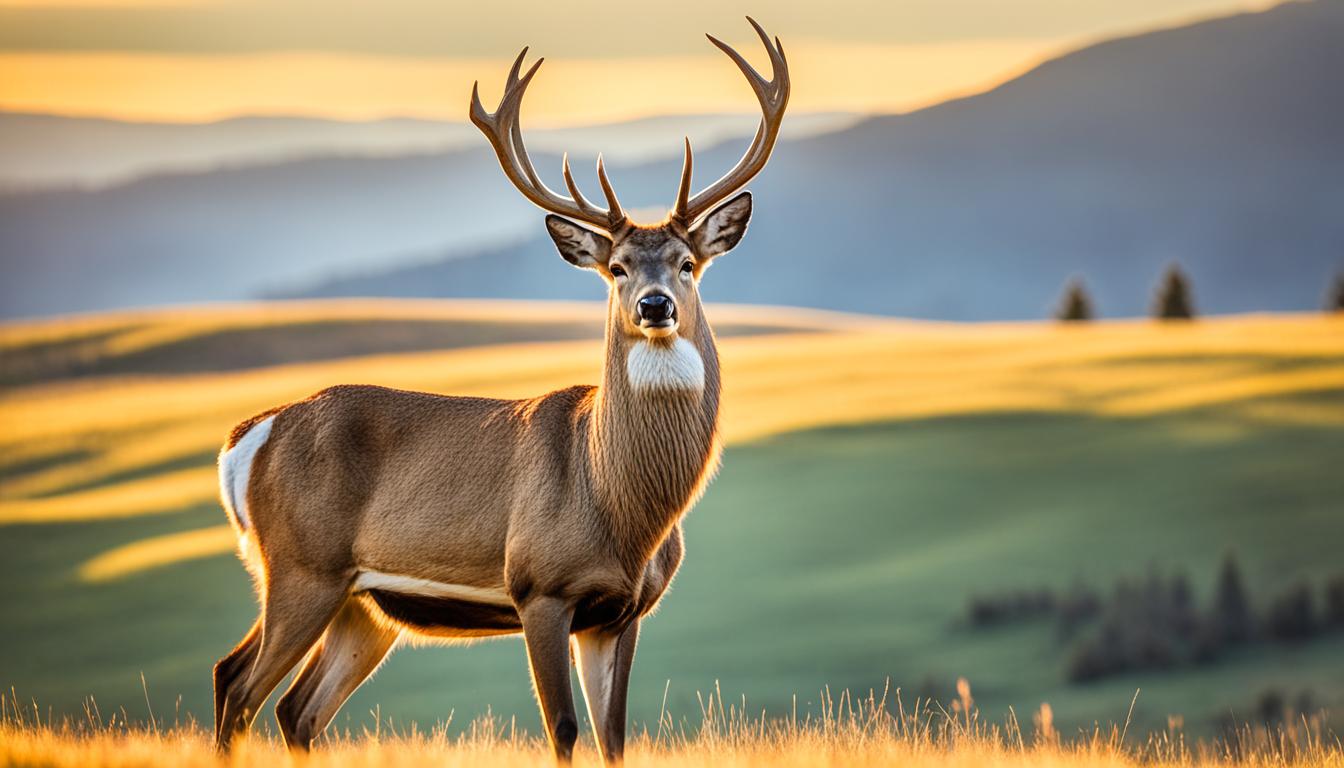
Are you fascinated by the lightning-fast pronghorn of North America, the graceful gazelle of the African savanna, or the elusive impala of the bush? The world of grassland-dwelling deer is full of captivating stories. Join us as we explore the remarkable adaptations and vibrant lives of these magnificent grassland antelope.
Introduction To Grassland Inhabiting Deer
The deer family, known as Cervidae, includes many hoofed, ruminant ungulates found worldwide. They are called “true deer” and are known for their iconic antlers. These antlers are grown and shed every year by most males. While many deer live in forests, a lot have adapted to live in grasslands, prairies, and savannas.
Grassland deer have unique physical traits, social behaviors, and preferences for their habitats. They share a common ancestry with forest deer but have special traits for living in open areas. This makes them stand out.
Deer like the pampas deer, marsh deer, and Andean deer live in grasslands. They are important to the cervidae family and play a key role in grassland ecology. These remarkable deer show how the deer family has adapted to different habitats, from forests to grasslands.
Pampas Deer: The Iconic Grassland Species
In central South America, the Pampas deer (Ozotoceros bezoarticus) is a standout among grassland deer. They are smaller than European deer but have a compact build and plain colors. This helps them blend into their grassy home.
Physical Characteristics
The Pampas deer has a unique 3-point antler structure, like many Asian deer. Their fur is reddish-brown to grayish-brown, perfect for hiding in the grasslands. They are about 3 feet tall and weigh 130-220 pounds, making them medium-sized deer.
Habitat And Diet
These deer live in the open grasslands and savannas of South America, especially in central Argentina’s Pampas. They eat various grasses, herbs, and sometimes woody plants. Their ability to move through the flat, treeless lands lets them thrive in this unique area.
Social Behavior And Reproduction
- Pampas deer live in small groups of up to 20, led by a dominant male.
- They breed in spring and summer, with females having one fawn after 7-8 months of pregnancy.
- Newborn fawns can stand and follow their mothers right away, a key survival skill in the open grasslands.
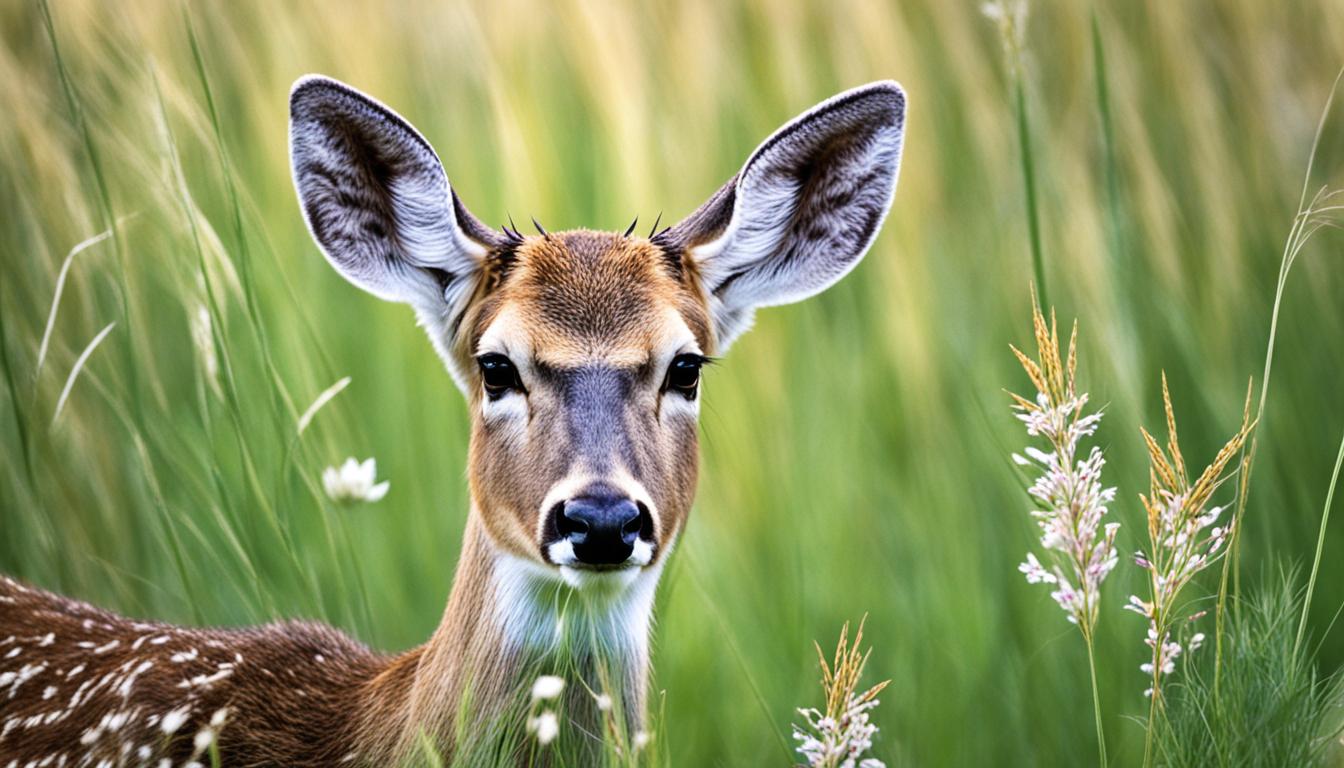
The Pampas deer is known for its unique look, special adaptations, and important role in the grasslands. It’s a symbol of South America’s natural beauty. Protecting this deer is key to keeping the Pampas ecosystem diverse and balanced.
Marsh Deer: Wetland Wonders
In the vast wetlands and tall grasses, a majestic creature roams – the marsh deer (Blastocerus dichotomus). It looks like a pampas deer but has long legs and black lower legs. These features make it stand out. Its antlers have four or five points with a unique design.
Distinguishing Features
The marsh deer is unique among wetland deer. Its long legs help it move through marshes easily. Its dark lower legs contrast with its light-colored body. The deer’s antlers have a special design with multiple points.
Habitat Preferences And Feeding Habits
The marsh deer loves wetland environments. It lives in places like the Pantanal in South America and lush river deltas. These deer eat many types of aquatic plants. They dive into the water to eat the plants that grow there.
Grassland Inhabiting Deer: Species, Behavior, And Habitat
Grassland deer, also known as antelope, live in open plains, prairies, and savannas worldwide. They include pampas deer, marsh deer, and many others like pronghorn, gazelle, and wildebeest. These deer have special traits to live in vast, grassy areas. They have unique ways of eating and living together in groups.
The pampas deer lives in small areas in central South America. Only about 1% of their old home is left today. They eat grass, shrubs, and herbs. They live in small groups and change their behavior with the seasons.
Marsh deer are bigger than pampas deer and love wetlands. They can swim well and eat plants in shallow water. But, their homes are being destroyed by people, making them harder to find.
There are many types of grassland deer, each with its own way of life. Learning about these deer helps us understand how they live in their vast, grassy homes.
Andean Deer: Mountain Marvels
Many deer live in open areas, but two species love the Andes’ mountains. These Andean deer are amazing. They live in tough places in the Andes.
Taruka: The Central Andes Dweller
The taruka lives in the central Andes, from Peru to northern Argentina. It’s an Andean deer that’s great at moving through steep places. It’s perfect for its home in the high mountains.
Huemul: The Endangered Patagonian Gem
In Chile and Argentina, the huemul lives in the southern Andes. It’s also known as the Patagonian deer. This deer is very special and has adapted well to the tough Patagonian land. Sadly, it’s endangered, and people are working to save it.
Conservation Challenges And Efforts
The grassland deer species, like the pampas deer, marsh deer, and Andean deer, face big challenges. Their homes are being destroyed and broken up by human activities. These include farming, building cities, and making roads.
For example, only about 1% of the original pampas deer home is left today. The marsh deer and the endangered huemul are also losing their homes. Their wetlands and mountain areas are being changed and used for other things.
People are working hard to save these deer and their homes. They use new methods like spatial modeling and remote sensing to track changes in the land. This helps them make plans to protect these areas.
The NRCS started a project to help grassland birds in the U.S. Northern Great Plains. Researchers like Niemuth et al. in 2017 made maps to help save grassland birds in the same area.
Conserving private land is getting harder because people use it for different things now. But, there are still efforts to restore habitats and protect deer populations.
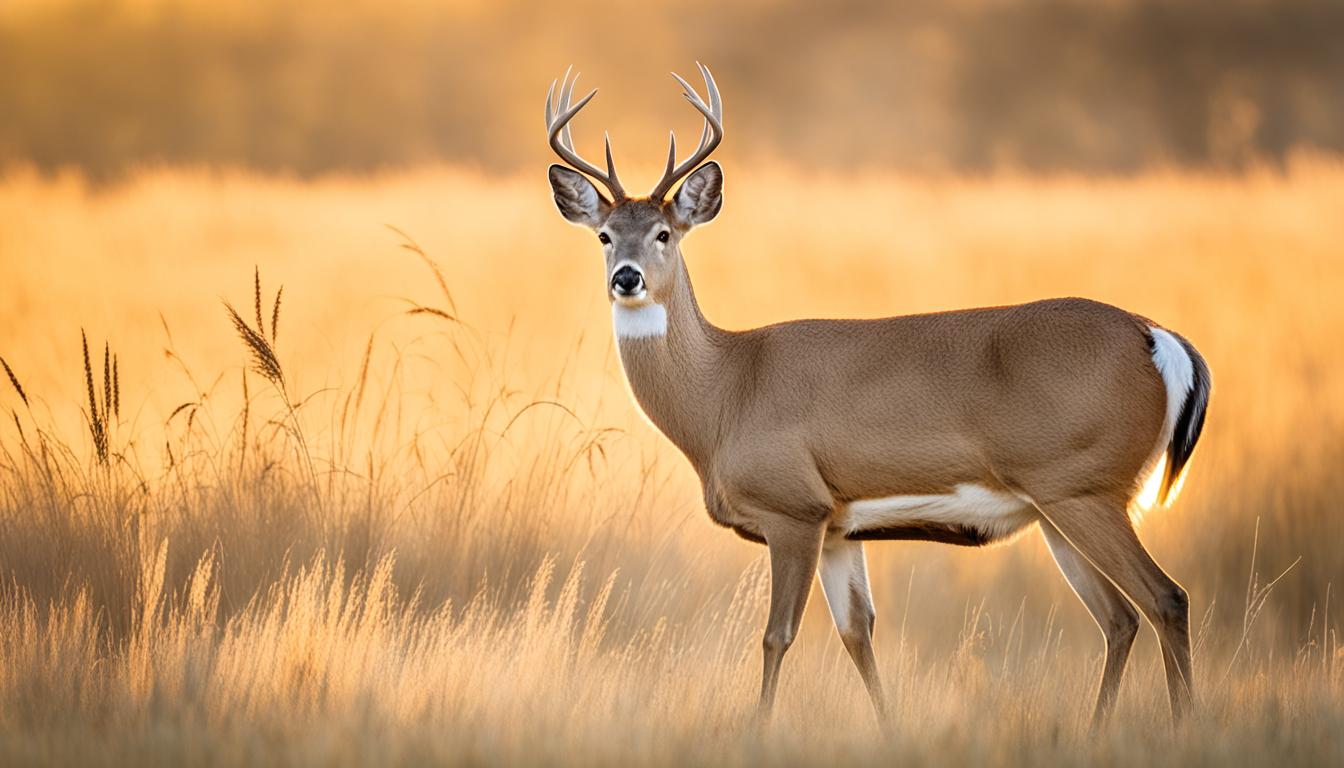
Even with big challenges, there’s hope for saving grassland deer. By stopping the main causes of habitat loss and using smart conservation plans, we can help these special deer live in their natural homes.
Conclusion
Grassland deer are a fascinating group that live in open, treeless areas. They include the well-known pampas deer and the endangered Andean species. These deer have unique traits and behaviors that help them live in their grassy homes.
It’s important to understand and protect these deer because they face many threats. Habitat loss and fragmentation are big problems for them. We need to keep studying and protecting these deer to save them.
By researching and raising awareness, we can help these deer survive. We can learn how deer affect the ecosystem by studying their eating habits and how they interact with plants. This knowledge helps us manage deer in places like farms and forests better.
Protecting grassland deer is important for nature and culture. They are tied to the culture and history of their lands. Keeping these deer helps keep their ecosystems diverse and balanced. By focusing on saving grassland deer, we protect these amazing animals and their homes for the future.
]]>In such cases, the recovery and responsibility of tracking wounded game rest on the hunter. What do they do, and not just that, but what are the right ways to do it as well?
This guide will explore the techniques and best practices for tracking and recovering wounded animals, ensuring your efforts at hunting responsibly are not thwarted.
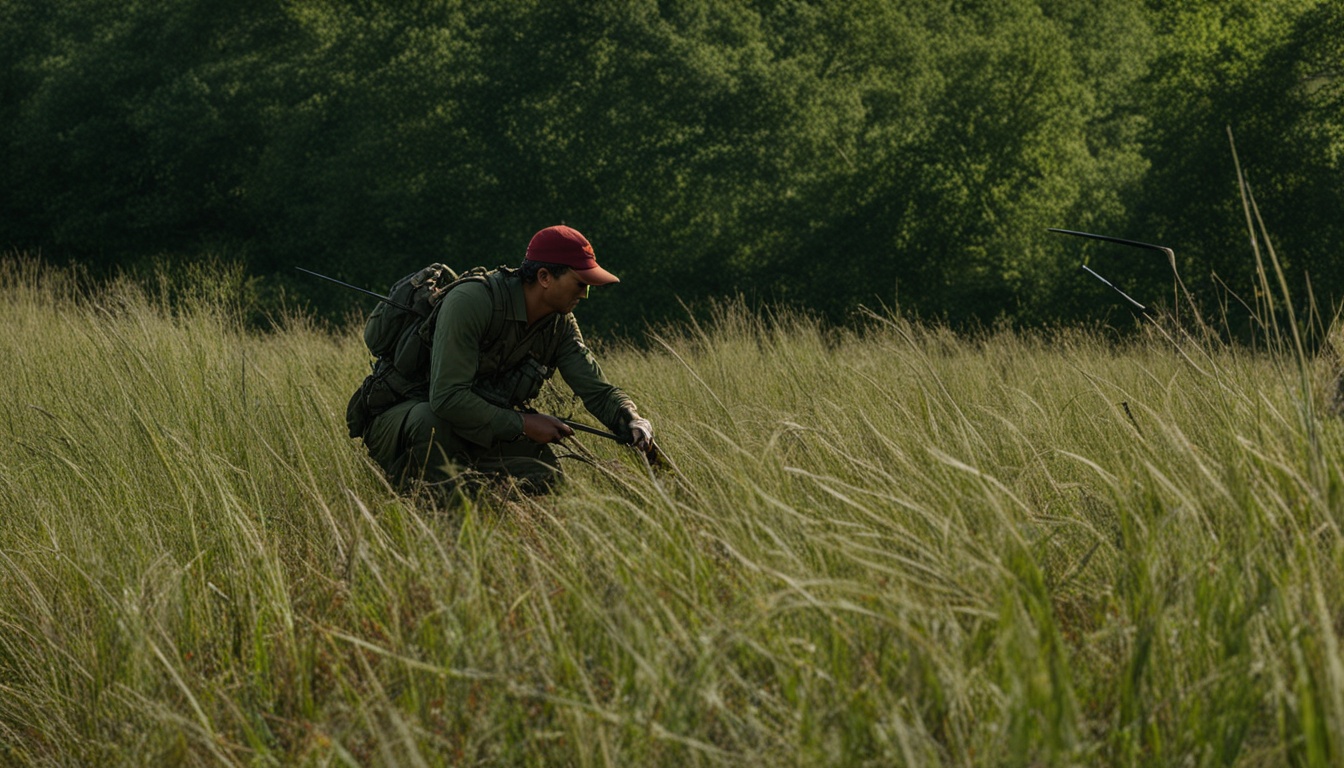
Ethical Responsibility and Initial Steps
Responsible hunting or hunting ethically is about respecting the life of the animal and ensuring its suffering is minimized. Your first priority as a responsible hunter should be to track and recover any wounded game no matter how difficult it is or the time required.
Even if the animal flees at the sound of your shot, assume it was hit and take the necessary steps to go get it.
Although sometimes difficult, it can be easier to track wounded animals if you follow a systematic approach and understand the signs left by the animal.
The following are a few things you can do:
Tracking Wounded Game
- Observe The Animal Behavior After the Shot
Watch how the animal reacts to see where you hit it and how badly it’s hurt. Look for signs like how it moves, the direction it goes, and any injuries or blood. These clues help guide your tracking.
- Mark the Location and Waiting Period
Mark where the animal disappeared with a landmark, compass, or GPS. This spot is where you start tracking. Wait 30 minutes to an hour before searching. Don’t be in a hurry because waiting lets the animal weaken and the blood trail get clearer.
- Identifying Blood Signs and Patterns
Start by checking the spot where the animal was shot. Look for blood signs to understand the wound and the animal’s condition. This is where you should know the difference between lung, gut, and grazing wounds because this will help you gauge the severity of the would and track how difficult or easy it will be to track the animal.
- Using Tracking Tools and Trail Markers
Having the right tools helps in tracking wounded game. Toilet papers are good for marking blood spots. A compass is also useful for keeping track of the animal especially when the blood signs fade.
In cases where the blood trail is hard to see, you can move slowly and use your senses. Listen for sounds be patient and observant. To really track a wounded animal you will need to be persistent and pay strong attention to detail.
Remember you goal is to track and recover the animal humanely so you have to be committed to doing just that
Now you have an idea how you can track your wounded game, but sometimes how would you know to track the right game? What if there are previous blood trails in the area?
How can you avoid wasting time only to find out the game you tracked was not the one you shot? Let’s look at that next.
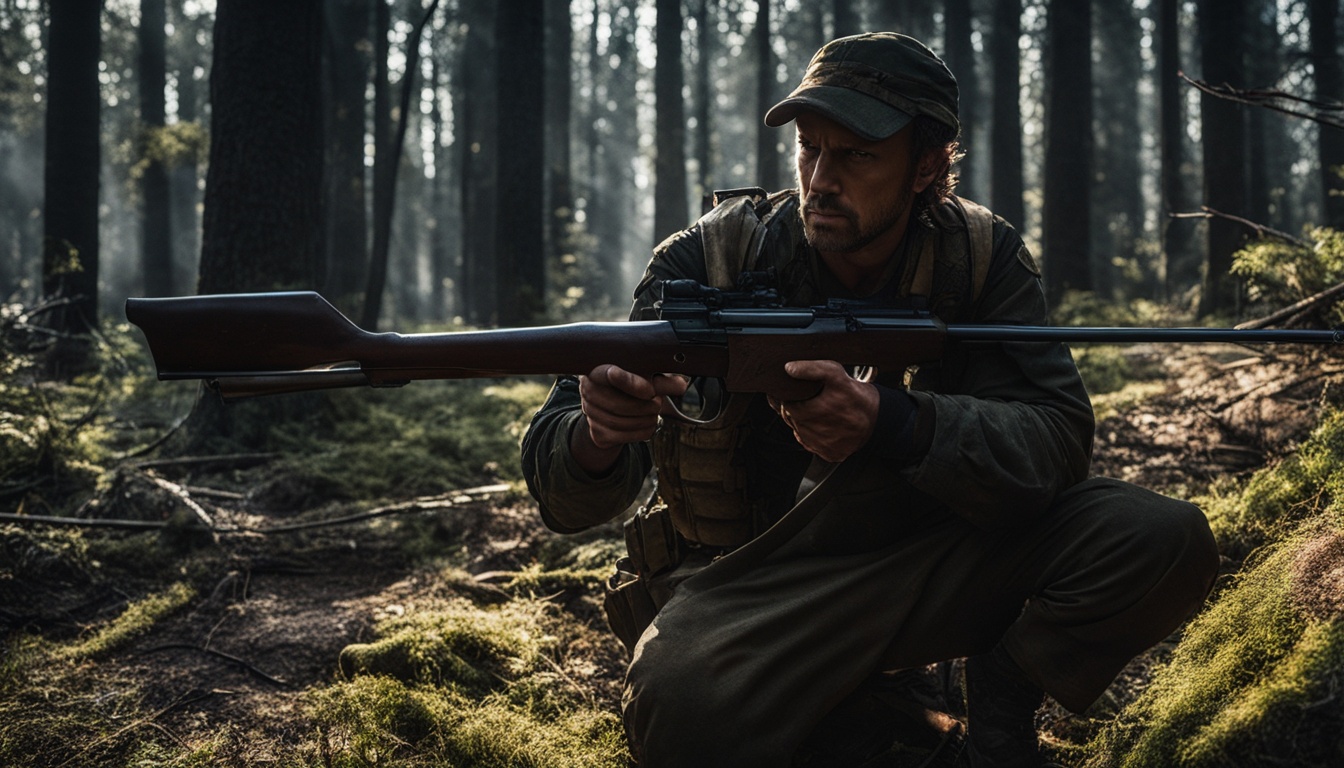
Blood Trail Clues
Where your shot hits and the blood spilled can tell you how badly an animal is hurt. This can help guide your search to find it.
The color of the blood trail tells you a lot about the shot. For example:
- Bright red or pink blood with bubbles means a hit to the lungs or heart. This shot is usually fatal, happening within 5-10 seconds.
- Darker, crimson blood means a hit to the muscles or liver. The animal might take up to an hour to die.
- Greenish blood with food bits means a gut shot. This is the toughest to recover, as the deer may travel far before dying, taking 5 hours or more.
Deer may also exhibit different reactions depending on the intensity of the shot. A deer hit badly will usually lie down within 200-300 yards and die soon, unless scared away.
If scared, it may run a 1/2 mile or more, leaving blood drops if the shot was not good. This could make tracking hard.
Now, after you have used blood trail clues to catch your game, you need to learn how to kill them responsibly if they are not fully dead, what’s more, you should also be able to tell if the meat is safe for consumption too.
Tracking Wounded Game: Prioritizing Humane Recovery
In responsible hunting, timing is everything when tracking a wounded game. Waiting too long lets the animal suffer. But acting too soon can also make it hard or impossible to find.
The humane thing to do is to:
- Watch how the animal acts after the shot to see how bad the wound is.
- Wait at least 30 minutes before tracking to let the animal weaken from its injury.
- Look for blood signs and patterns to follow the animal, telling apart bright red arterial blood from darker, clotted blood.
- When you find the animal, come up from behind to avoid a dangerous fight.
Preserving Meat Quality
While considering humane techniques, to really keep deer meat good, you need to get to it fast. Waiting too long makes the meat taste bad.
It’s important to handle and store the meat right to keep it fresh and tasty.
Here are some ways you can preserve the quality of your meat.
- Know the animal’s body and how it reacts to the shot to check if it was a good hit.
- Follow the rules for tagging and moving the carcass to keep it safe and sound.
- Use Responsible Hunting methods to reduce the animal’s pain and keep the meat quality high.
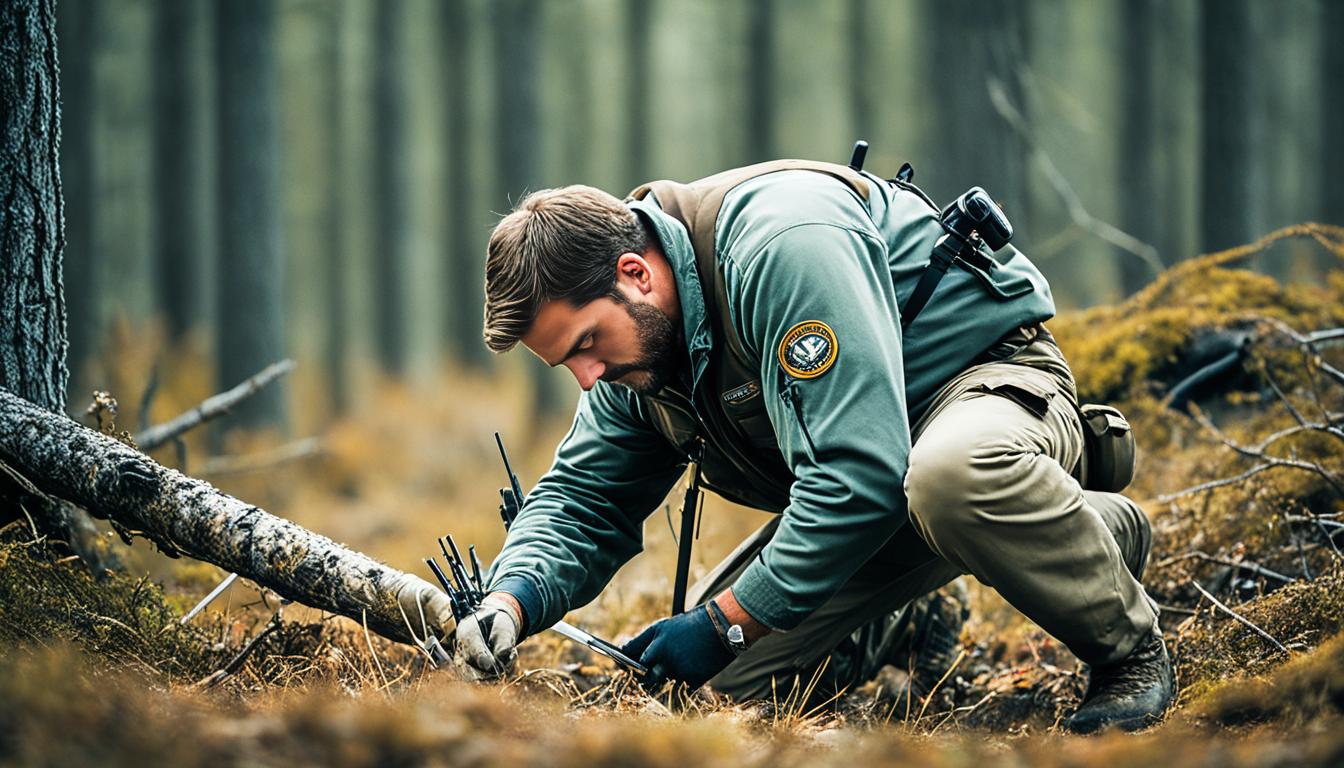
Go Get Your Game!
Tracking wounded deer or bear takes patience and knowledge of animal behavior. It’s a tough task, but the reward of a successful recovery is huge.
If you follow ethical hunting principles, you’ll become a better tracker. This helps keep your sport sustainable for the future.
Remember to focus on humane recovery and keeping the meat quality up!
]]>