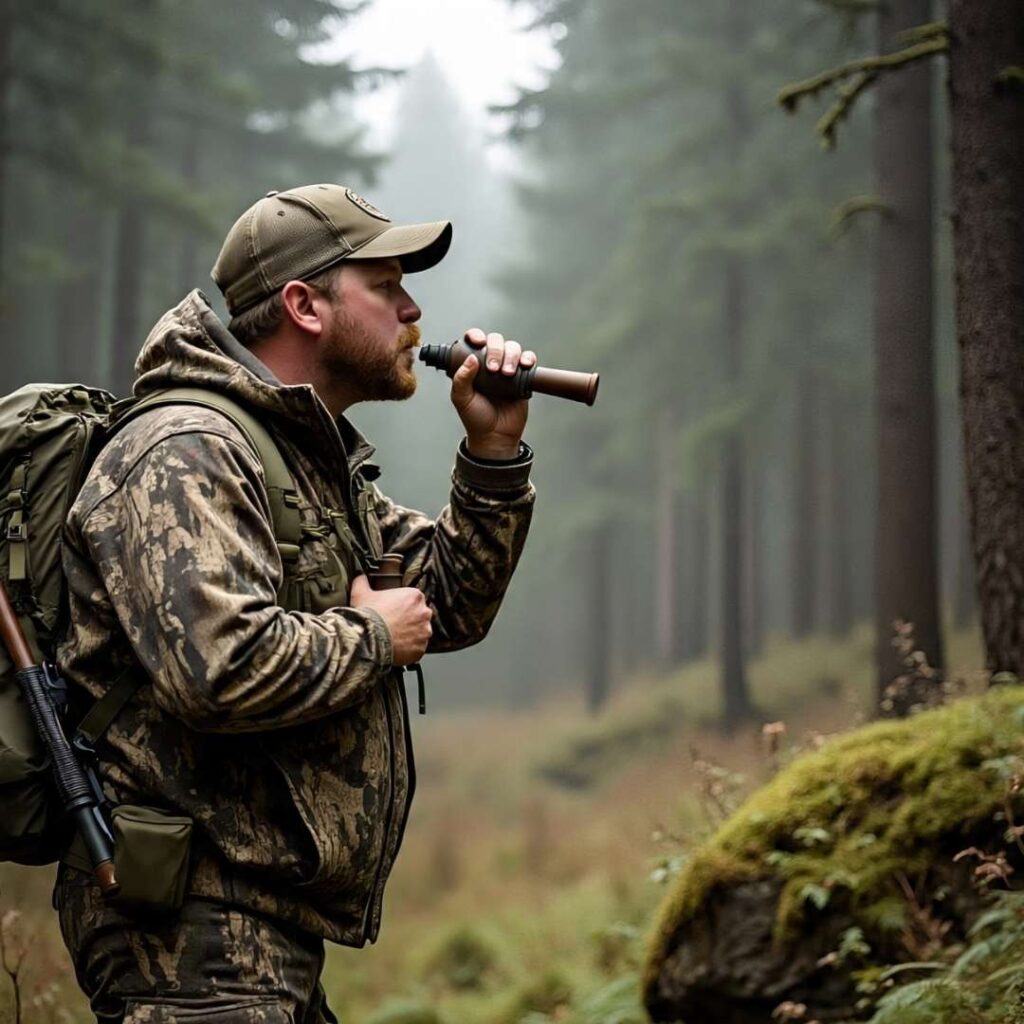
The woods are silent. A mature buck steps into the clearing, broadside, unaware of your presence. You reach for your grunt call—one sound later, he locks eyes, stomps, and vanishes. Just like that, your chance is gone.
Many hunters replay this exact scenario in their heads, wondering what went wrong. The truth? It often comes down to simple grunt call mistakes that can be easily avoided. In this post, we’ll break down **five common grunt call mistakes—and how to fix them—**so your next hunt ends in success, not frustration.
Mistake 1: Using Grunt Calls Too Often
One of the most common errors hunters make with grunt calls is simply overusing them. While it’s tempting to reach for your call every few minutes, too much noise quickly tips deer off that something isn’t right. Instead of drawing them in, excessive calling can send them bolting out of range.
Deer are highly sensitive to their surroundings, and they recognize natural calling patterns. In the wild, bucks don’t grunt nonstop. They vocalize occasionally to communicate dominance, maintain contact, or signal breeding interest. When hunters overcall, it creates an unnatural rhythm that deer immediately pick up on.
The problem is that many hunting enthusiasts believe frequent grunt calls equal stronger attraction. In reality, constant calling has the opposite effect. Just as you might ignore a phone that won’t stop buzzing, a buck will ignore—or even avoid—what seems like an overly aggressive or unnatural sound.
To fix this mistake, think of grunt calls as a tool for subtle influence rather than constant control. Your goal is to mimic natural deer behavior, not to dominate the woods with artificial sound. A few well-timed calls will always be more effective than a barrage of noise.
Here are some simple ways to keep your grunt calls realistic and effective:
- Short, spaced-out grunts = realism. One or two soft calls followed by silence feels authentic.
- Constant calling = unnatural. Continuous grunting sounds forced and alarms deer.
- Think of grunt calls like texting. Too many messages get ignored or blocked; the same applies in the woods.
By calling sparingly, you allow curiosity to work in your favor. A buck that hears a single, subtle grunt is more likely to investigate than one overwhelmed by nonstop noise. Remember, in deer communication, less almost always means more.
This balance sets the stage for the next mistake many hunters make—using grunt calls at the wrong time. Understanding not just how much to call but when to call can make or break your hunt.
Mistake 2: Wrong Timing with Grunt Calls
Even when hunters use grunt calls sparingly, many still make the mistake of calling at the wrong time. Timing is everything in the woods, and a poorly timed grunt can completely ruin an otherwise perfect setup. Understanding when to call—and when to stay quiet—separates successful hunts from missed opportunities.
One of the biggest timing errors happens when a deer is already on high alert. If a buck is staring your way, stamping his hoof, or showing signs of unease, hitting your grunt call is the worst move you can make. Instead of calming him, the sound confirms his suspicion and drives him off.
Another common mistake occurs when hunters call while deer are too close. At close range, grunt calls can sound unnaturally loud and aggressive, breaking the illusion of authenticity. Deer may spook immediately, leaving you no chance to recover. At such moments, silence is your best strategy.
The ideal time to use grunt calls is when a buck is moving calmly, distracted by feeding, or walking out of range. A subtle grunt in these situations mimics natural communication and can trigger curiosity or dominance without raising suspicion. This timing gives you control over the encounter without pressuring the animal.
Here are a few practical tips for mastering timing with grunt calls:
- Call when deer are calm. Relaxed behavior creates the best opportunity for a natural response.
- Wait for a deer to pass slightly out of range. A soft grunt can stop him or turn him back.
- Never call when a buck is locked on you. Any sound will increase his alertness.
By using grunt calls with patience and purpose, you let the moment dictate your action instead of forcing it. Deer react more favorably when timing feels natural and deliberate.
Getting timing right is crucial, but it’s only half the equation. The next mistake hunters often make is using the wrong tone or volume, which can be just as damaging to your success in the field.
Mistake 3: Using the Wrong Tone or Volume
Grunt calls are not a one-size-fits-all tool. Just as deer change their vocalizations based on mood and season, hunters need to adjust tone and volume to match the situation. Using the wrong sound at the wrong level is one of the quickest ways to alarm deer and end your hunt early.
Too much volume is the most frequent mistake. A loud grunt may carry farther, but it often comes across as unnatural or aggressive, especially outside of the rut. Bucks that aren’t in a dominant mood will shy away from what they perceive as a challenge. Instead of investigating, they’ll slip out quietly.
On the other hand, calls that are too soft fail to make an impression. If a buck can’t hear the grunt, it serves no purpose. Worse still, an inconsistent tone that rises and falls unnaturally can make the call sound artificial, tipping off wary deer before they commit to approaching.
The key to success is matching your grunt calls to both the deer’s behavior and the hunting season. During the rut, a slightly louder, more aggressive grunt may spark dominance. In early or late season, subtle and soft calls are more effective, reflecting natural deer communication at those times.
Here are some quick guidelines to keep your tone and volume in check:
- Soft tending grunts work best at close range or in early season setups.
- Moderate contact grunts help reach deer that are nearby but out of sight.
- Aggressive grunts should be reserved for rutting bucks ready to challenge rivals.
Think of grunt calls as a conversation. If you shout when a whisper will do, you risk breaking the mood. If you mumble when boldness is needed, your message never gets through. Balance ensures your calls sound natural and believable.
Mastering tone and volume builds authenticity, but hunters often overlook another critical factor—matching grunt calls to the season. Knowing when and how to adjust your calling strategy by time of year is the next step to consistent success.
Mistake 4: Not Matching Grunt Calls to the Season
Another major mistake hunters make with grunt calls is using the same strategy all season long. Deer behavior shifts dramatically throughout the year, and if your calling doesn’t adjust to match, you risk sounding unnatural. What works in November during peak rut will not have the same effect in September or January.
In the early season, deer are cautious and less vocal. Overly aggressive grunt calls at this time feel out of place and often spook bucks instead of attracting them. The right approach is to keep calls soft and minimal, mimicking light communication between deer rather than dominance displays.
During the rut, everything changes. Bucks are charged with testosterone and far more responsive to grunt calls. This is the time for slightly louder and more assertive grunts, often combined with rattling sequences to mimic a challenge. The right tone can trigger a dominant buck’s natural instinct to defend his territory.
Late season calls for restraint again. After the rut, bucks are weary from breeding activity and highly alert to danger. Loud or frequent grunt calls will send them running. Instead, a few quiet, subtle grunts can encourage cautious deer to investigate without raising alarm.
Here’s a quick seasonal guide for using grunt calls effectively:
- Early season: use light, sparing grunts to avoid spooking deer.
- Rut: mix in aggressive grunts with rattling for maximum attraction.
- Late season: keep calls soft and subtle to avoid pressuring wary bucks.
By tailoring your grunt calls to the season, you mirror the natural communication patterns of deer at different times of year. This seasonal awareness not only improves realism but also increases your odds of coaxing a buck into range.
Even with the right seasonal strategy, hunters often fail to notice how deer react in real time. Ignoring a buck’s body language after a grunt call can undo all your careful planning, which brings us to the next mistake.
Mistake 5: Ignoring Body Language After a Grunt Call
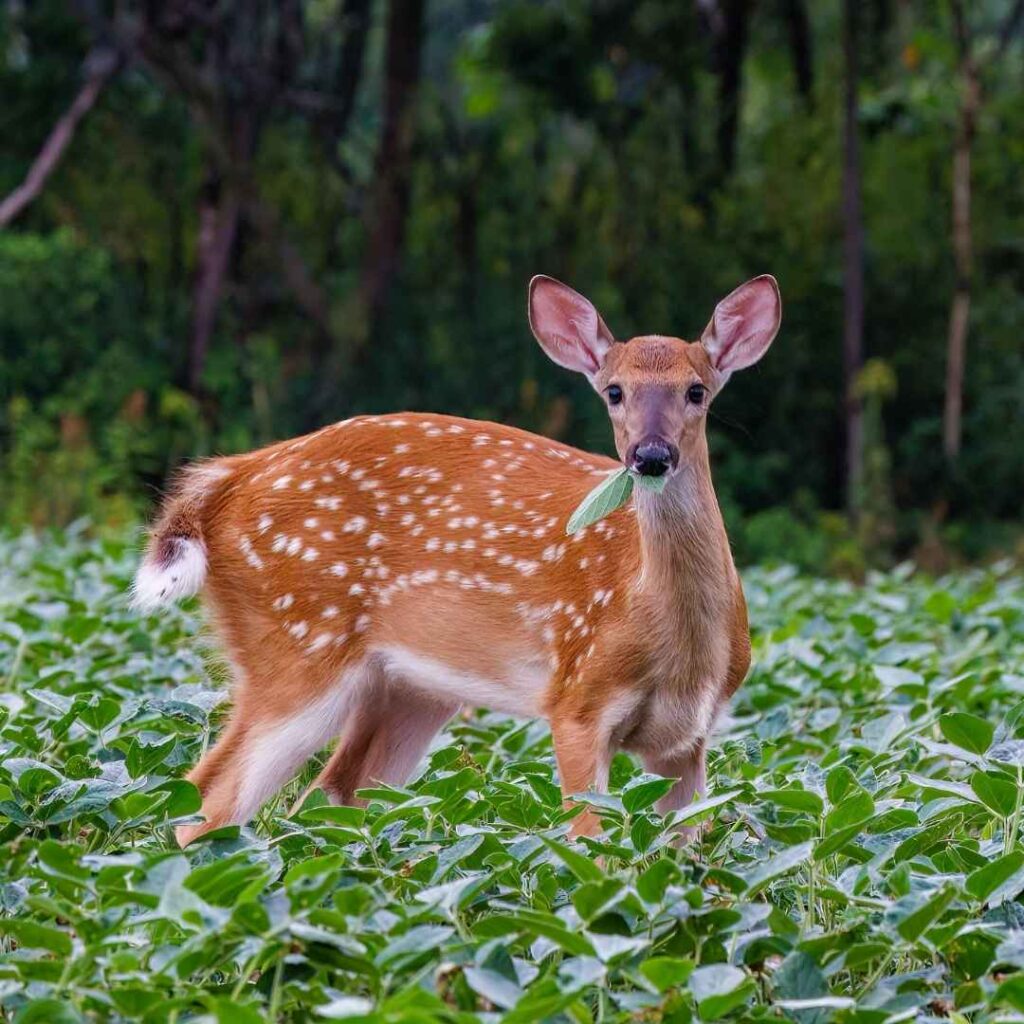
Even when hunters use grunt calls correctly, many still make the mistake of ignoring what comes next—the deer’s reaction. Body language provides instant feedback, and failing to read it often leads to blown opportunities. A call without observation is like speaking without listening.
When a buck hears a grunt call and freezes, his posture tells you everything. If he raises his head, perks his ears, and scans the woods, he is alert but undecided. Calling again too soon in this moment can break the illusion and send him bounding away. Patience becomes the smarter move.
Another reaction is cautious investigation. If the buck takes a few steps in your direction but stops frequently to look around, he is curious but suspicious. A second, soft grunt after a pause may encourage him to close the distance, but pushing too hard risks ruining the setup.
Sometimes, deer respond positively and commit right away. If a buck turns directly toward the sound, there’s no need for additional grunt calls. Many hunters lose deer by getting overexcited and calling again, which makes the encounter feel staged. Silence in this scenario is the strongest strategy.
Here are quick tips for interpreting deer body language after a grunt call:
- Staring or stomping: stay quiet; another call confirms his suspicion.
- Slow approach with caution: wait, then add a soft call if needed.
- Immediate commitment: remain silent and prepare for the shot.
Learning to read and respond to deer behavior ensures grunt calls feel authentic. Every movement, ear flick, or step is a clue that guides your next decision. By paying attention, you avoid overcalling and keep the illusion alive.
Mastering body language completes the picture. With the right frequency, timing, tone, seasonality, and observation, grunt calls become a true hunting advantage instead of a liability. Used wisely, they can transform an ordinary sit in the woods into the hunt of a lifetime.
Conclusion: Mastering Grunt Calls for Hunting Success
Grunt calls can either make or break your hunt. As you’ve seen, overcalling, poor timing, the wrong tone, ignoring the season, and overlooking deer body language are mistakes that cost hunters countless opportunities. The good news? Each one is easy to fix when you hunt with patience, awareness, and strategy.
The next time you step into the woods, treat your grunt call as a tool of precision, not pressure. Subtlety and timing win more deer than force ever will. By avoiding these five pitfalls, you’ll not only improve your success rate but also build more memorable, rewarding hunts.
Now it’s your turn—have you ever made one of these grunt call mistakes, or do you have a tip that works for you? Drop a comment below and share your experience with fellow hunters.
And if you want more proven deer hunting strategies, gear breakdowns, and expert tips, follow Deer Hunting Gateway on Facebook, Instagram, and TikTok. Every hunt can teach you something new—don’t miss the next lesson.
]]>Forest dwelling deer are some of the most fascinating and elusive creatures in the wild. They move with silent precision through thick woodlands, relying on instincts and adaptations that have kept them alive for centuries. To the untrained eye, these animals might seem predictable. But any hunter knows the moment you underestimate a forest dwelling deer, it vanishes like smoke into the trees.
Have you ever wondered how deer always seem to know you’re there even before you make a sound? That’s because forest dwelling deer are masters of survival. They blend in, sense danger before it arrives, and adapt to every season of the year.
In this post, we’ll uncover the 7 survival secrets of forest dwelling deer. These insights will not only help you appreciate the intelligence of these woodland survivors but also give hunters a valuable edge in the field.
Secret 1: Mastering Camouflage in Dense Forests
The first survival advantage of a forest dwelling deer is its natural camouflage. Their coats change with the seasons, allowing them to vanish into the forest background:
- Summer coats: Reddish-brown fur blends with leaves and undergrowth.
- Winter coats: Grayish hues match bare trees and snow.
A forest dwelling deer doesn’t just rely on color. It freezes and stays still, becoming part of the forest itself. Sometimes, a hunter may sit for hours within 30 yards of a deer without realizing it’s there. Their ability to merge into shadows makes them nearly invisible.
For hunters, success means spotting movement, not shapes. Train your eyes to detect small, subtle motions: the flick of an ear, the rise and fall of a chest, or the twitch of a tail.
Pro tip: Next time you’re glassing a woodlot, look for movement rather than silhouettes. In the forest, stillness is often the deer’s strongest weapon.
Secret 2: Acute Senses – Hearing, Smell, and Sight
The second survival secret of forest dwelling deer is their extraordinary senses. These animals are built to detect danger long before it arrives.
- Hearing: Their ears swivel like radar dishes, picking up faint rustles or the snap of a twig. Hunters often underestimate just how quiet they must be.
- Smell: A forest dwelling deer can detect human scent from hundreds of yards away, sometimes hours after you’ve passed through.
- Sight: While deer don’t see colors the way humans do, they excel at detecting movement, especially in low-light conditions at dawn and dusk.
For hunters, this creates both a challenge and an opportunity. Success depends on working with the deer’s senses rather than against them. Check the wind before you head out, wear scent-control gear, and minimize unnecessary noise.
Imagine this: you’ve scouted a prime feeding area. The wind is wrong, and your scent drifts straight toward it. Without ever seeing you, every forest dwelling deer in that patch will know you’re there. That’s the power of their senses.
Secret 3: Strategic Feeding Patterns
A forest dwelling deer doesn’t feed randomly, it eats with strategy and caution.
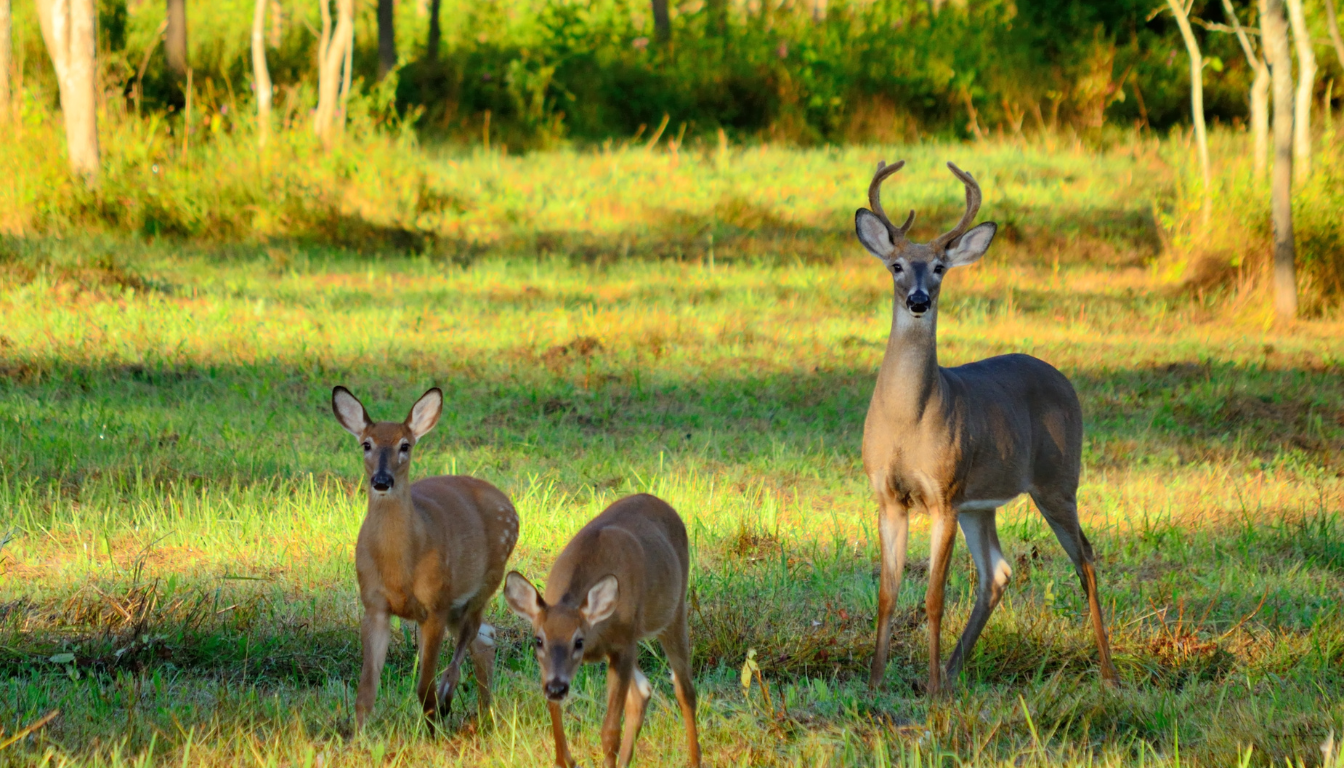
- Timing: Deer are crepuscular, meaning they feed most actively at dawn and dusk. These times reduce risk because predators are less effective in low light.
- Diet shifts: In summer, deer prefer fresh greens, while in autumn they gorge on acorns and crops to build fat reserves. Winter diets are leaner, woody browse, bark, and fungi sustain them when food is scarce.
- Location: Forest dwelling deer rarely feed in wide-open areas unless they feel safe. They stick to forest edges or areas close to cover for a quick escape.
Hunters who pay attention to seasonal food sources can predict movement. For instance, when acorns drop in early fall, deer abandon fields to feast in oak groves. Knowing this helps you position yourself where the deer will be, not just where they were.
Secret 4: Navigating with Memory and Mapping
A forest dwelling deer isn’t a wanderer, it’s a strategist with a mental map of the forest. This map includes:
- Safe bedding areas
- Water sources
- Feeding zones
- Trusted escape routes
Deer remember danger zones. If they survive an encounter in one spot, they may avoid it for weeks or shift to a safer route. This memory is why hunters often notice trails worn smooth in certain areas while others remain unused.
For hunters, understanding this “mental map” is critical. Rub lines, scrapes, and deer trails are clues to their preferred routes. Study these, and you’re essentially reading the diary of a forest dwelling deer.
Pro tip: If you spook a deer in one area, give it a week or two before returning. Their memory is sharp, and they won’t risk danger twice in quick succession.
Secret 5: Stealth and Silence in Movement
A forest dwelling deer moves with incredible stealth. Their hooves and muscles are designed for quiet movement, allowing them to slip through forests without breaking the silence.
They pause frequently, scanning and listening before moving again. This stop-and-go pattern makes it hard for predators or hunters to track them.
For hunters, the lesson is clear: mimic the deer. Move slowly, pause often, and always watch where you step. A snapped twig may seem minor, but to a deer, it’s an alarm bell.
Picture this: You’re easing through a thicket, taking one step every 20 seconds. You pause, listen, then move again. This rhythm mirrors the caution of a forest dwelling deer and drastically increases your chances of going undetected.
Secret 6: Group Dynamics and Alert Systems
A single forest dwelling deer is cautious, but a group is nearly impossible to fool. Deer especially does and fawns often move in small groups for safety.
They communicate with subtle signals:
- Tail flicks show alertness.
- Foot stomps warn of potential danger.
- Snorts trigger group flight.
One alert deer can ruin a hunt. If the lead stomps and snorts, the entire group may bolt, and even nearby deer could be alerted.
Hunters must watch carefully for body language. A raised tail or stomping hoof is your warning sign you’ve been noticed. Freeze, stay still, and you may avoid a full alarm.
Secret 7: Seasonal Adaptations and Survival Strategies
The final secret of the forest dwelling deer is how it adapts to the seasons. These strategies ensure survival year-round:
- Winter: Energy conservation is vital. Deer reduce movement, seek sheltered bedding areas, and rely on fat reserves.
- Antler cycles: Bucks grow antlers for dominance during the rut, then shed them afterward to conserve strength.
- Range shifts: In times of scarcity, deer may migrate short distances to find better cover and food.
For hunters, timing is everything. The rut offers the best opportunities to hunt mature bucks because their guard drops. In winter, focusing on food sources or thick bedding areas pays off.
Pro tip: Study your hunting grounds year-round. Each season tells a different story about where forest dwelling deer will be.
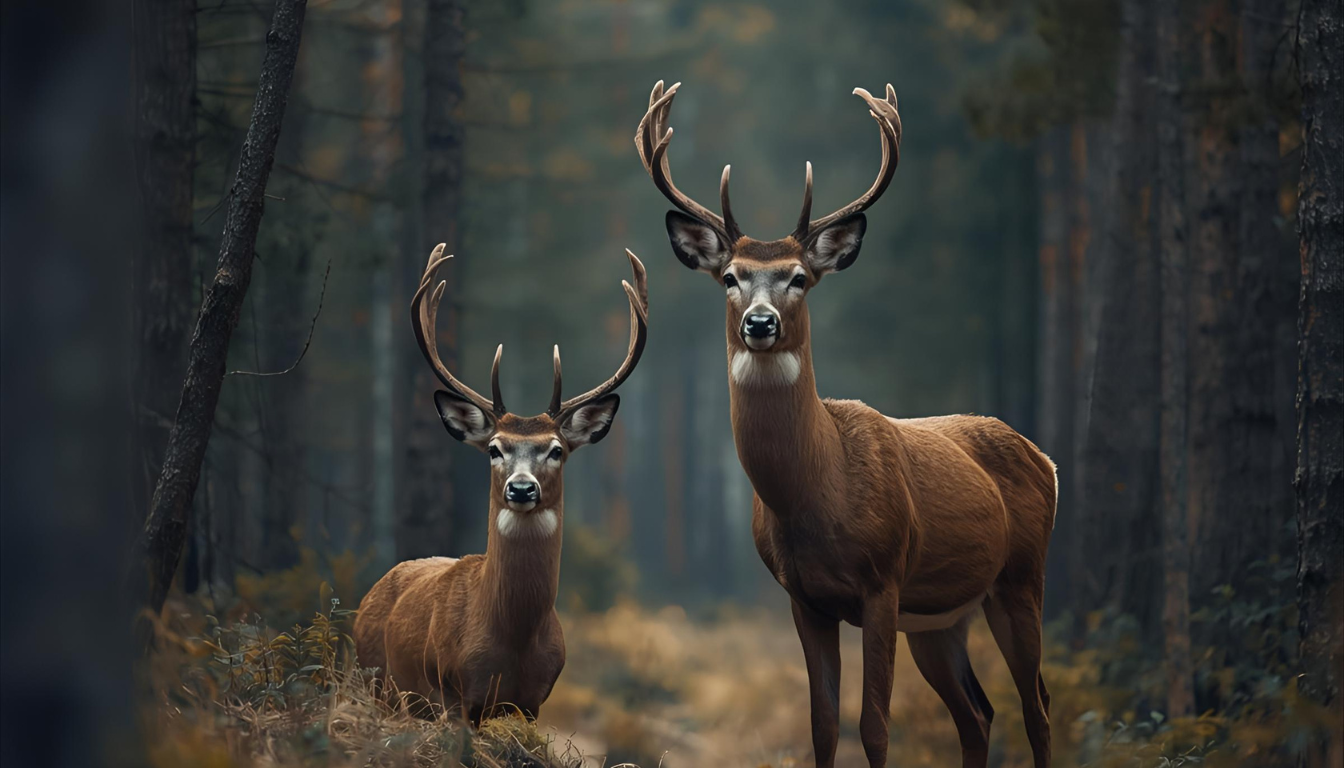
The forest dwelling deer is one of nature’s greatest survivalists. From camouflage and sharp senses to memory, stealth, group dynamics, and seasonal adaptability, these animals demonstrate intelligence and resilience that every hunter must respect.
Conclusion
For hunters, understanding these survival secrets is more than just strategy, it’s about entering the woods with knowledge, patience, and a deeper appreciation for the quarry you pursue. The forest dwelling deer is not only a challenge; it’s a teacher.
So the next time you step into the woods, remember you’re not just chasing a trophy. You’re entering the carefully balanced world of a master survivor. Approach it with respect, preparation, and skill, and your chances of success rise dramatically.
If you found these insights valuable, share them with your hunting buddies. The more we understand forest dwelling deer, the more rewarding every trip into the wild becomes.
Table of Contents
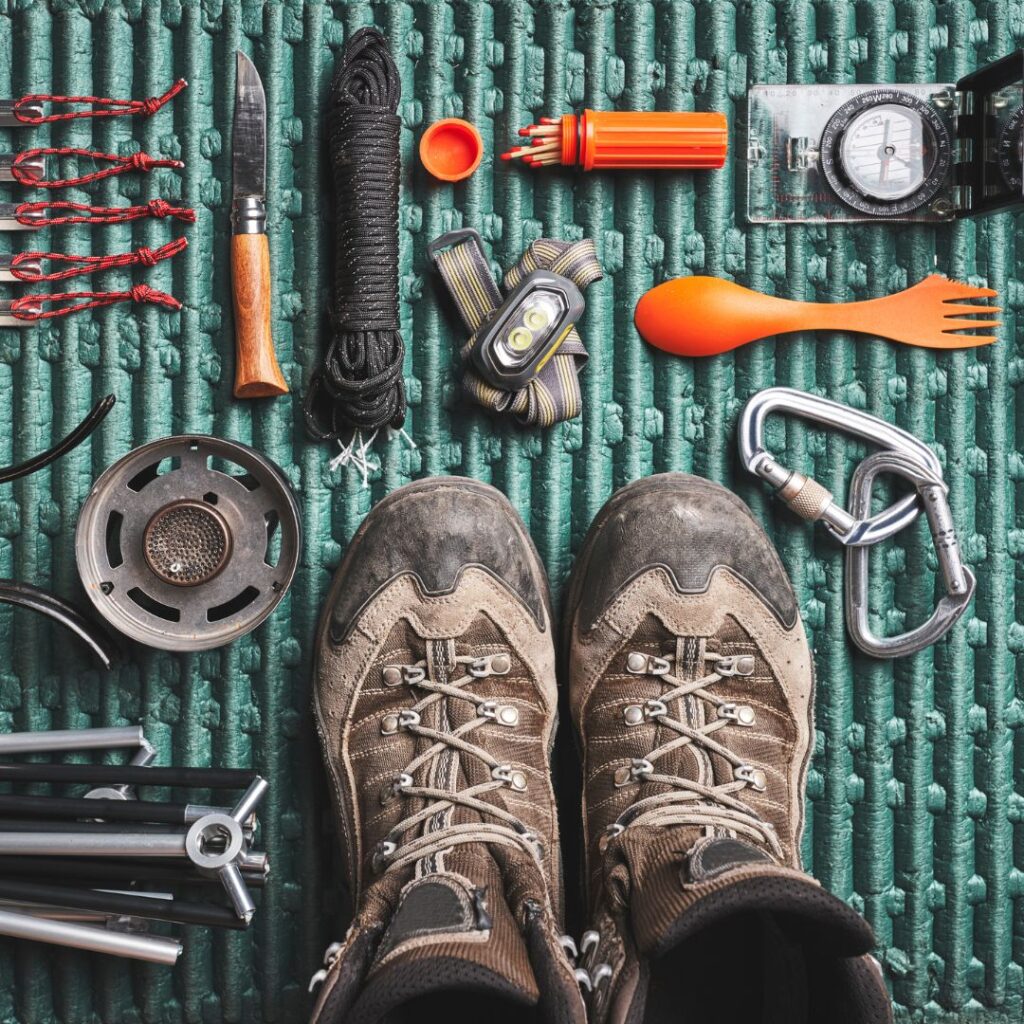
Have you ever hiked deep into the woods, only to realize you left behind one of the hunting accessories that could make or break your hunt? Every hunter knows that one forgotten tool can turn a promising day into a frustrating setback, often making the difference between success and going home empty-handed.
The truth is, skill alone won’t guarantee results—having the right hunting accessories in your pack can mean safer trips, better game visibility, and a more rewarding experience overall. Whether you’re new to the sport or a seasoned pro, these five essentials will keep you prepared and confident in the field.
1. Reliable GPS & Compass Hunting Accessories
When you’re deep in the woods, far from marked trails or familiar landmarks, navigation becomes one of the most critical skills a hunter can have. Even the most experienced outdoorsmen can get turned around in thick cover or low-visibility conditions. This is where navigation-focused hunting accessories play a vital role—not only for success but also for safety.
Why Navigation Tools Matter in the Field
Losing your sense of direction in the wilderness isn’t just frustrating; it can also be dangerous. Hunters often cover miles of rugged terrain while tracking game, and without reliable navigation tools, finding your way back can become a serious challenge. The right hunting accessories ensure you always know where you are, where you’re going, and how to return safely.
Modern GPS vs. Traditional Compass and Maps
Today’s hunters have the benefit of advanced GPS devices that provide real-time location tracking, topographic maps, and even waypoints for marking game trails or tree stands. A good GPS unit is compact, rugged, and designed with long battery life, making it an essential tool for modern hunting.
However, traditional tools like a compass and waterproof map still hold tremendous value. Unlike GPS devices, a compass doesn’t rely on batteries or satellites. In the event of dead batteries or a device malfunction, a compass paired with a detailed map becomes your most dependable backup. Smart hunters carry both—using the GPS for convenience and the compass as a fail-safe.
Must-Have Navigation Hunting Accessories
When packing for your next hunt, consider adding these essential navigation accessories to your gear list:
- GPS device with long battery life – Ideal for marking game trails, tracking routes, and navigating unfamiliar areas.
- Backup compass + waterproof map case – A lightweight, reliable tool that works in any condition.
- Headlamp or flashlight for low-light navigation – Crucial when traveling before dawn or after dusk.
Investing in these navigation hunting accessories doesn’t just make your trip easier—it ensures you return home safely and with confidence, ready to focus on spotting and scouting game.
2. Optics: Binoculars & Rangefinder Hunting Accessories

Spotting game at the right moment can determine whether your hunt ends in success or disappointment. Good optics are among the most valuable hunting accessories because they allow you to locate, identify, and assess animals from a distance without giving away your position. For hunters who spend hours scanning fields, ridgelines, or dense woodlands, reliable binoculars and a rangefinder are indispensable.
Why Optics Are Critical in Hunting
Wild game animals like deer, elk, or turkey are naturally alert and quick to detect movement. Approaching too closely without proper gear increases your chances of being spotted. With the right optics, you can scan large areas efficiently and pick out subtle details—like antler tips in tall grass or movement at the edge of a treeline. This not only improves your accuracy but also helps conserve energy during long hunts.
Binoculars vs. Rangefinders: What’s the Difference?
Binoculars are essential for scanning wide landscapes. A high-quality pair with good magnification and clarity lets you observe game at long distances and evaluate whether it’s worth pursuing. Look for lightweight, fog-proof, and waterproof binoculars that can withstand changing weather conditions.
On the other hand, a rangefinder provides precision. It measures the exact distance between you and your target, accounting for terrain and angles. This is especially useful for bowhunters and rifle hunters who need accurate range data to make ethical, effective shots. While binoculars are for finding game, rangefinders are for closing the deal.
Must-Have Optics Hunting Accessories
Every hunter should consider adding these optics to their gear bag:
- Lightweight, fog-proof binoculars – Perfect for long hours of scanning in various weather conditions.
- Rangefinder with angle compensation – Delivers accurate distance readings for better shot placement.
- Lens cloth + protective case – Keeps your optics clean and ensures long-term durability.
Together, binoculars and rangefinders make up a powerful combination of hunting accessories, giving you the advantage of both scouting game from afar and making precise, ethical shots in the field.
3. Survival & First Aid Hunting Accessories
When you’re miles from civilization, small problems can quickly become big emergencies. That’s why survival and first aid gear are among the most important hunting accessories you can carry. Whether it’s a twisted ankle, unexpected weather, or a minor cut while field dressing, being prepared can keep a simple hunt from turning into a dangerous situation.
Why Survival Gear Matters for Hunters
Hunting often takes you deep into remote terrain where help isn’t readily available. A slip on wet rocks, sudden storms, or even fatigue can put you at risk. Having the right survival-focused hunting accessories means you’re equipped to handle the unexpected. It’s about protecting yourself so you can enjoy the hunt with peace of mind.
Essential First Aid & Survival Tools
A compact first-aid kit is non-negotiable. Stock it with bandages, antiseptic wipes, blister pads, and pain relievers—items that address common field injuries. Pair this with a sturdy hunting knife or multi-tool, which doubles for emergency repairs and survival tasks. Fire-starting tools like a ferro rod or waterproof matches are also vital, ensuring you can build a fire for warmth or signaling if you’re stranded.
Another often-overlooked accessory is an emergency blanket. Lightweight yet incredibly effective, it retains body heat and can even serve as temporary shelter. These essentials weigh very little but can be lifesavers in the field.
Must-Have Survival Hunting Accessories
To stay safe and prepared, make sure your pack includes:
- Compact first-aid kit – For cuts, scrapes, blisters, and basic medical needs.
- Firestarter (ferro rod or waterproof matches) – A reliable way to build warmth or signal for help.
- Multi-tool or hunting knife – Versatile gear for cutting, repairs, or emergencies.
- Emergency blanket – Lightweight protection against hypothermia and sudden weather changes.
Carrying these survival-focused hunting accessories ensures you’re not just hunting smart, but also hunting safe—ready for whatever the wilderness throws at you.
4. Clothing & Scent Control Hunting Accessories
When it comes to staying undetected in the field, your clothing and scent management can be just as important as your weapon. Animals like deer have extremely sharp senses—keen eyesight and an even sharper nose. Without the right hunting accessories for concealment, you risk spooking game before you ever get a clear shot.
Why Concealment Matters in Hunting
Wild game are experts at detecting predators. A flash of unnatural color or the faintest trace of human scent can send them running. Proper camo clothing and scent control hunting accessories help you blend into your surroundings and mask your presence. This allows you to get closer, remain undetected, and ultimately increase your chances of a successful hunt.
Clothing for Comfort and Stealth
Your hunting apparel should serve two purposes: protect you from the elements and make you invisible to game. Choose camouflage patterns that match the terrain—woodlands, fields, or snowy environments. Insulated layers are essential in cold conditions, while lightweight, breathable fabrics are best for early-season hunts. And don’t overlook durable, waterproof boots—these keep you comfortable and quiet while covering long distances.
Scent Control for Staying Undetected
Even with the perfect camo, your scent can give you away. That’s why scent-control hunting accessories are vital. Scent-eliminating sprays, carbon-layered clothing, and scent-blocking bags for gear storage all reduce the chances of deer catching your smell. The less detectable you are, the closer you can get without alerting your target.
Must-Have Concealment Hunting Accessories
Add these essentials to your gear bag for better concealment:
- Insulated camo gear – Weather-appropriate clothing that blends with the environment.
- Scent-control sprays or scent-blocking clothing – Reduces human odor in the field.
- Waterproof, durable hunting boots – Keeps you dry, quiet, and mobile in any terrain.
By combining the right clothing with scent control hunting accessories, you’ll stack the odds in your favor—staying hidden, comfortable, and prepared for long hours in the wild.
5. Game Processing & Call Hunting Accessories
A successful hunt doesn’t end when you spot your target—it continues through calling, harvesting, and properly processing your game. That’s why game processing tools and calling devices are must-have hunting accessories for every serious hunter. They not only improve your chances of drawing game closer but also ensure you handle your harvest efficiently and respectfully.
Why Calls and Processing Tools Matter
Wild animals don’t always wander into shooting range on their own. Calls mimic natural sounds like grunt calls, doe bleats, or rattling antlers to spark curiosity or trigger dominance responses. Using the right hunting calls at the right time can make the difference between an empty day and a filled tag.
Once the hunt is successful, game processing becomes just as important. Field dressing ensures the meat stays clean and fresh, while proper storage and transport preserve your hard-earned harvest. Having the right tools keeps the process safe, fast, and effective.
Calls for Luring Game
Different calls serve different purposes depending on the season and the species you’re targeting. Grunt calls work well during the rut to attract bucks, while doe bleats appeal to curiosity or maternal instincts. Rattling antlers can trigger aggressive responses from dominant males. Adding these hunting accessories to your kit gives you more control over your hunt.
Processing Tools for the Field
Field dressing requires precision and care. A sharp hunting knife or complete field dressing kit allows you to process the animal quickly and safely. Game bags are also essential, keeping the meat clean and cool during transport. For hunters planning future trips, trail cameras are excellent scouting accessories, helping track movement patterns before you even set foot in the field.
Must-Have Game Processing & Call Hunting Accessories
Keep these items in your hunting pack:
- Deer calls (grunt calls, doe bleats, rattling antlers) – Attract and lure game effectively.
- Field dressing kit (gloves, knives, bone saw) – Safe and efficient game processing.
- Game bags – Protect harvested meat during transport.
- Trail camera – Scout game movement for future hunts.
With the right combination of calls and processing hunting accessories, you’ll not only increase your success in the field but also ensure your harvest is handled with skill and care.
Conclusion
Success in the field doesn’t happen by chance—it’s the result of preparation, skill, and the right gear. From navigation tools that keep you safe, to optics that sharpen your vision, to clothing, scent control, and game processing essentials, these hunting accessories give you every advantage nature allows.
Now it’s your turn: What’s the one hunting accessory you never head into the field without? Drop your answer in the comments—we’d love to hear from fellow hunters. And if you found these tips useful, don’t keep them to yourself. Share this post with a hunting buddy who could use a gear upgrade, and follow us on social media for more field-tested advice, expert tips, and gear recommendations to make your next hunt your best one yet.
]]>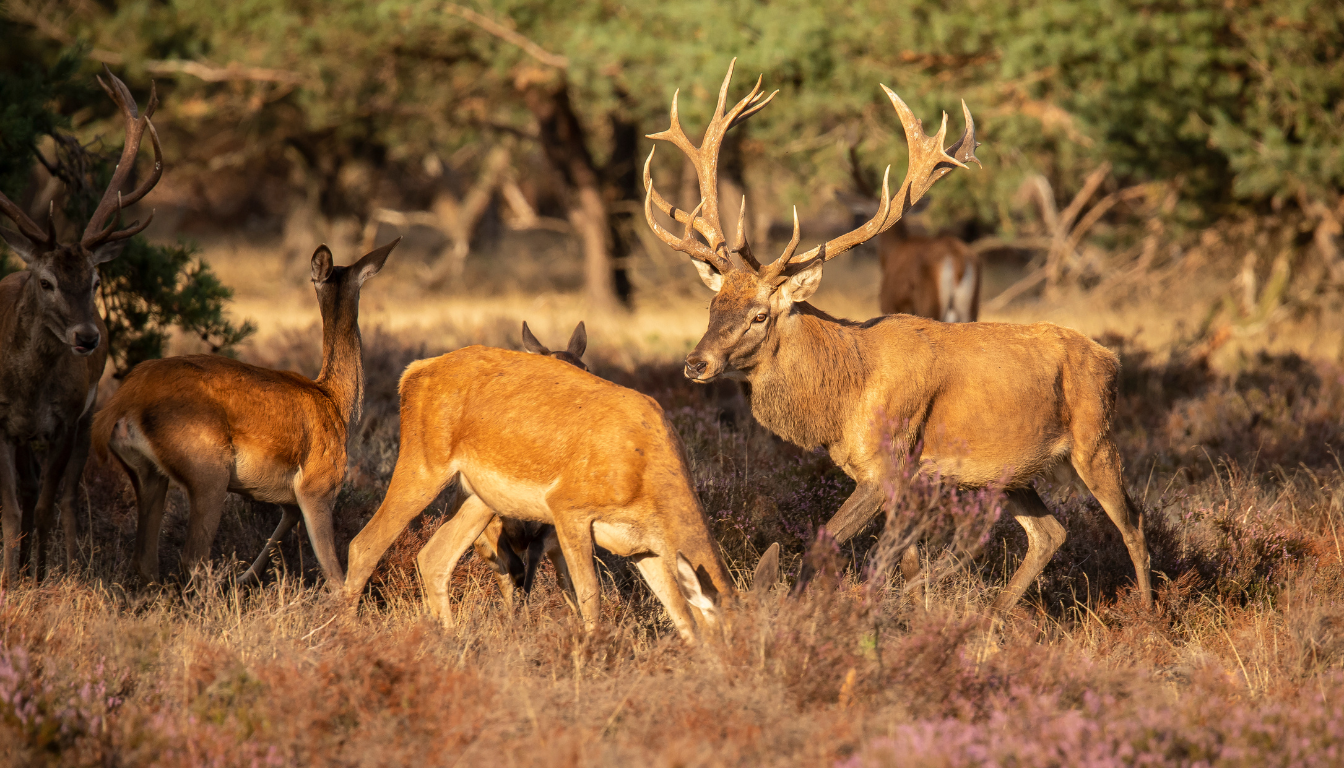
Red deer are some of the most impressive and sought-after game animals in the world. Known for their majestic antlers, powerful presence, and adaptability, they have fascinated hunters, conservationists, and nature lovers for centuries.
From the misty highlands of Scotland to the dense forests of Eastern Europe, red deer roam in herds that command both respect and admiration.
But how much do you really know about red deer? Many hunters are familiar with their size or the iconic image of a stag in rut, roaring across a valley. Yet behind the scenes, red deer have survival strategies, behaviors, and cultural importance that go far beyond the hunt.
In this post, we’ll uncover five amazing facts about red deer, hunters should know. These insights will not only deepen your understanding of these magnificent creatures but also sharpen your hunting skills. Whether you’re preparing for your first stalk or have years of experience in the field, knowing more about red deer can give you the edge.
Let’s get started.
Fact 1: Red Deer Are Among the Largest Deer Species
When it comes to size and stature, red deer are giants. They are one of the largest species in the deer family, second only to elk and moose.
- Stags (males): Can weigh between 350–530 pounds (160–240 kg) and stand up to 4 feet (1.2 meters) at the shoulder.
- Hinds (females): Smaller, usually weighing between 260–370 pounds (120 – 170 kg).
- Antlers: Mature stags grow spectacular branching antlers that can stretch over 1 meter wide and weigh up to 15 kg.
These antlers aren’t just for show. Each year, red deer stags shed and regrow them, with antlers getting bigger and more elaborate as the stag ages. During the rut, stags use these antlers to battle rivals, a dramatic contest of strength and dominance that determines breeding rights.
For hunters, this size matters. Tracking a red deer requires patience and skill, as these powerful animals can move surprisingly quickly through rough terrain. Field dressing and transporting such a large animal is also a challenge, demanding preparation and the right equipment.
Imagine standing on a hillside and watching a mature stag emerge from the mist, antlers catching the light. It’s a sight that commands respect and one that every hunter treasures.
Fact 2: Seasonal Behavior and the Rut
One of the most thrilling aspects of hunting red deer is experiencing the rutting season. This dramatic event happens once a year, usually in late September through October, depending on the region.
During the rut:
- Stags roar loudly to attract hinds and to warn off rivals. This “roaring” is one of the most distinctive sounds in nature.
- Antler battles take place, sometimes lasting minutes as two stags lock horns in displays of strength.
- Stags often go without eating for days, losing weight as they focus entirely on breeding.
For hunters, the rut is both an opportunity and a challenge. On one hand, stags are more vocal and visible, making them easier to locate. On the other hand, they become highly aggressive and unpredictable. A roaring stag in the wild is thrilling to witness but demands caution and respect.
The timing of the rut can vary slightly depending on geography and climate. In Scotland, for example, the highland hills echo with stag roars in October, while in parts of Eastern Europe, the rut may start earlier.
Hunters often describe the rut as an unforgettable experience. Hearing the deep, guttural roar of a stag at dawn is enough to raise the hair on your neck and remind you why red deer are so legendary.
Fact 3: Adaptability Across Habitats
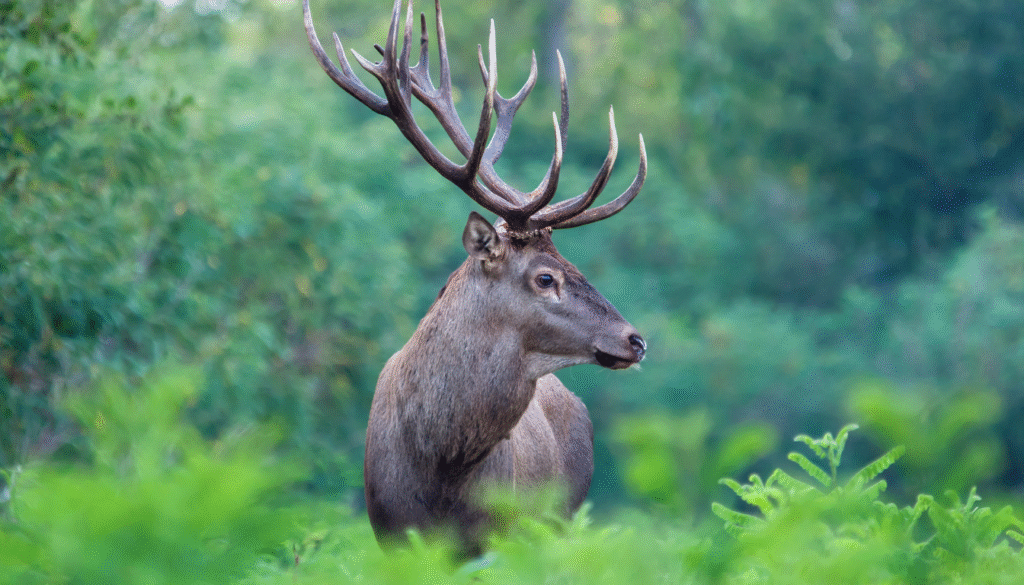
Another amazing fact about red deer is their ability to thrive in a wide range of habitats. Unlike some deer species that are limited to certain environments, red deer adapt remarkably well.
- Forests: Dense woodland provides cover, food, and security for hinds and calves.
- Moorlands & Grasslands: Stags are often spotted grazing in open country where visibility is greater.
- Highlands & Mountains: In Scotland, red deer are icons of the highlands, navigating rugged terrain with ease.
- Agricultural Land: In some areas, red deer adapt to farmland, feeding on crops and causing conflicts with farmers.
Their adaptability also extends to their diet. Red deer eat grasses, herbs, leaves, bark, and even heather in harsher climates. This ability to shift feeding habits with the seasons ensures survival in challenging conditions.
For hunters, understanding habitat is crucial. Stalking techniques differ in open landscapes compared to thick forests. In wide, open moorlands, long-range glassing and careful stalking are key. In woodland, moving quietly and reading deer signs becomes more important.
This adaptability is one reason red deer are found across Europe, Asia, and even New Zealand (where they were introduced for hunting). Wherever they live, they find a way to survive and flourish.
Fact 4: Social Structure and Herd Dynamics
Red deer live in herds, and their social structure is both fascinating and important for hunters to understand.
- Hinds and calves: These typically live in herds led by an older hind. These groups provide safety in numbers.
- Stags: Outside the rut, stags form bachelor groups. They only join the hind herds during the breeding season.
- During the rut: Stags fight for control of harems of hinds, sometimes guarding 10–20 females at a time.
Communication within herds is subtle but effective. A hind spotting danger may raise her head sharply, stomp a foot, or bolt suddenly, sending the entire herd running. For hunters, this means a single mistake: one snapped twig or careless movement can alert dozens of deer at once.
Understanding group behavior can make or break a hunt. If you can anticipate how a herd will move or react, you can position yourself more effectively. But if you misjudge, hours of careful stalking can unravel in seconds.
Hunters often describe the tension of watching a herd of red deer. Every movement feels magnified, every sound critical. When a hind locks eyes with you, heart pounding, you know the outcome could go either way.
Fact 5: Conservation and Hunting Heritage
The last amazing fact about red deer goes beyond biology, it’s about culture, history, and conservation. Red deer have been central to human hunting traditions for thousands of years.
Cave paintings in Europe show that red deer were hunted in prehistoric times. In medieval Europe, stag hunting was considered a sport of kings.
Today, red deer remain deeply embedded in hunting heritage, especially in countries like Scotland, Hungary, and Germany. The sight of a roaring stag or a stag’s head mounted as a trophy carries centuries of symbolism.
But with this heritage comes responsibility. Conservation plays a vital role in ensuring healthy red deer populations. In some areas, populations are carefully managed to prevent overgrazing and to maintain balance with other wildlife.
In other places, red deer numbers have expanded so much they threaten ecosystems, requiring regulated culling.
For hunters, this means participating in a tradition that’s as much about stewardship as it is about sport. Respect for the animal and the land is at the core of ethical hunting. Pursuing red deer isn’t just about the harvest, it’s about preserving a heritage for future generations.
Conclusion
The red deer is a creature of majesty, strength, and resilience. From their commanding size and awe-inspiring antlers to their unforgettable rutting season, adaptability across habitats, complex herd dynamics, and deep cultural heritage, these animals embody the spirit of wild hunting traditions.
For hunters, each of these five amazing facts about red deer offers not just knowledge, but practical insight. Understanding their size prepares you for the physical demands of the hunt. Learning their seasonal behavior sharpens your timing.
Recognizing their adaptability improves your scouting. Reading herd dynamics keeps you one step ahead. And appreciating their heritage reminds you of the responsibility that comes with the chase.
When you step into the woods, hills, or highlands, remember you’re not simply pursuing game. You’re engaging with a species that has survived for millennia and inspired countless generations of hunters. That’s why hunting red deer is more than sport, it’s a privilege.
If this guide has deepened your respect for red deer, share it with your hunting friends and drop a comment about your own red deer experiences.. The more we learn about red deer, the more meaningful every trip into the wild becomes.
]]>Food plot and feeding deer are two of the most powerful tools hunters can use to attract, sustain, and pattern whitetails. Ask any seasoned hunter, and they’ll tell you success doesn’t come down to chance alone.
While patience, skill, and timing play huge roles, having a well-planned food plot and feeding system is often the real difference between watching deer from afar and having them within range.
Food plots and deer feeding strategies aren’t just about pulling deer closer during hunting season. They improve herd health, support antler growth, and make deer movements more predictable throughout the year. By creating an environment where deer find consistent food sources, you’re not only increasing your odds of success but also building healthier herds on your land.
This guide will walk you through everything from choosing the right crops and planting techniques to seasonal feeding approaches and ethical considerations.
Whether you’re planting your very first plot or fine-tuning a property you’ve managed for years, this resource will help you master food plots and feeding deer strategies that truly work.
1. Food Plots and Their Role in Deer Hunting
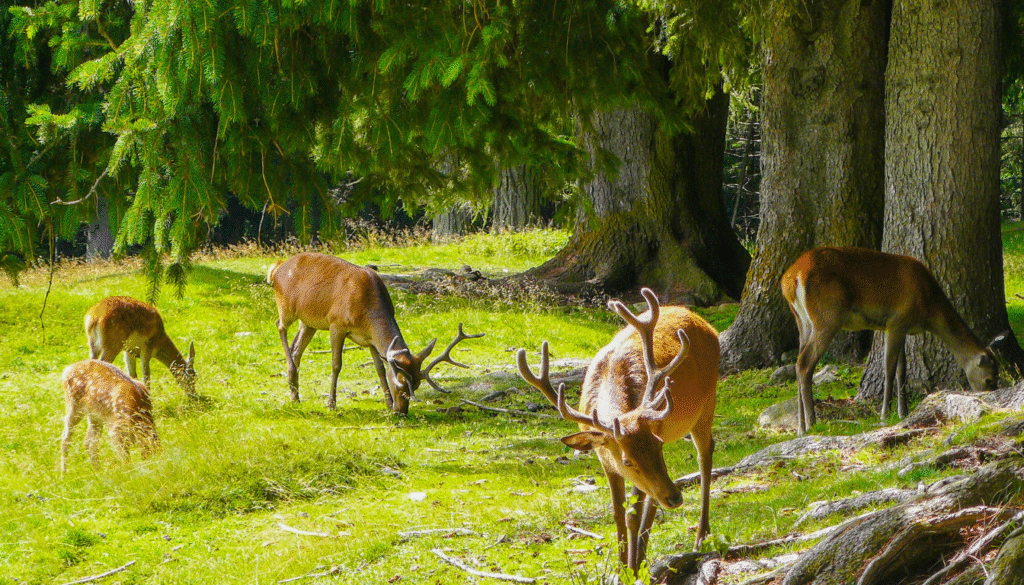
A food plot is simply a section of land prepared and planted to provide deer with supplemental nutrition. But for hunters, a food plot and feeding strategy is more than just a patch of greenery, it’s a way of shaping deer behavior.
Hunters typically use two styles of plots. Larger nutrition plots are meant to sustain deer year-round, while smaller hunting plots are designed to draw them close to a stand or blind during hunting season.
When paired with smart feeding practices, these plots make deer more predictable, giving hunters a clear edge while also ensuring the animals remain well-fed and healthy.
2. Types of Food Plots Every Hunter Should Consider
Choosing the right food plot and feeding deer plan depends on your goals and land. Perennial plots such as clover and chicory are excellent for long-term nutrition, often lasting several years with proper care. They’re reliable, especially in spring and summer, and require less replanting once established.
Annual plots, on the other hand, are seasonal but highly effective. Corn, soybeans, and brassicas grow quickly and provide attraction when it matters most in fall and winter. Many hunters plant both perennials and annuals to strike a balance between long-term nutrition and seasonal attraction.
You’ll also want to think about timing. Warm-season crops like soybeans thrive in spring and summer, while cool-season options such as oats and turnips shine in fall and winter. A food plot and feeding system that rotates crops through the year keeps deer coming back month after month.
3. Choosing the Right Food Plot for Your Land
No two hunting properties are the same, which is why tailoring your food plot and feeding deer strategy to your land is so important. Start by testing your soil so you know what nutrients it needs. From there, consider your property size, local climate, and what natural food sources already exist nearby.
If your area is surrounded by cornfields, plant something different to diversify. If you have a smaller property, focus on one or two well-placed hunting plots near cover, where deer will feel secure feeding.
Every decision you make about where and what to plant should work toward your ultimate goal: keeping deer on your property and within range.
4. Planting and Maintaining Food Plots
Planting a food plot and feeding deer may sound simple, but success comes down to preparation. Healthy soil is the foundation, so never skip a soil test.
Once you’ve corrected pH and added necessary fertilizer, prepare a clean seedbed by removing weeds and brush. Plant your chosen seeds at the right depth and spacing, then monitor growth closely.
Maintenance is just as important. Clover plots benefit from mowing to reduce weeds, while annual plots may need reseeding each year.
Crop rotation also keeps the soil fertile and prevents pests from building up. Many new hunters make the mistake of skipping these steps, but the truth is, food plots only perform well when they’re maintained with care.
5. Feeding Deer Beyond Food Plots
While food plots are the foundation, they’re not the whole story. A complete food plot and feeding deer plan often includes supplemental strategies.
Mineral sites, for example, are invaluable in spring and summer when bucks are growing antlers and does are nursing fawns. Feeders can also play a role, providing consistent access to grains where legal.
Beyond manufactured options, you can enhance natural browse by encouraging native plants, improving timber stands, or even using controlled burns. These habitat improvements often complement food plots, ensuring deer always have something to eat regardless of the season.
6. Seasonal Food Plot and Feeding Strategies
Deer diets change throughout the year, and your food plot and feeding strategy should adapt as well. In spring and summer, deer need protein-rich nutrition to grow strong and healthy. Soybeans, clover, and alfalfa are excellent choices during these months.
As fall approaches, the focus shifts to attraction. Brassicas, turnips, and oats provide irresistible feeding opportunities during hunting season, drawing deer into predictable patterns.
Once winter arrives, energy-rich food like corn and winter wheat help deer survive cold, scarce months. By rotating your plantings and feeding strategies with the seasons, you create a year-round buffet that keeps deer close.
7. Overcoming Common Challenges
Even the best-laid food plot and feeding deer plans come with obstacles. The weather is one of the biggest. Drought can ruin young crops, while flooding can wash away seeds. Choosing the right crop for your soil and climate reduces these risks.
Another challenge is heavy browsing, especially on small plots. If deer wipe out a crop before it establishes, protective fencing or larger planting areas may be necessary.
Weeds, pests, and limited budgets also present hurdles, but creative hunters often find solutions from spot spraying weeds to planting cost-effective crops like clover that deliver great results without breaking the bank.
8. Ethical and Legal Considerations
Every food plot and feeding deer plan should follow local hunting laws. In many areas, placing corn or feed during hunting season is considered baiting and may be illegal.
Beyond regulations, there’s also the question of ethics. Over-reliance on feeding can reduce the principle of fair chase. A balanced approach that combines food plots, habitat management, and supplemental feeding ensures a sustainable, ethical strategy that benefits both hunters and deer.
Conclusion
At the end of the day, hunting success isn’t luck — it’s preparation. A well-thought-out food plot and feeding deer strategy gives you a clear advantage while supporting healthier herds on your property. From spring nutrition plots to fall attraction crops, from mineral sites to habitat improvements, every decision adds up to stronger deer, more predictable movement, and better opportunities when you’re in the stand.
Remember, planting a seed today could mean harvesting the buck of a lifetime tomorrow. The more effort you put into your land, the greater the rewards both for you and for the deer you pursue.
If you haven’t started your food plot and feeding deer plan yet, this season is the perfect time. Test your soil, pick the right crops, and take that first step toward transforming your property into a whitetail paradise. Share your food plot and feeding deer experiences.
]]>
As the leaves begin to turn and the crisp autumn air settles in, hunters across Ohio are gearing up for another exciting deer hunting season. But before you head out into the woods, it’s crucial to stay informed about the latest updates to Ohio’s deer hunting regulations for 2025. The Ohio Department of Natural Resources (ODNR) Division of Wildlife has announced several changes aimed at improving wildlife management, enhancing hunter safety, and ensuring a sustainable deer population. Whether you’re a seasoned hunter or new to the sport, here’s everything you need to know about the 2025 Ohio deer hunting regulations.
Key Changes to Ohio Deer Hunting Regulations in 2025
- New Bag Limits for Antlerless Deer
One of the most significant updates for 2025 is the adjustment to antlerless deer bag limits. In an effort to balance the deer population and promote healthier herds, the ODNR has introduced county-specific bag limits. Hunters in certain counties with higher deer densities will be allowed to harvest more antlerless deer, while counties with lower populations will see stricter limits. Be sure to check the updated county-by-county regulations before heading out, as these limits vary significantly across the state. - Expanded Youth Hunting Opportunities
The 2025 season brings great news for young hunters! Ohio has expanded its youth deer hunting opportunities by adding an additional weekend to the youth-only hunting season. This change is designed to encourage more young people to participate in hunting and learn the importance of conservation. The youth season will now run for two consecutive weekends in early November, giving families more time to create lasting memories in the field. - Mandatory Harvest Reporting
Starting in 2025, all deer hunters in Ohio will be required to report their harvest within 24 hours of taking a deer. This new regulation aims to improve data collection and help wildlife biologists make more informed decisions about deer management. Hunters can report their harvest through the ODNR’s mobile app or online portal. Failure to report a harvest could result in penalties, so make sure to comply with this new rule. - Changes to Antler Point Restrictions
In certain counties, the ODNR has implemented antler point restrictions (APRs) to promote the growth of older, larger bucks. For 2025, hunters in these counties will be required to harvest bucks with at least three points on one side of their antlers. This regulation is intended to improve the age structure of the buck population and provide hunters with more opportunities to harvest mature deer. - New Public Land Hunting Opportunities
Ohio continues to expand access to public hunting lands. In 2025, several new areas will be opened to deer hunting, providing hunters with more options for pursuing their game. These additions include state forests, wildlife areas, and cooperative hunting areas. Be sure to review the updated maps and regulations for these new locations before planning your hunt.
Why These Changes Matter
The updates to Ohio’s deer hunting regulations for 2025 are not just about rules and restrictions—they’re about ensuring the long-term health of the state’s deer population and the sustainability of the hunting tradition. By adjusting bag limits, expanding youth opportunities, and improving data collection, the ODNR is taking a proactive approach to wildlife management. These changes reflect a commitment to balancing the needs of hunters, landowners, and the ecosystem.
For hunters, these updates mean more opportunities to enjoy the sport while contributing to conservation efforts. By adhering to the new regulations, you’re playing a vital role in maintaining Ohio’s rich hunting heritage for future generations.
Tips for a Successful 2025 Deer Hunting Season
- Plan Ahead
With the new county-specific bag limits and antler point restrictions, it’s more important than ever to plan your hunt in advance. Research the regulations for the counties you plan to hunt in and familiarize yourself with the new public land opportunities. - Use Technology to Your Advantage
The ODNR’s mobile app is a valuable tool for hunters. Use it to report your harvest, check regulations, and even scout hunting locations. Staying connected and informed will help you make the most of your hunting experience. - Focus on Safety
While the thrill of the hunt is undeniable, safety should always be your top priority. Wear blaze orange, practice proper firearm handling, and let someone know your hunting plans before heading out. - Get Involved in Conservation
Hunting is about more than just harvesting deer—it’s about being a steward of the land. Consider participating in local conservation efforts or volunteering with organizations that support wildlife management. Your involvement can make a real difference.
What Hunters Are Saying About the 2025 Updates
The response to the 2025 regulations has been largely positive, with many hunters praising the ODNR for its efforts to improve deer management. “I’m excited about the new public land opportunities,” says longtime Ohio hunter Mark Johnson. “It’s great to see the state making more areas available for hunting.” Others have expressed appreciation for the expanded youth season, noting that it’s a fantastic way to introduce the next generation to the sport.
However, some hunters have raised concerns about the mandatory harvest reporting requirement, citing potential challenges for those without reliable internet access. The ODNR has acknowledged these concerns and is working to provide alternative reporting methods for hunters in remote areas.
Final Thoughts
The 2025 Ohio deer hunting season promises to be an exciting one, with new opportunities and updated regulations designed to benefit both hunters and wildlife. By staying informed and following the rules, you can enjoy a safe and successful hunt while contributing to the conservation of Ohio’s deer population.
As always, the ODNR encourages hunters to provide feedback on the new regulations. Your input helps shape the future of deer hunting in Ohio, ensuring that it remains a cherished tradition for years to come. So, grab your gear, review the latest regulations, and get ready for an unforgettable hunting season in the Buckeye State!
“
]]>
This is a step-by-step to mastering still hunting. Imagine standing still in a thicket, holding your breath as a deer stops 30 yards away. Its ears move, checking the forest. This is still hunting.
For generations, hunters have used this method to stalk game without modern tools. It shows that still hunting techniques are still crucial today.
This guide will make your hunting skills top-notch. You’ll learn to track whitetail deer in Wisconsin or elk in Colorado’s high country. You’ll move like a shadow and read the landscape like a pro.
Still hunting is more than a method; it’s a mindset. It requires control over every step, breath, and glance.
You’ll learn to master the stalking game through terrain analysis, scent control, and animal behavior psychology. We’ll share professional hunting methods, like silent foot placement and reading wind patterns. Each lesson aims to turn instinct into expertise.
By the end, you’ll see why still hunting is key to ethical hunting. It’s not just about tagging game; it’s a test of perseverance and a connection to the wild. Are you ready to learn the secrets of moving unseen?
Understanding the Fundamentals of Still Hunting
Still hunting is a skill that mixes patience with keen observation. It’s different from stand or drive hunting because you move quietly. You watch for signs of the game as you go.
This method blends stealth with smart movement. It stands out from just sitting still or rushing around.
What Sets Still Hunting Apart from Other Hunting Methods
Traditional hunting often means waiting in one spot or using dogs and callers. Still hunting, though, is about slow, careful steps. It helps you move without being seen.
This approach beats using trail cameras or decoys. It’s simple and relies on natural instincts, not just gear.
The Historical Evolution of Still Hunting Techniques
Indigenous people first used still hunting to understand landscapes and animal behavior. Early settlers adopted it too. Over time, it evolved but kept its core principles.
Today, hunters mix old wisdom with new knowledge of animal behavior. This shows that quiet methods can outdo loud ones in the right places.
Why Still Hunting Remains Effective in Modern Times
Still hunting is cost-effective and works on many terrains. It’s great for dense forests or open fields, where patience wins over technology. Learning these basics gives you a valuable skill for places where other methods fail.
Essential Gear for Successful Still Hunting
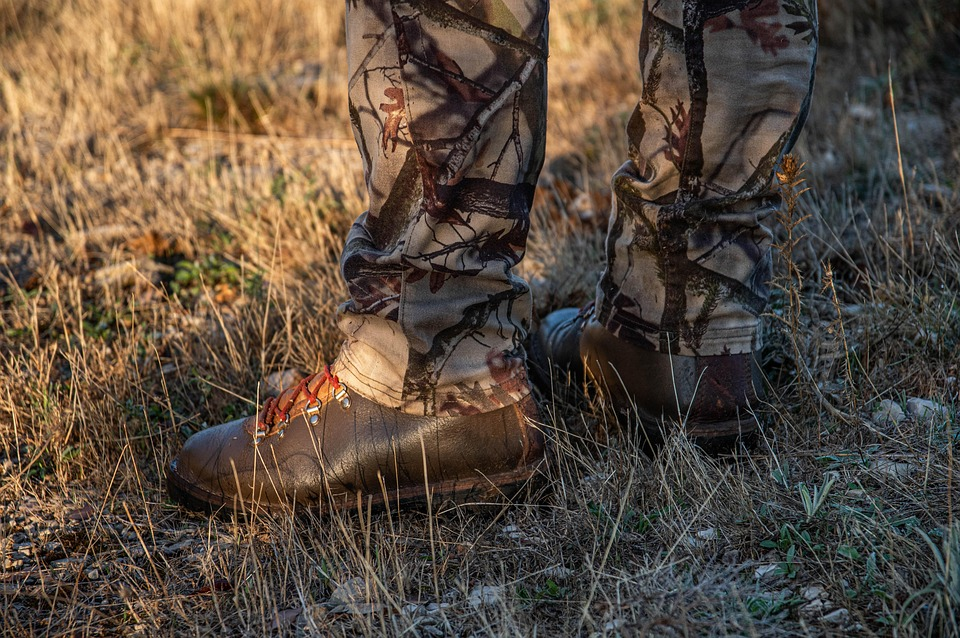
Choosing the right still hunting equipment is key to creeping and staying hidden. Start with footwear designed for silent steps. Boots like LaCrosse’s UltraLight or Danner’s Hale Storm are great. They keep you steady on different terrains without weighing you down.
A rugged, well-equipped hunting setup rests in a secluded forest clearing. In the foreground, a weathered leather backpack and a sturdy rifle with a telescopic sight stand ready. Beside them, a camouflage-patterned jacket and pants hang neatly. In the middle ground, a pair of comfortable hiking boots and a pair of binoculars lie on a moss-covered log. The background features a dense canopy of towering evergreen trees, casting a serene, dappled light across the scene. The overall atmosphere evokes a sense of preparedness, patience, and a deep connection with the natural world.
Camouflage clothing is also crucial. Look for layering systems from Sitka or Real Tree. These offer modern moisture-wicking fabrics and patterns that blend with your surroundings. Choose materials that reduce rustling, like Primal insulation or wind-resistant outer layers.
Scent control products are essential. Use sprays and clothing treatments from Scent Blocker or Primos to hide your scent. Carry scent-neutralizing packs in your pack to refresh your cover during long sits.
Compact optics like Bushnell’s Legend Ultra HD binoculars are great for scanning without bulk. For weapons, consider a lightweight crossbow or bow. Mathews’ Axis X is agile, while a rifle like the Remington 700 in .243 calibers balances power and portability.
Accessories can make a big difference. Shooting sticks from Tink’s reduce noise, and silent slings from Tenkara USA keep gear secure. Invest in scent-free packs and lightweight calls tailored to your target species.
Mastering the Art of Still Hunting: A Step-by-Step Guide
Success in still hunting comes from mastering key skills. This guide will help you improve your abilities. It turns theory into action.
Developing the Right Mindset for Still Hunting
Still hunting requires patience. Start by training your focus during everyday activities. Slow your breathing and notice small details in the city.
Practice tracking animal signs in your backyard. This prepares you for hunting. Discipline and calmness are essential for success.
Perfecting Your Movement Techniques
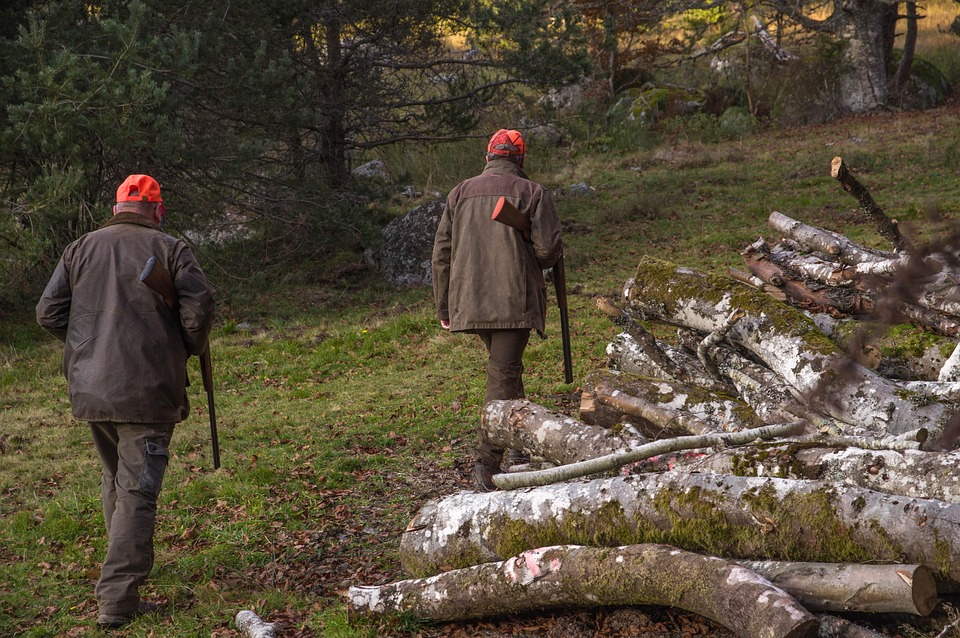
Good still hunting involves controlled movement. Take two steps, pause, and freeze if you see the game. Step softly and test the ground before moving.
Use natural barriers like rocks to hide your sound. Practice in different terrains to build muscle memory.
Controlling Your Scent and Sound
Start scent control by washing gear in unscented detergents like Nikwax Tech Wash. Shower with scent-free soap before hunting. Always approach the game from downwind.
Use wind vanes to track the wind. Spritzing Scent Stop UV adds an extra layer of protection.
Optimizing Your Visual Awareness
Sharpen your visual skills by scanning systematically. Look from left to right at different heights. Train to spot deer ears or antlers in trees.
Use your peripheral vision to spot movement without moving your head. Practice in wooded areas to improve your skills.
Weather Conditions and Their Impact on Still Hunting Success
Weather plays a big role in every still hunt. Learning to adapt to different weather conditions can turn challenges into advantages. This section will show you how to use wind, rain, and temperature to your advantage.
Hunting in Wind, Rain, and Snow
When hunting in the wind, it’s key to face it to hide your scent. If there’s a crosswind, you’ll need to move to stay hidden. Rain can help mask your movements, but watch out for muddy spots.
Tracking in the snow is all about following prints. But move slowly to avoid sinking or making too much noise.
Temperature Considerations for Different Game
Temperature affects how game behaves. Whitetail deer are more active when it’s below 50°F. Elk tend to stay quiet during the hottest part of the day.
Adjust your hunting strategy based on the species you’re after. Cold mornings can be great for spotting animals, while very hot days make them less active.
Using Weather Forecasts to Plan Your Hunt
Weather forecasts can help you plan your hunt. Look for times when animals are more active, like before a storm or after the weather has changed. Plan your hunt for cool, calm days after rain or snow for the best chance of success.
Terrain Analysis for Strategic Still Hunting
Learning about hunting terrain features begins with map study. Spot ridges, draws, and valleys to guess where animals move. Topographic layers show where game paths are, helping you pick better spots.
GPS apps like OnX Hunt or DeLorme help find game travel corridors. Look for narrow passes or stream crossings where animals gather. These spots increase your chances of success.
Focus on habitat edge hunting where forests meet meadows or thicket border fields. Animals often stop at these edges, giving you a clear shot. Stay downwind of these areas.
Study elevation changes to guess animal paths. Animals prefer easy routes—ridges for warmth, creek bottoms in rain. Use natural cover like boulders or fallen logs to hide.
Practice scouting with aerial maps. Note pinch points and funnels. When hunting, move along contour lines to stay hidden. Analyzing terrain turns it into your ally, not a barrier.
Tracking and Sign Reading Essentials

Learning to track and read signs turns the forest into a map. Begin with animal track identification to understand movement. Look at track depth and mud to guess how old they are. A fresh print with sharp edges means recent activity.
Study the direction of claw marks or hooves to guess where animals are going.
Identifying and Interpreting Animal Tracks
Track patterns show how animals behave. Deer tracks pointing inward mean they’re running away. Tracks pointing outward mean they’re coming towards you.
Use a stick to measure track size—deer hooves are usually 2-4 inches. Look for tracks in mud or snow for animal track identification. Practice drawing tracks in a journal to get better.
Understanding Feeding Signs and Patterns
Deer feeding signs show torn leaves above 18 inches. Elk or moose make taller breaks. Look at chew marks: rough edges mean recent eating.
Rub lines on trees with game trail patterns near food show active areas. Track when leaves are stripped at dawn or dusk for ambush times.
Recognizing Bedding Areas and Travel Routes
Wildlife bedding areas are hidden in thickets with flattened plants. Look for hair on branches or faint game trail patterns leading away. Primary trails show where animals go to water, food, and cover.
Use these signs to set up stands where trails meet wildlife bedding areas.
Developing Stealth: The Silent Hunter’s Approach
Stealth is key to still hunting success. Mastering silent hunting movement and stealth hunting techniques takes practice. Start by controlling your body’s presence in the field.
Learn to shift your weight slowly and place each footfall with care. Pause between steps to freeze, like wildlife does.
Body Control and Movement Techniques
Take slow, quiet steps to avoid making noise. Practice slow hunting approach by moving 10 yards and then pausing for 60 seconds. Adjust your foot placement on different terrain to reduce sound.
Use your knees to absorb shock, which helps prevent vibrations that could scare game.
Breathing and Mental Discipline
Controlled breathing helps you stay still. Inhale slowly through your nose and exhale in short bursts. This keeps your body steady.
Do mental focus exercises like counting tree rings or tracking sounds. This keeps your mind sharp without getting tense. Use a metronome app daily to improve your rhythm and calmness.
Clothing and Equipment Noise Reduction
Test your gear weekly with the “quiet test”. Lay on a carpeted floor and move like you’re hunting. Listen for any noise from zippers, buckles, or fabric.
Use hook-and-loop straps instead of snaps, and line your packs with fleece. Choose boots with rubberized soles, like LaCrosse or Sloggi, for wetland hunting. Attach drawstrings to hood edges to stop them from flapping.
Seasonal Adaptations for Year-Round Still Hunting
Mastering seasonal hunting strategies means adjusting to nature’s cycles. In early-season hunting, look for food sources like cornfields or acorn drops. Animals tend to gather there. Move slowly along field edges at dawn or dusk when deer are active but still hidden by vegetation. Also, adjust scent control as wind patterns change with cooler mornings.
Rut hunting tactics change as autumn reaches its peak. Look for rub lines and scrape lines made by bucks chasing does. Move quietly near these spots, using grunt calls or doe bleats to get a reaction. Hunt travel corridors between doe groups and bedding zones during the pre-rut phase. During the chase phase, position yourself where does gather to intercept chasing bucks.
In late season still hunting, adapt to winter’s open landscapes. Focus on areas with lots of browse, like cedar thickets or hardwood draws. Use terrain features like ridges to stay upwind of feeding zones. Post-rut bucks are wary, so stalk slowly in a zigzag pattern to avoid predictable trails. Snow conditions let you follow tracks directly to bedding areas at first light.
Time your movements with light: hunt midday in the early season when animals feed actively, but switch to twilight hours during the rut. Late-season success often comes at dawn or in the late afternoon when deer seek shelter from the cold. Every season demands patience, but these shifts in timing and location make still hunting effective year-round.
Game-Specific Still Hunting Strategies
Successful hunting depends on matching tactics to the animal’s instincts.
Each species needs its own deer-hunting techniques, elk-hunting strategies, or small-game hunting methods to succeed.
Whitetail Deer Tactics
Whitetail deer use edge zones between open fields and thickets. Move parallel to these areas, staying low to avoid detection. On public land, vary paths weekly to confuse pressured deer. Pause frequently to scan for tail flicks or ear movements.
Elk and Moose Approaches
Elk hunting strategies require vocalizations during the rut. Bugling can draw bulls into view. Moose in open country need wider field-of-view scans—watch for antler shadows against slopes. Hunt elk herds cautiously, avoiding sudden movements that spook cows.
Small Game Methods
Small game hunting methods prioritize speed and sound mimicry. Move faster than with big game but stay alert for rustling leaves or bird alarms. Use twig-snapping sounds to mask approach noises. Rabbits freeze when spotted—freeze too, then advance slowly.
Species-specific hunting thrives when you blend biology with patience. Observe how each animal uses terrain, and adjust every step to its behavior.
Ethical Considerations and Shot Placement
Still hunting lets hunters get close to their prey, making shots easier. But, it’s crucial to follow ethical hunting rules. Every shot you take shows your commitment to hunting responsibly.
When hunting deer, aim for the heart-lung area. Shots angled at 30 degrees or less are okay if you’re sure of your aim. But, avoid shots that could harm the spine or non-vital areas, causing the animal to suffer.
It’s better to wait for a clear shot than to rush. Make sure you have a good view of the animal’s body before shooting. If the angle is tricky, aim higher to hit the lung area.
Always carry a rangefinder to check distances accurately. Knowing how to track animals is as important as knowing how to shoot. Learn to follow blood trails to find animals quickly and humanely.
Use bullets or broadheads that cause quick blood loss. For example, bonded bullets work well even at steep angles. Don’t take shots you’re not sure about. Practice at 3D targets to build your confidence.
Responsible hunters care more about the animal’s welfare than trophies. This approach helps conservation and shows respect for wildlife.
Troubleshooting Common Still Hunting Challenges

Still, hunting requires quick thinking when things go wrong. If you spot deer, stay calm. Freeze instantly to avoid sudden movements.
Use terrain features like brush or elevation changes to break the line of sight. If detected at close range, consider retreating slowly to avoid pursuit risks. Carry calls to mimic animal sounds and distract the deer’s attention.
Adaptive hunting methods are key when the game acts unpredictably. If deer approach directly, stay absolutely still and let them pass. Non-target animals like turkeys or birds can alert prey—adjust routes to avoid flushing them.
For pressured animals showing altered behavior, shift tactics: hunt later in the day or target less-frequented areas. Learn from patterns to predict shifts in movement.
Hunting mental stamina keeps you sharp during long sits. Combat fatigue by setting small goals: track time in 30-minute intervals. Use physical checks—adjust clothing, reset stance—to stay present.
Mental drills like counting tree rings or estimating distances keep focus. Manage discomfort by hydrating early and using padded gear to prevent aches from slowing reactions.
Conclusion: Becoming a Still Hunting Expert Through Practice and Patience
Still hunting is all about patience and precision. It needs both mental and physical focus. You start with the basics like scent control and terrain analysis.
Getting better takes time and practice. You’ll learn to read the wind and understand animal tracks. This journey is about setting goals and improving with each hunt.
Keep a journal to track your progress. Write down what you learn from each hunt. Every mistake is a chance to get better.
Start small by spending hours in the woods without a gun. Learn to move quietly and mask your scent. Still hunting is a long-term journey, not a quick fix.
Begin your journey today. Choose a familiar place and practice holding your breath or mapping trails. Every step you take brings you closer to becoming an expert.
]]>
As the hunting community continues to grow and diversify, women hunters are hitting the woods, and are increasingly seeking gear that meets their specific needs and preferences.
It’s not just about looking good; it’s about being safe, comfortable, and effective. In 2025, the market is filled with innovative products designed to enhance the hunting experience for women. Here are the top 5 hunting gear essentials that every female hunter should consider:
Essential Hunting Apparel for Women Hunters
Finding the right clothing is crucial for comfort and performance during long hunting trips. Women-specific hunting apparel is designed to fit better, providing flexibility and mobility.
Moisture-wicking fabrics are your friend, keeping you dry and at ease.These garments are often designed with input from women hunters, ensuring they meet the unique needs of women in the field. Gear that fits well moves well with you.
Insulating Layers
When it gets cold, insulation is your best friend. Fleece or down jackets and pants trap heat. Packability is a plus, so your layers don’t hog space. Consider the warmth-to-weight ratio. A lightweight, super warm jacket is worth its weight in gold. Staying warm prevents you from getting distracted by the cold.
Outerwear: Jackets and Pants
Outerwear needs to block wind and rain, plain and simple. Look for waterproof and windproof features. Breathability stops you from getting soggy inside. Durable materials hold up to tough terrain. Camo patterns should match your hunting area. Women-specific cuts offer better fit and movement.

Firearms and Accessories Tailored for Women Hunters
Choosing the right firearm and a lightweight rifle can make a significant difference in handling and accuracy for women in hunting. Think about the perfect accessories for better comfort and accuracy.
Choosing the Right Firearm
Caliber matters depending on the game. Think about if you want a rifle or shotgun. Adjustable stocks let you customize the fit. Recoil pads cushion the blow. Weight matters; a lighter firearm is easier to handle. A firearm with manageable recoil allows you to be accurate.
Firearm Accessories
Scopes magnify your target. Slings free up your hands. Bipods steady your aim. Cheek risers give you a better view through your scope. Seek out those designed for female hunters; they’re out there! These things improve accuracy.
Footwear: Boots Built for the Women Hunters
Good boots are non-negotiable. Look for boots built for the terrain you’ll be hiking in. Fit, support, and waterproofing will help.
Selecting Hunting Boots
Ankle support prevents twists and sprains. Insulation keeps your toes from freezing. Waterproof membranes, like Gore-Tex, keep out water. Tread patterns should match the ground (rocky, muddy, etc). Try boots on with hunting socks to make sure they fit correctly. Proper footwear can really prevent injury and keep you out there longer.
Socks
Socks are the unsung heroes of hunting footwear. Moisture-wicking socks are key to avoid blisters. Wool and synthetic blends work well. Thickness depends on your boots and the weather. Proper socks can really prevent blisters.
GPS Devices and Tracking Apps
GPS devices and tracking apps are indispensable for navigating the wilderness and tracking game. Devices like the Garmin GPSMAP 66i offer advanced features such as satellite messaging and weather forecasts to help identify your exact location. Maps provide detailed topographic maps and property boundaries, helping women hunters stay informed and safe in the field.
Conclusion
Hunting is a rewarding experience that requires the right gear to ensure success and enjoyment. By focusing on these essential items, women hunters can enhance their time in the field, if they’re seasoned veterans or just starting out.
Whether it’s custom-fit apparel, lightweight rifles, or advanced GPS technology, each piece of gear plays a crucial role in making the hunting experience more accessible and enjoyable for women.
]]>Will you be surprised to know that a well-designed and deer-friendly yard can increase your chances of attracting them by up to 80%?
Attracting these animals to your yard is a great way to connect with nature. If you’re a wildlife enthusiast who loves to watch animals or a hunter preparing for the hunting season.
Knowing what attracts deer to your yard can create a space that is attractive to them.
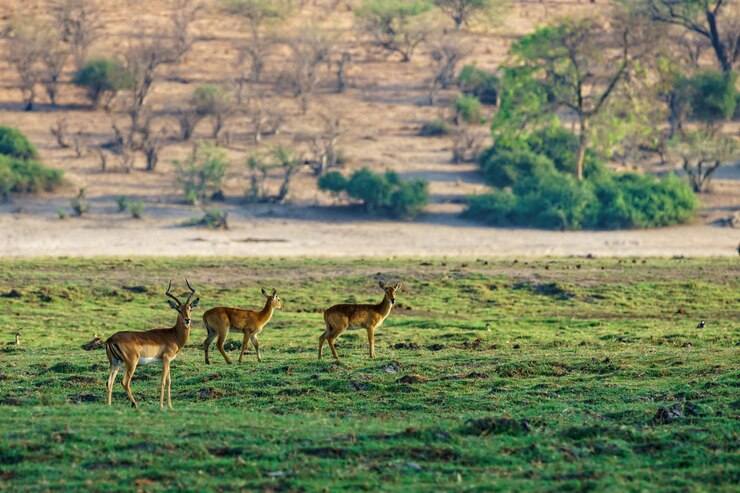
In this guide, I’ll walk you through 9 expert secrets that will help you design a deer-friendly yard, and make it a haven for these majestic creatures.
1. Food Attracts Deer
One secret to attracting deer is by providing food. Deer are constantly on the lookout for reliable food sources, especially during the colder months or when natural food becomes scarce.
- What Deer Eat: Common foods they enjoy include acorns, apples, clover, and even corn. By planting trees that produce nuts or fruit and grasses that grow naturally in your area, you can create a steady food source for them.
- Planting Deer-Friendly Plants: Like Oaks (for acorns), apple trees, and clover plots will keep deer coming back to your yard. You can create bedding areas with tall grasses or thick vegetation if you are interested in natural feeding.
- Food Plots: Planting a dedicated food plot. It’s like a buffet for them! consisting of crops like soybean or clove. This can further boost your chances of attracting deer.
- Be mindful of local regulations, especially when planting food plots, to ensure you’re acting responsibly. Just make sure to check your local regulations on food plots and feeding wildlife.
2.Shelter and Safe Spaces
Aside from the food, deer need safe spaces to rest and hide. By creating natural shelters in your yard, you will provide them with the security they need and attract them to your yard..
- Natural Cover/Habitat: Planting dense shrubs, trees, and tall grasses can offer the protection deer seek.
They prefer areas where they can quickly hide from predators, so incorporating thick vegetation will make your yard feel safer to them.
- Artificial Shelter Options: You can create portable shelters and a small brush pile if you don’t have a lot of natural cover, this will provide deer with a cozy spot to rest.
- Landscaping for Privacy: Deer are naturally shy and will avoid areas with too much human activity. You can create privacy for them by using hedge rows, shrubs, or even a simple fence to block out the hustle and bustle of daily life.
3. Water Sources to Attract Deer
Water is another key element in attracting deer and perfectly answers the question, of what attracts deer to your yard. Just like any other animal, deer need consistent access to fresh water, and providing it can significantly increase your chances of seeing them regularly.
It can be a pond, stream, or even a simple water trough can do the trick.
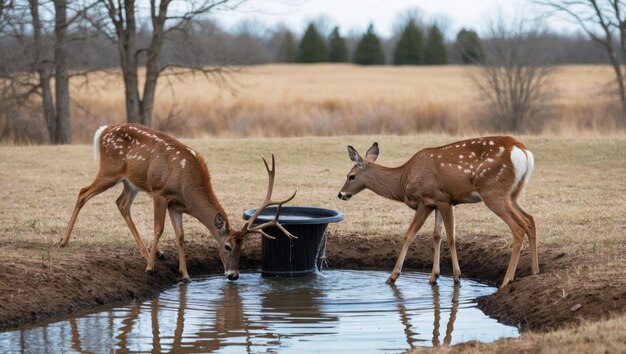
- Water Features: Deer are more attracted to natural water sources like a pond, you can add a small artificial pond or a water feeder to your yard.
- Seasonal Water Needs: Remember, deer’s water needs vary by season. In the summer, they need more to stay hydrated, while in winter, they will seek out ice-free water sources.
- Placement Tips: Position your water source near your food plot or in a quiet part of your yard to make it more accessible and appealing to deer.
4. Keep Your Yard Quiet and Calm
Deer are very sensitive to noise and human activity. If you want to attract them, you have to create an environment where they feel safe and undisturbed.
- Deer and Human Scent: Deer have a remarkable sense of smell, and too much human scent in the area will scare them off. Limit your movements around the spots where you want to attract deer.
- Noise Sensitivity: Loud noises such as barking dogs, heavy machinery, or frequent human presence can deter deer. The quieter your yard, the more comfortable deer will feel.
- Creating a Calm Environment: Deer are attracted to a serene environment that makes them feel at home.
5. Use Deer Lures and Scents
When it comes to what attracts deer to your yard, using deer attractants like doe estrus or salt licks is a proven way to draw deer closer to your property. These natural scents can entice deer to investigate your yard, especially during mating seasons.
- Best Times to Use: Use attractants during the rutting season or when natural food sources are scarce. This is when deer are most likely to seek out new feeding grounds.
The best times to use these attractants are early morning or late afternoon when deer are most active.
- DIY Lure Options: You can create your own lures using things like corn or molasses to attract deer to your yard.
6. Minerals and Salt Licks
Deer need a variety of nutrients, and minerals are key for their health, especially when it comes to antler growth. Providing a mineral block or salt lick will make your yard attractive to bucks.
- Best Salt Lick Placement: Position your salt lick in a quiet, shady spot where they feel safe enough to linger. This attracts them easily to your yard.
- DIY Mineral Sites: You can also create DIY mineral sites by mixing salt with other minerals such as calcium and phosphorus to improve their health. This will give them a reason to return again and again.
7. Forest Edge
One response often given by experienced deer hunters when asked, ”What attracts deer to your yard” is Forest Edge. Deer are attracted to forest edges because they provide food, shelter, and easy access to open areas.
- Deer prefer to travel along the edges of forests where they can quickly dart into cover.
- To mimic this in your yard, create a forest-like edge with tiered vegetation. Hedges, rows of trees, or small clearings can make your yard feel like an extension of the natural habitat, encouraging deer to visit.
8. Manage Yard Design for Deer Attraction
Yard design is one key answer to the question, of what attracts deer to your yard.
Choose a layout that combines food, shelter, and water sources. Strategically plant trees and shrubs to provide cover, and leave pathways open for deer to move through easily.
You can even fence off certain parts of your yard to prevent over-browsing and still allow deer to access their favorite spots.
Creating natural trails and clearings can guide deer directly into your yard, offering a more reliable experience for observing or hunting.
9. Seasonal Adjustments
- Understanding Deer Behavior by Season: During the summer, deer are more likely to roam widely, while in winter, they stick close to reliable food and shelter. Adapt your yard to these seasonal needs.
- Winter Strategies: In colder months, consider providing extra food, like corn, and additional shelter to help deer weather the harsh conditions.
Responsible Deer Attraction and Conservation
As you get answers to your question, what attracts deer to your yard, remember It’s essential to attract these animalsresponsibly.
Check local laws regarding feeding and interacting with wildlife to avoid any legal issues. Attracting deer can also contribute to wildlife conservation by supporting local ecosystems and ensuring they have safe habitats to live in. Read about ethical wildlife management practices.
In Summary
Finally, you just learned 9 expert secrets on what attracts deer to your yard. Attracting these animals to your yard is a brilliant way to engage with wildlife, and it does not have to be complicated.
With these 9 guides, you can create a haven that’s perfect for deer while enjoying the beauty of nature right in your backyard.
Start small, be patient, and enjoy the rewards of a deer-friendly yard that both you and the wildlife can appreciate.
If you’re ready to take the next step, check out more tips on wildlife management and ethical ways to create your own deer sanctuary at Deer Hunting Gateway.
Remember to share your tips in the comments section.
]]>
If you’ve ever asked yourself “Do deer eat alfalfa pellets, what could keep deer coming back to my hunting spot?, well, you’re not alone. Imagine having a simple, effective way to attract and nourish deer while boosting your chances for a successful hunt.
The answer? Alfalfa pellets. These little green pellets could be the secret weapon you never knew you needed.
Alfalfa pellets can be an excellent addition to a deer’s diet, making them a solid choice for hunters looking to attract deer and keep them healthy.
These nutritious pellets are easy to feed and can give you a real advantage in the field.
In this article, we’ll look at five key reasons why alfalfa pellets are great for deer, the pros and cons, and some practical feeding tips to help you make the most of them so, stick around.
1. Nutritious Food Source
Alfalfa pellets are packed with protein, fiber, and essential minerals, making them a nutritious option for deer. Hunters who want to maintain a healthy deer population on their land can offer alfalfa pellets as a valuable source of nutrients.
- Pros: The protein in alfalfa pellets supports muscle growth, especially in bucks, helping with antler development, a key aspect of deer hunting.
The added fiber also aids digestion, which is essential for maintaining the health of deer, especially during harsh winter months.
- Cons: While beneficial, too much of a good thing can be problematic. Overfeeding deer with alfalfa pellets can lead to digestive issues like bloating.
Deer need variety in their diet, and relying solely on pellets can disrupt their natural foraging habits.
- Tip Feed alfalfa pellets in controlled amounts and ensure deer have access to their natural forage. This balanced approach helps deer maintain optimal health without becoming overly dependent on supplemental feed.
2. Easy to Store and Feed
Hunters and landowners often choose alfalfa pellets because they are easy to use. Alfalfa pellets are easy to store, transport, and distribute, making them a convenient option for maintaining a deer population on your property.
- Pros: Alfalfa pellets are compact and easy to handle, making them ideal for hunters who want a straightforward way to feed deer.
This is especially helpful during the busy hunting season when time is limited, and you need a hassle-free method to provide food for the deer.
- Cons: Convenience can sometimes sometimes be bad. Deer when fed too frequently with alfalfa pellets may become used to food provided by a human, which diminishes their natural survival instincts.
In some cases, this could reduce the adventure of deer hunting by altering the deer’s natural behavior.
- Tip: Maintain a proper balance. Offering alfalfa pellets and letting deer forage for their food. Use pellets as a supplement rather than the main food source to maintain a healthy, self-sufficient deer population.
3. Supports Growth and Antler Development
For hunters aiming to land a trophy buck, antler growth is crucial. With their high protein content, Alfalfa pellets can help deer, especially bucks, develop larger and stronger antlers.
- Pros: Feeding alfalfa pellets can support muscle development and antler growth in bucks. This can be particularly useful during the rutting season, a prime time for deer hunting when hunters track bucks with impressive racks.
- Cons: Not all deer populations require additional protein, depending on the abundance of natural food in their habitat. Over-reliance on alfalfa pellets can result in a skewed nutritional balance if not monitored carefully.
- Tip: Introduce alfalfa pellets during the months leading up to the deer hunting season when bucks are growing their antlers. This helps boost the deer’s overall health and enhances their physical appearance, making your hunts more rewarding.
4. Provides Winter Nutrition
Winter months can be tough for deer as natural food sources become scarce. This is when alfalfa pellets can be a game-changer for hunters looking to attract deer to their property or keep the deer population healthy throughout the cold season.
- Pros: Alfalfa pellets provide deer with a reliable food source during winter when they need energy and nutrients the most. Hunters can ensure deer stay close to their feeding areas, increasing the chances of successful hunts once the season opens.
- Cons: Overfeeding in winter can lead to deer becoming overly reliant on pellets, which may negatively impact their ability to find food by themselves once the supplemental feeding stops.
- Tip: Scatter the pellets to encourage natural grazing behavior, and limit the amount you provide. This helps deer maintain their instincts while benefiting from the nutritional boost that alfalfa pellets offer.
5. Cost-effective and Accessible for Deer Managers
For hunters and land managers who want to maintain a healthy deer population without breaking the bank, alfalfa pellets are a cost-effective option. They’re widely available, affordable, and easy to purchase in bulk.
- Pros: Alfalfa pellets offer hunters an affordable method to attract deer to their hunting areas. If you manage a property popular with deer hunters, this is a practical solution for keeping deer well-fed and thriving.
- Cons: If provided too frequently, alfalfa pellets can disrupt deer migration patterns, leading to an unnatural concentration of deer in one area, which affects the overall hunting adventure for you and other hunters.
- Tip: Use alfalfa pellets strategically. Feed during specific times to keep deer coming back, but don’t overdo it. This ensures your property remains a prime hunting location without disrupting the deer’s natural movements.
Feeding Tips: How to Responsibly Feed Alfalfa Pellets to Deer
When it comes to feeding deer, moderation and timing are key. Here are some tips to help hunters and deer managers feed alfalfa pellets effectively:
- Start slow: Gradually introduce alfalfa pellets, especially if it’s a new food source for the deer in your area. This allows the deer to get used to the pellets without overwhelming their digestive system.
- Portion control: Feed adult deer around 1-2 pounds of pellets per week. For fawns or younger deer, reduce the amount to half of that.
- Monitor closely: Keep an eye on the deer after you start feeding alfalfa pellets. If you notice any signs of digestive upset, reduce the amount or frequency.
- Stay balanced: Always provide alfalfa pellets alongside natural forage. A diverse diet is essential for maintaining a healthy deer population that can thrive in the wild and offer the best hunting experience.
Conclusion
Alfalfa pellets can be a great supplemental food source for deer, providing essential nutrients, supporting antler growth, and offering a reliable option during winter. However, hunters and land managers should be mindful of how they feed these pellets, ensuring that deer don’t become overly dependent on them.
Visit our website for more hunting tips and resources.
]]>