





Ever found yourself perched in a stand during a steady drizzle, convinced the deer have vanished into thin air? Many hunters hang it up when the skies open, only to miss out on prime opportunities hidden in the rain.
The truth is, deer behavior in rain is far from predictable—and misreading it can cost you your hunt. From underestimating movement patterns to ignoring how rain alters scent and sound, hunters often make critical mistakes that leave them empty-handed.
In this post, we’ll break down the 5 fatal errors hunters make when misreading deer behavior in rain, and show you how to turn wet-weather challenges into your secret weapon for success.
1. Assuming Rain Shuts Down Deer Movement
Many hunters pack up the moment rain begins, believing deer will bed down until it passes. But this assumption often costs them encounters, since light to moderate rain can actually spark more deer activity.
Deer don’t see rain as a reason to stay put. Damp conditions muffle sound, wash away scent, and give them added confidence to move. For hunters who stay out, these shifts in deer behaviour create valuable opportunities.
Edges of cover near food sources become hotspots during showers. Bucks may also check on does more actively, taking advantage of reduced detection. Positioning yourself near these transition zones can make all the difference.
Tips for Hunting Rainy Conditions
- Target edges of cover and feeding areas: Deer travel confidently between security and food.
- Use muffled sound and scent to your advantage: Wet ground lets you move quieter and stay undetected.
- Rely on dependable gear: Waterproof boots, optics covers, and durable hunting accessories keep you in the field when others quit.
Light rain isn’t the end of your hunt—it’s an opportunity. Next, we’ll explore how deer respond differently when rainfall shifts from light to heavy.
2. Ignoring Changes in Deer Behavior During Heavy Rain
A common mistake hunters make is treating all rainfall the same. Light showers can spark more deer activity, but heavy downpours trigger an entirely different behavioural response. Misreading this shift often leaves hunters staring at empty fields.
When rain intensifies, deer instinctively hunker down. They retreat to low-lying areas, thickets, or wooded cover with dense canopy. In these spots, raindrops are muted, visibility is limited, and deer feel more secure bedding down.
This doesn’t mean the hunt is over. As soon as the storm breaks, deer behavior changes sharply. The woods come alive, with deer rising to feed, travel, and check scrapes. Bucks in particular use this lull to move confidently, taking advantage of refreshed ground and cover.
Tips for Reading Deer Behavior in Heavy Rain
- Scout sheltered bedding areas: Deer often wait out storms in creek bottoms, valleys, or timber pockets.
- Capitalize on the post-rain window: Expect increased movement within minutes of a downpour ending.
- Focus on transition zones: Rain pushes deer toward areas where shelter and food meet.
- Stay prepared: Quality rainproof hunting accessories like optics covers and waterproof packs keep you in position to observe these changes.
Heavy rain may pause activity, but it also sets up one of the most productive times to hunt. Next, we’ll look at how rainfall influences a deer’s ability to detect scent and sound, and why overlooking this detail is another costly mistake.
3. Misreading Deer Behavior with Scent and Sound in Rain
Many hunters underestimate how rain transforms a deer’s ability to sense danger. Scent and sound—two of a deer’s strongest survival tools—behave differently in wet conditions. Misreading this shift often means missed chances.
Rainfall dampens scent particles, making it harder for deer to detect predators. What normally gives them an edge is suddenly weakened, allowing hunters to get closer without being noticed. Light rain especially works in your favor.
Sound is also muted. Wet leaves don’t crunch, branches drip steadily, and background noise masks movement. This allows both deer and hunters to move more quietly, but it also means deer may rely more on sight and sudden movement cues.
Hunters who fail to account for this often overestimate how easily deer will pick them off. In reality, rain creates one of the few scenarios where stealth becomes easier. Using this natural advantage can tip the odds in your favor.
Tips for Leveraging Rain’s Effect on Deer Behavior
- Time your approach in rain: Move slowly when sound is muffled and your scent is diluted.
- Use the wind wisely: Rain shifts air currents; play wind direction carefully to stay undetected.
- Capitalize on low-noise environments: Get closer to bedding areas without the usual risk of being heard.
- Equip for stealth: Waterproof boots and scent-control hunting accessories keep you mobile and invisible longer.
Hunters who adapt to these sensory changes often spot deer others never see. Next, we’ll examine how overlooking bedding and feeding patterns in rain is another costly mistake many hunters make.
4. Overlooking Bedding and Feeding Patterns in Rain
Another mistake hunters make is assuming deer abandon their routines in wet weather. While rain changes movement slightly, deer behavior around bedding and feeding remains surprisingly consistent. Ignoring this costs opportunities.
In light rain, deer often stay closer to feeding areas, using the sound cover to move more confidently. In heavier showers, they’ll bed down in sheltered spots but rarely stray too far from food sources. The connection between the two still drives activity.
Sheltered bedding areas like thick timber, low valleys, or brush near crops become especially important. Deer use these safe zones to wait out storms, then travel short distances to feed as soon as conditions ease.
Hunters who fail to identify these zones end up in the wrong place at the wrong time. Those who anticipate deer sticking to the food–cover cycle, even in rain, can intercept movement more effectively.
Tips for Targeting Bedding and Feeding Behavior in Rain
- Scout bedding cover: Look for thickets, ridges, or creek bottoms deer use to bed during rain.
- Focus on short travel routes: Deer often take the quickest path from bedding to feeding once showers slow.
- Monitor edges after rainfall: Transition zones between crops and cover light up with activity.
- Stay ready with the right gear: Dry optics and waterproof hunting accessories help you stay sharp when deer step out.
Recognizing that deer still follow predictable patterns—just adjusted for weather—keeps you one step ahead. Next, we’ll explore how rain impacts visibility and timing, and why misjudging this can ruin a hunt.
5. Misjudging Visibility and Timing of Deer Behaviour in Rain
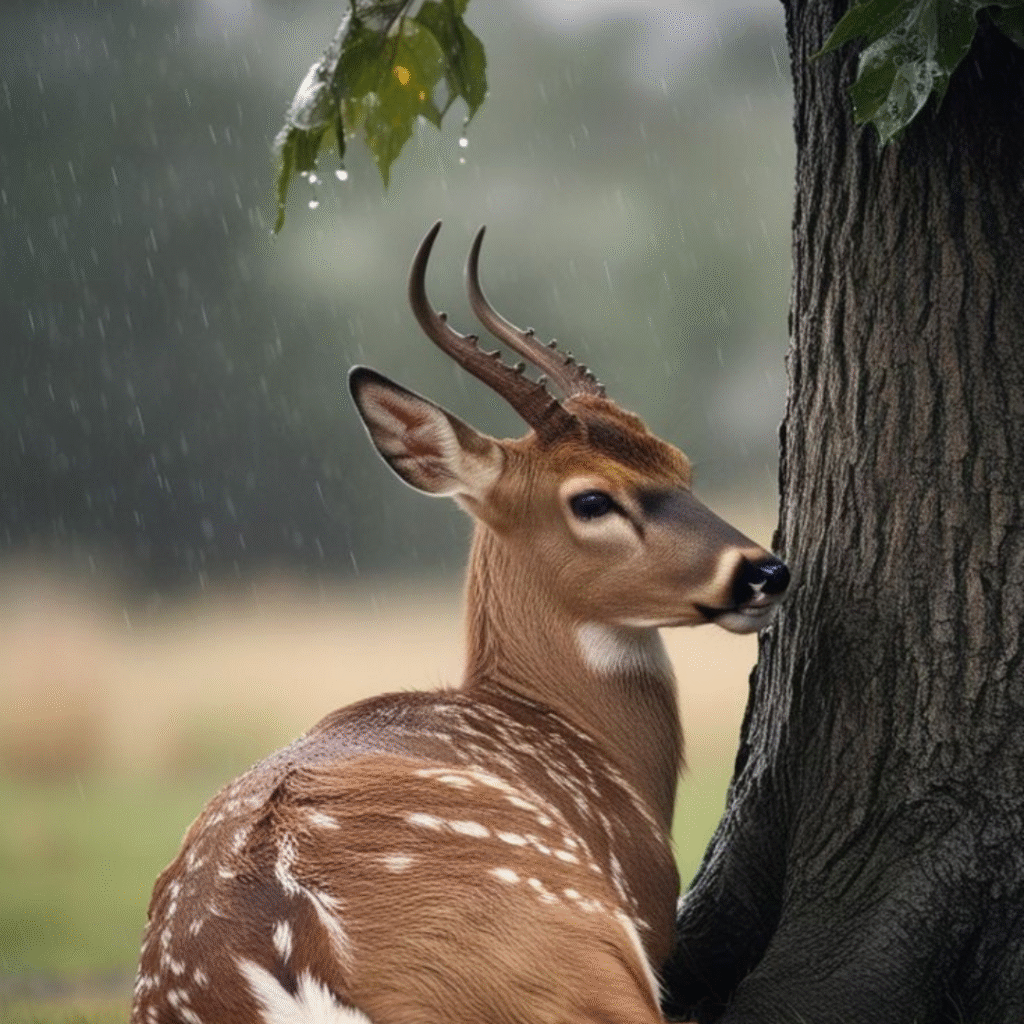
Many hunters overlook how rain impacts visibility—for both them and the deer. Overcast skies and steady drizzle change the way light filters through the woods, altering deer behavior and prime movement times.
Deer see best in low light, which gives them an edge at dawn and dusk. Rainy, cloud-covered conditions extend this advantage, encouraging deer to move more freely throughout the day. Hunters who pack up early often miss this window.
On the flip side, heavy rainfall limits visibility for deer, making them cautious. They may pause movement until the storm eases, then take advantage of the dim light to travel confidently. This explains why activity often spikes just after rain.
Hunters must also consider their own visibility. Raindrops blur optics, and fogged lenses reduce accuracy. Without preparation, even a perfect setup can be wasted if you can’t see clearly when deer finally appear.
Tips for Timing and Visibility in Rain
- Hunt longer hours: Overcast days stretch deer activity beyond typical dawn and dusk windows.
- Glass open fields post-rain: Deer often re-enter fields to feed once visibility improves.
- Stay alert in low light: Rain extends the gray-light conditions deer prefer.
- Protect your vision: Lens wipes, scope covers, and waterproof hunting accessories ensure clear sightlines when it counts.
By understanding how rain reshapes visibility and timing, hunters can anticipate movement patterns instead of being surprised by them. With these five errors avoided, you’ll be ready to turn wet weather into one of your greatest hunting advantages.
Conclusion: Outsmart the Rain by Understanding Deer Behavior
Rain doesn’t ruin a hunt—it reveals opportunities most hunters never see. By avoiding these five fatal errors, you’ll read deer behavior in the rain more accurately, position yourself where the action is, and stay ready when others give up too soon.
Now it’s your turn: Have you ever misread deer movement during a rainy hunt? Share your experience in the comments—we’d love to hear your story. And don’t forget to follow us on social media for more proven hunting tips and strategies that give you the edge, rain or shine.