It is widely known and confirmed from many estimates that white-tailed deer can run and even cover up to 35 to 40 miles in an hour. Mind-blowing right?
There are many intriguing features about this graceful creature. How high can white-tailed deer jump is not just a question but another fantastic aspect of its behavior worth exploring.
In this article, we shall provide specific and perfect answers to address the concern and often-asked question; how high can white-tailed deer jump?
What Is White-Tailed Deer Jumping
Before exploring How high can White-tailed deer jump; It is important to know what white-tailed deer jumping is.
It is commonly known as stotting (a term for deer jumping), where deer jump in the air using all four legs. It is a common behavior among deer species usually for many reasons.
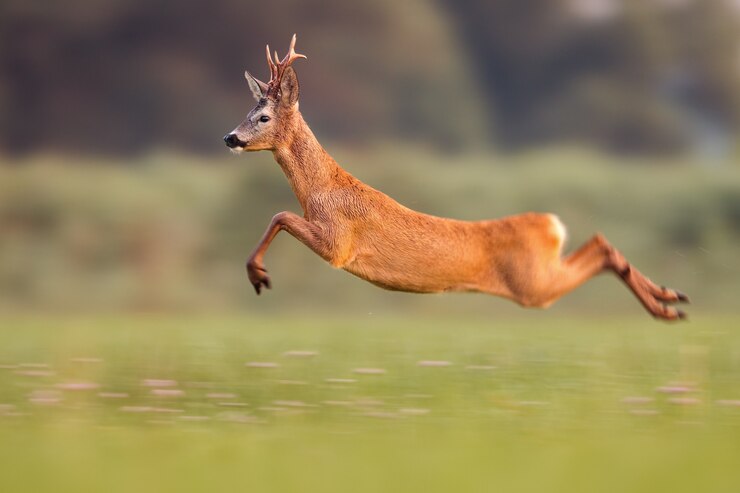
White-tailed deer can be very active throughout the day. Their behavior can change instantly when they perceive that a predator is approaching. The first action is to leap away, and they often do that with their tail lifted so high that the white underside is seen.
How High Can Whitetail Deer Jump
Most white-tailed deer can jump up to 8 feet from a standing start, but others can jump higher. Some can jump as high as 12 feet.
On average, whitetail deer can jump between 8 to 10 feet in height, which is very impressive and essential for their survival.
Though they are able to jump up to twelve feet high with a running start, they only do this when escaping a dangerous situation.
It is important to note that the higher a white-tailed deer can jump may depend on the motivation for that, for instance, danger.
Watch a white-tailed deer jumping over a 7-foot fence and and a 12-point Whitetail deer jumping
Factors That Influence The Height A Deer Can Jump.
When it comes to how high can white-tailed deer jump? Several factors can influence your response to this question. The exact height a deer can reach has a direct relation with the factors that influence the jumping.
- Terrain: How high can deer jump can depend on how much space a deer has to jump.
In open areas, deer often have the space and momentum to jump higher. In contrast, dense forests where obstacles may hinder their movement or uneven terrain can limit their jumping height.
The ground surface plays a crucial role because deer require stability for maximum leverage.
- Threats: White-tailed deer are vulnerable to many predators. When faced with predators or human threats, such as hunters, they are more likely to exert maximum effort, which can result in higher jumps.
The more immediate or intense the threat, the more likely they are to push their physical limits to escape.
In such cases the white-tailed deer can clear a 7-8-foot fence on the stand and up to 12 feet from a running start.
- Age and Health: Age and health also have a great influence on the height a deer can jump. Younger, healthier deer have greater agility and strength, which allows them to jump higher and farther.
- In contrast, older deer or those suffering from injuries or illnesses may not reach the same heights. A whitetail’s overall fitness plays a significant role in its jumping ability.
Understanding these factors is essential for anyone interacting with or hunting whitetail deer. By knowing what affects their jumping, hunters can anticipate and strategize accordingly.
Other factors
Hunger
Deer do not hesitate to go for anything that they think will make a delicious snack. A short fence in the way is no match for a hungry and curious deer.
To mate
White-tailed deer also jump to mate. According to expert hunters, a deer is willing to jump as high as possible when they see a potential mate, most especially with male deer during the mating season.
Practical Insights For Hunters
How high can white-tailed deer jump, can be asked by anyone. But for hunters and landowners, understanding how high whitetail deer can jump is not enough, but crucial for them in developing effective strategies and maintaining property boundaries.
Fence Height: What You Need to Know
One of the most common issues faced by landowners and hunters is deer clearing or jumping over fences meant to keep them out.
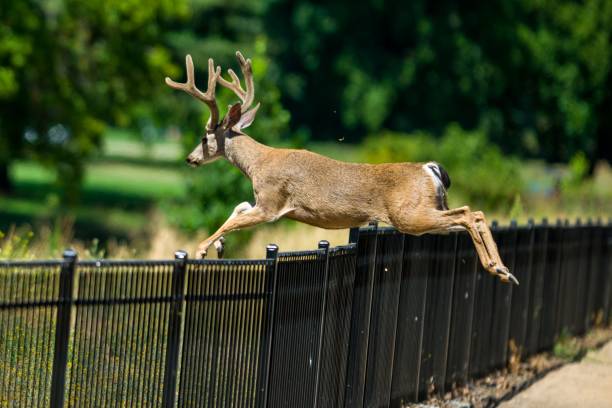
With the ability to jump as high as 10-12 feet, a standard farm fence may not be enough to deter them from entering fields or gardens.
An effective deer fence can be at least 8 feet high. Even though deer can jump an average of 8-10 feet, and even 12 feet depending on the circumstances, they will not risk jumping a fence they are uncertain about.
For hunters and wildlife managers, when you understand these limits, you can set up effective barriers.
Yet still a minimum fence height of 10 feet is recommended to prevent deer from jumping over. However, if the terrain offers a slope or an incline leading up to the fence, deer might find it easier to clear even a taller barrier.
Landowners might consider using angled or double fencing to further reduce the likelihood of deer jumping over.
Escape Tactics: How Deer Use Their Jumping Ability
When whitetail deer feel threatened, their first instinct is to flee. Their jumping ability plays a significant role in this escape process.
They are fast and can use obstacles like fallen trees, fences, or rocks to create distance between themselves and a predator.
For hunters, this means that a deer fleeing for safety is not limited by traditional barriers; they can and will jump over almost anything in their path if the threat is great enough.
Hunting Strategy: Using Deer Jumps to Your Advantage
As a hunter, knowing how high whitetail deer can jump can give you a great advantage. For instance, tree stand placement is crucial for maximizing your visibility and avoiding areas where deer might suddenly leap and disappear.
If you understand that a whitetail is capable of clearing a certain fence or obstacle, you can use that knowledge to anticipate their escape routes and plan ambush points more effectively.
Moreover, when tracking deer, pay attention to signs of jumps—scratched bark, disturbed leaves, or fence indentations—these clues can help you follow their trail, especially when hunting in dense or wooded areas where deer might leap to evade detection.
You can learn more about White-tailed deer at the Word deer Organisation.
Final remarks,
How high can white-tailed deer jump is not only a question but an opportunity to explore and understand its unique behavior.
Whitetail deer, with their remarkable ability to jump as high as 8 to 10 feet, will continue to amaze those who observe them in the wild.
For hunters, understanding this key makes you appreciate nature and enhance hunting strategies to be able to make more informed decisions.
Whether you’re setting up a tree stand, tracking deer, or building a fence, knowledge of how high deer can jump provides valuable insights into their behavior.
And staying aware of the factors that influence their jumping—terrain, threats, and health—you can make strategic choices that will improve your hunting experience and protect your property from deer intrusions.
If you found this information helpful, explore more on how to enhance your deer hunting skills on our website.
]]>Mule Deer Hopping is one of the unique deer behaviors many animal lovers and hunters long to see. It is an eye-catching sight for wildlife enthusiasts.
It is also known as “stotting” or “pronking”, a distinctive movement that sets mule deer apart from other species and serves many critical survival functions.
But what does it mean? Why do they do it? And how can you spot mule deer in the wild?
In this post, we will learn and understand the beauty and function of mule deer hopping hopping behavior.
What Is Mule Deer Hopping?
Mule deer hopping, also called stotting, is a behavior in which mule deer leap into the air with all four legs stiff and in unison, often resembling a bounding motion.
It’s almost as if they’re bouncing across the landscape with stiff-legged bounds, and it can be mind-blowing to watch. This can serve an important survival function.
You can watch a video of a mule deer hopping here.
How Mule Deer Hooping Helps Them Survive
Mule deer often live in tough terrains, and their hopping motion allows them to move quickly over rocky landscapes, steep slopes, and thick brush.
Their leaps allow them to cover ground fast, making it harder for predators to catch them and helping them conserve energy.
Why Do Mule Deer Hop?
So, why exactly do mule deer hop? There’s more to it than just looking cool.
Escape Response
Mule deer are often prey to various predators, including mountain lions, coyotes, and wolves. Hopping is an anti-predator strategy that allows mule deer to quickly put distance between themselves and a threat.
When a mule deer feels threatened, hopping is one of its first moves to escape danger, high leaps allow them to make a speedy getaway.
Mule deer hopping is very useful when they need to move fast through uneven or rocky terrain.
A Visual Warning
Some scientists think mule deer hopping is a display of communication to predators / Hunters.
When the deer hops high and confidently, it is trying to tell the predator that, “I’m strong, I’m fast, and I can outrun you. Therefore, don’t even bother!” This could discourage predators from attempting to chase them.
Communication With Other Deer
Stotting is a useful way for mule deer to communicate with each other. The behavior is a way to alert other deer to be cautious or prepare for flight.
When one deer starts hopping, others might pick up on the behavior as a signal that there’s danger nearby. It’s sounding an alarm.
Terrain Adaptation
Mule deer live in rough environments, and their hopping helps them move efficiently over these challenging terrains.
Be it rocky hillsides or desert landscapes, their stiff-legged leap allows them to conserve energy and navigate areas that slow down other animals.
How to Spot Mule Deer in the Wild
If you want to see mule deer in their natural habitat, it is important to know where and when to look for them. Here are some practical tips to increase your chances:
Where To Find Them
Mule deer are commonly found in diverse habitats across western North America, including forests, deserts, and mountainous regions.
They prefer spots with plenty of cover and easy access to food. Dawn and dusk are the best times to catch a glimpse of them since that’s when they’re most active.
Want to share your thoughts on mule deer hopping and why they hop, join this conversation.
Pay Attention To Movement
Mule deer’s hopping behavior makes them easier to spot in wide-open spaces. When hiking in mule deer territories, keep an eye out for unusual movements or rhythmic leaps.
They can often be seen hopping away when startled or when they’re on the move.
Be Patient and observant
Mule deer are cautious animals, they are shy too. If you’re hoping to spot them, patience is key.
Stay quiet, take your time, and scan the landscape for any movement. Binoculars can be a big help here, especially if you’re watching from a distance.
Best Time of Day
Mule deer are active during the early morning and late evening hours. These are the best times for observing/sighting mule deer.
They are often out feeding or moving between bedding and foraging areas, during these cooler times of day. This gives you a perfect window to catch a glimpse of them in action.
Signs They Might Hop Soon
It can be easy to detect if a mule deer is about to hop. If you notice a mule deer suddenly becoming very still or alert, it might be preparing to hop.
Also, keep an eye on their posture—if they seem tense and ready to spring, a hop may be coming.
The Difference Between Mule Deer And Other Deer Species
You might be wondering how mule deer differ from other types of deer, like white-tailed deer. Here’s a quick breakdown:
Physical Traits
Mule deer have large ears that resemble those of a mule, which is how they got their name. They also have a black-tipped tail, unlike the white-tailed deer, which has a wider, white tail.
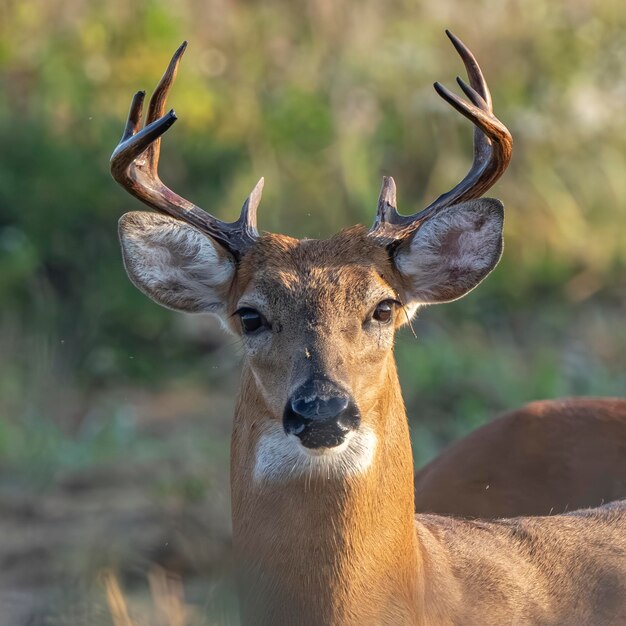
And of course, their hopping behavior is a key distinction—white-tailed deer typically run, rather than hop, when fleeing predators.
Behavioral Differences
Mule deer tend to rely on their stotting behavior more than other deer species. While both mule and white-tailed deer are prey to similar predators, mule deer are more adapted to rugged, uneven terrain and use hopping as an effective way to navigate it.
Tips For Observing Mule Deer Safely
When you’re lucky enough to spot mule deer hopping or just the deer in the wild, it’s important to respect their space and observe them in a way that doesn’t disturb their natural behavior.
Keep Your Distance
Always maintain a safe distance. Mule deer are easily startled, and getting too close could scare them away.

Bring binoculars or a camera with a zoom lens so you can watch them from afar without causing any distress. Approaching them too closely can cause stress or disrupt their natural behavior.
Minimize Disturbance
Try to avoid loud noises or sudden movements that might startle the deer. Move quietly and slowly to increase your chances of observing their natural behavior.
Ethical Wildlife Watching
As always, remember to respect the environment. Leave no trace, and avoid interfering with the animals or their habitat.
Responsible wildlife watching helps protect these creatures and ensures that future generations can enjoy the same experience.
In Conclusion,
Mule deer hopping is one of nature’s most interesting behaviors by deer; it serves as both a survival tool and a means of communication.
When you understand why mule deer hop and know where and how to observe them, you can deepen your appreciation for these incredible animals.
If you are an avid hiker or a curious observer, spotting mule deer in the wild can be one of your unique experiences.
So next time you’re out in the wild, keep an eye out for those high leaps and enjoy the thrill of witnessing mule deer in action.
Have you ever seen mule deer hop? Share your experiences or tips in the comments below, and remember—always observe wildlife responsibly.
Keep exploring our website for deer behavior and hunting tips
]]>