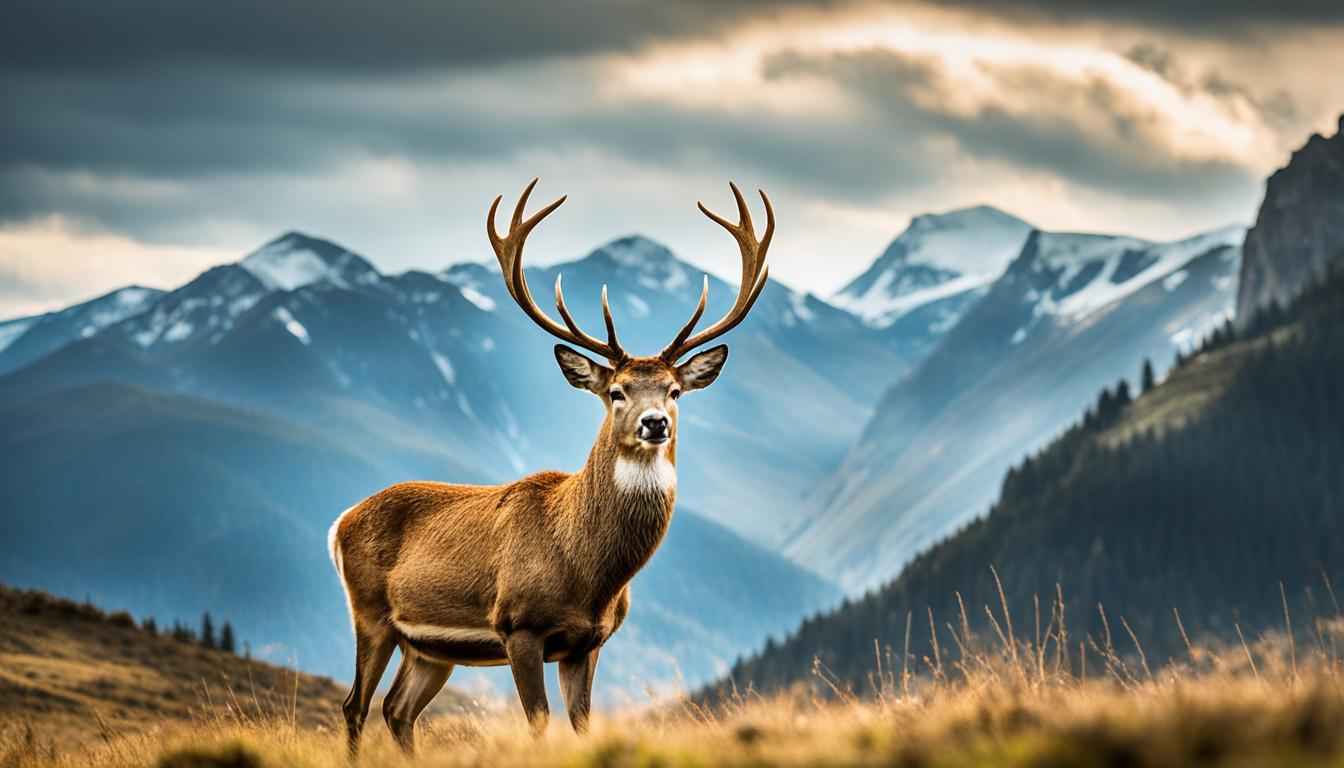
Imagine walking through an ancient forest, the soft crunch of leaves beneath your feet. Suddenly, a majestic deer appears, its antlers defined against the setting sun. This scene, etched in human memory for millennia, captures the essence of deer symbolism in cultures worldwide.
In many myths, deer are seen as special animals. In Celtic mythology, they’re linked to magic and gods. Greek myths tell of Actaeon turning into a stag, and Germanic tales feature deer in royal symbols like the Anglo-Saxon scepter from Sutton Hoo.
Exploring deer in ancient myths reveals a world full of stories. They are seen as messengers, they also symbolize grace, and powerful spiritual beings. They have deeply influenced human culture and imagination over the ages.
Deer in Mythology: A Universal Symbol
Deer are considered special in many cultures around the world. Deer are often said to connect the earthly and spiritual worlds. Gentleness, intuition, and peace are spiritual meanings often associated with them.
Deer as Spiritual Messengers
Deer are considered messengers from the divine. In many Native American tribes the symbolism of deer in mythology is associated with deep intuition and sensitivity. In Mexico, the Wixaritari people think deer are also creatures that translate godly messages to humans.

The Stag: Power and Leadership
In explaining the symbolism of deer in mythology, it is often said; The stag, a male deer, stands for strength and leadership. In Celtic traditions, the presence of a stag is a sign of nobility and wisdom. Chinese culture links the spirit of the deer with wealth and luck.
Some Native American believed that deer (the stag) antlers are spiritual tools.
Deer in Folklore and Fairy Tales
Deer have important spiritual significance and are common in stories across the globe. In European tales, deer are known as symbols of purity and innocence. In fairy tales, deer often help or are magical beings.
These stories show how deer is closely linked to culture and nature.
“If deer keep appearing in your life, it may be an invitation to learn from their wisdom and embody qualities like gentleness, compassion, and unconditional love.”
The symbolism of deer in mythology is widespread and timeless. They serve as spiritual guides and to many, deer also symbolize. The image of a deer inspires us to connect with nature’s wisdom.
Symbolism of Deer Mythology in Ancient Europe
Deer were very important in ancient European myths. They were seen as symbols of power, wisdom, and spirituality. These animals were more than just animals; they were symbols of great meaning.
Celtic Traditions: Fairy Cattle and Divine Figures
Deer in various Celtic stories were called “fairy cattle.” They could change shape, mixing the real and magical worlds. The Cailleach Bhéara, a powerful figure from Irish stories, could turn into a deer.
Greek Mythology: Artemis and the Sacred Deer
Greek myths linked deer with Artemis, the hunt goddess. The story of Actaeon, transformed into deer by Artemis, shows this bond. In Greece, deer were seen as messengers between humans and gods.
Symbolism of Deer in Mythology: Germanic Legends
The presence of deer were key in Germanic royal symbols. The Anglo-Saxon royal scepter from Sutton Hoo had an antlered stag on it. The epic poem Beowulf mentions Heorot, meaning “Hall of the Hart,” showing deer’s importance in Germanic culture.
- Stags can run up to 40 miles per hour and jump as high as eight feet
- The Celtic god Cernunnos, depicted with antlers, embodies the spirit of the stag
- Deer antlers symbolize wisdom, spiritual enlightenment, and regeneration
These myths and legends show how much Europeans revered deer. From Celtic shapeshifters to Greek messengers and Germanic symbols, deer in ancient stories still fascinate us today.
Symbolism of Deer in Mythology: From East to West
Deer iconography is found all over the world, showing its lasting charm. In China, deer stand for good luck and long life. The word for deer, “lu,” sounds like words for wealth and income, making it a symbol of wealth.
In Japan, Shinto traditions see deer as sacred messengers of the gods. This belief connects to themes of living a long life and showing love. Deer in Japan often link the world of humans with the divine.
Native American mythology see deer as symbols of ongoing life and plenty. They use deer in rituals and as a key food source. This shows the deer’s deep importance in their culture.
In Europe, stories tell of white deer or stags as magical beings. These creatures often help heroes on quests for spiritual growth. Encountering a deer, particularly the white stag, is seen as a sign of purity and brings big changes.
“The deer is a bridge between worlds, connecting humans to nature and the divine across cultures.”
In Hindu tradition, deer are linked with Shiva, showing control over nature. In Christianity deer is a reminder of faithfulness and innocence. These stories show how symbolic meanings of deer may change. Regardless of this, deer are symbols that convey deep meanings in spirituality and nature.
Religious Significance of Deer Across Faiths
The deer species are important in many religions, showing their deep cultural value. They are found in Christianity, Buddhism, and the beliefs of indigenous peoples. These animals have special meanings in both ancient myths and today’s faiths.
Christianity: Saint Hubertus and the Divine Stag
Saint Hubertus’ story in Christianity tells of a vision with a crucifix between a stag’s antlers. This story shows different species of deer as messengers from above. The stag with a cross symbolizes spiritual awakening and guidance from above.
Deer In Buddhism
In Buddhism, the Jataka tales feature the Buddha as a deer. These stories teach about compassion and karma, key ideas in Buddhism. The Golden Deer story from the 4th century BCE teaches us about kindness and wisdom.
Indigenous Spiritual Beliefs and Deer Reverence
Indigenous cultures see deer as spiritual guides and symbols of peace. Native American tribes believe deer protect Mother Earth and are sacred. They pray to deer for a good hunt and respect nature’s balance. This shows how important deer are in these traditions.
“Deer are messengers of the gods, moving between realms to deliver divine messages.” – Shinto belief
Deer symbolize gentleness, grace, and a connection to the divine across different faiths. Their spiritual importance is widespread, making them symbols of peace and wisdom in religious beliefs.
The Deer in Art and Literature Through Ages
The symbolism of deer in mythology has captured the hearts of artists and writers for centuries. It has left a lasting impact on culture. From ancient cave paintings to modern sculptures, deer have evolved but kept their charm.
In medieval times, the “Hunt for the White Stag” was a common theme. It showed the deer’s magical importance. Renaissance artists brought back Greek myths, showing Artemis and Actaeon with deer.
This period saw more deer in art, like Prudence with a deer in paintings and sculptures. The deer’s meaning went beyond art, appearing on English King Richard II’s coat of arms and in Russian city symbols.
In literature, deer have many meanings. Shakespeare mentioned deer in “The Merry Wives of Windsor” with Herne the Hunter. Lewis Carroll used a fawn in “Alice’s Adventures in Wonderland” to symbolize kindness and gentleness.
Today, deer still inspire artists and writers. They appear in holiday decorations and as symbols of peace and beauty. This shows how these graceful creatures continue to capture our imagination.
]]>