Fallow deer are not only an iconic species but also a rewarding target for hunters. One of the most effective times to hunt fallow deer is during their breeding season, also known as the rut.
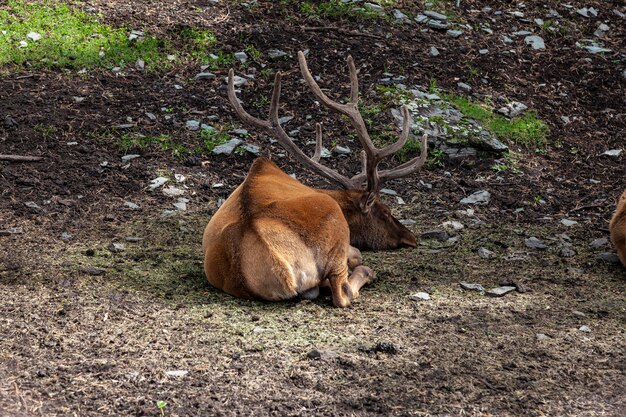
For hunters, knowing the timing, phases, and behaviors of fallow deer during this period can greatly improve their chances of a successful hunt.
In this post, I will explain the timing of the fallow deer breeding season and provide key tips for hunters to take advantage of this crucial period.
What Fallow Deer Breeding Is All About
Fallow deer (Dama dama) are a popular species of deer native to Europe but also found in various regions like New Zealand. Their breeding season, also known as the rut, is a crucial period for hunters.
This is the time when bucks are most active, seeking out ‘does’ to mate and compete for dominance over their territory.
During this season, bucks become highly aggressive, displaying changes in behavior, appearance, and scent, making them more predictable targets for hunters.
The fallow deer is a polyestrous species, meaning females, known as does, can come into heat multiple times if not successfully bred.
A doe typically reaches sexual maturity around 16 months of age, which marks her first opportunity to enter the breeding season. The cycle revolves around the estrous period, when the doe becomes receptive to mating.
When is the Fallow Deer Breeding Season?
The breeding season of fallow deer varies based on the region and climate. However, in most temperate regions, including Europe and New Zealand, the breeding season takes place in the fall.
Typically, it occurs between late September and early November, with some regional variances depending on factors like food availability, climate, and herd structure.
Hunters should be particularly attentive to the onset of the breeding season.
In some regions, the rut may extend into early December or even late September.
- Northern Hemisphere: October to November
- Southern Hemisphere: April to May
The peak activity lasts about 3 to 4 weeks, during which bucks compete for access to the does by establishing territory through aggressive behavior like scraping and thrashing their antlers against trees.
Knowing these general timelines can help hunters plan their trips accordingly. For more specific insights, explore the latest news of deer behavior or resources like Hunt Wise for updates on seasonal changes in your area.
Factors Affecting the Timing
Several factors affect the timing of the fallow deer breeding season:
| Factor | Impact on Breeding Season |
| Climate | Warmer or cooler weather can influence the onset of the rut. |
| Food availability | Well-fed herds experience a stronger and earlier rut. |
| Population Density | More deer in a given area can trigger early rut behavior. |
| Regional Difference | In places like New Zealand, the timing may slightly differ. |
| Health and age of Herd | Younger and healthier deer may experience earlier rutting |
Times and Phases of the Fallow Deer Breeding
The fallow deer breeding season can be divided into three main phases:
Pre-rut
The pre-rut is when bucks start to establish their dominance and prepare for the breeding season.
This phase typically begins in late September and is characterized by bucks marking their territory with scrapes, urine, and antler rubs.
Bucks also begin to shed the velvet from their antlers and engage in sparring with other males.
Peak Rut
The peak rut is the height of the mating season and typically occurs in mid to late October. During this time, bucks aggressively pursue does in heat and compete for access to mate.
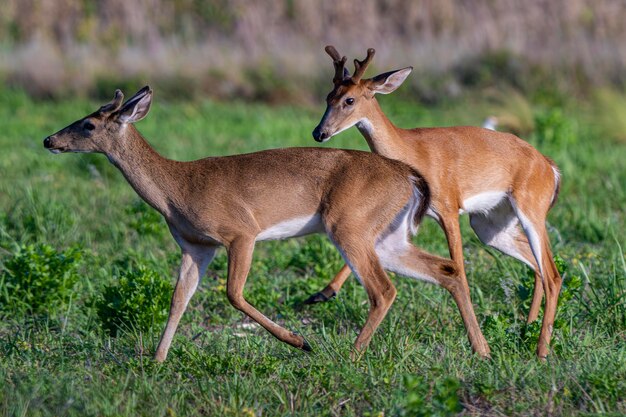
Bucks may lose a significant amount of weight due to their intense focus on breeding rather than feeding. You will see increased activity within the herd during this time.
Key behaviors during this phase include:
- Mating Calls: Bucks emit loud grunts and groans to attract receptive ‘does’.
- Chasing: Bucks will actively chase does that are in estrus, leading to increased movement throughout their territories.
- Sparring: Aggressive interactions between bucks become more common as they vie for dominance.
Post-rut
The post-rut occurs after most of the does have been bred. Bucks start to withdraw from competition and regain their strength.
This phase, in early November, is when the fawns conceived during the rut begin their gestation period, which typically lasts about 7.5 months.
Proven Tips to Identify Fallow Deer During the Breeding Season
Physical Changes in Bucks
During the rut, bucks undergo significant physical transformations. Their necks swell, and their coats darken.
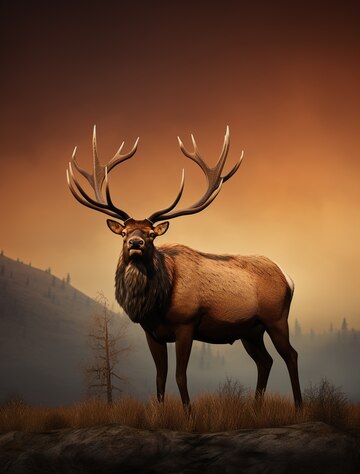
Their antlers become polished after shedding the velvet. Bucks often develop deep grunts and bellows, a vocalization that serves to challenge other bucks and attract does.
Behavioral Cues
Bucks will thrash trees and bushes with their antlers to mark their territory and assert dominance. You’ll also observe bucks scraping the ground and urinating on it to spread their scent.
Doe Behavior
The female deer, or does, display signs of readiness to mate by seeking out dominant bucks. During the estrous cycle, which lasts just a few days, they will allow bucks to approach and mate.
Hunters should look for does in groups, as they often stay together during the breeding season.
Best Hunting Tips and Strategies During Fallow Deer Breeding Season
Timing Your Hunts for Maximum Success
Timing is critical during the fallow deer breeding season. The pre-rut phase is an excellent time to hunt, as bucks are more visible while establishing their territory and engaging in sparring matches.
During the peak rut, bucks are distracted by mating activities, making them more vulnerable to hunters.
Hunting During Different Phases of the Rut
- Pre-rut: Bucks are territorial and still feeding heavily. This is a great time to pattern their movements based on food sources.
- Peak rut: Bucks are chasing does, making this the best time to call or rattle antlers to simulate a challenge.
- Post-rut: Bucks are exhausted and less cautious. This is the time to focus on food sources as they seek to regain weight.
Using Calls and Decoys
During the peak rut, bucks are highly responsive to calls and decoys. Effective use of calls can significantly enhance your chances of attracting fallow deer.
Mimicking Vocalizations: Use grunt calls during pre-rut and peak rut phases to attract nearby bucks.
Strategic Decoys: Position decoys strategically during peak rut; they can entice curious bucks into shooting range.
For tips on using calls effectively, check out resources like Mossy Oak.
Positioning and Stalking Tips
Where you set up is critical. During the rut, bucks are on the move, often chasing ‘does’ through open fields or wooded areas.
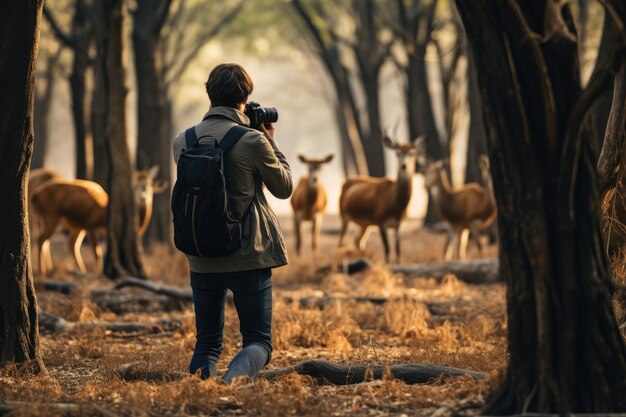
Position yourself along known travel routes or near feeding areas where ‘does’ congregate. Stalking during the rut can be more successful as bucks are more focused on mating than avoiding predators.
To sum up
The fallow deer breeding season offers hunters unique opportunities to track and harvest these fascinating animals.
By understanding the timing of the rut, recognizing physical and behavioral changes in the herd, and adjusting hunting strategies for each phase of the breeding season, hunters can maximize their chances of success.
For more expert tips on hunting strategies, browse our additional resources at Deer Hunting Gateway. Stay informed and prepared for the fallow deer rut to enjoy a productive hunting season.
]]>This behavior shows us how deer have adapted over time. It also tells us about their social lives. Let’s dive into the reasons behind this unique way of moving.
Introducing The Peculiar Hopping Behavior Of Male Deer
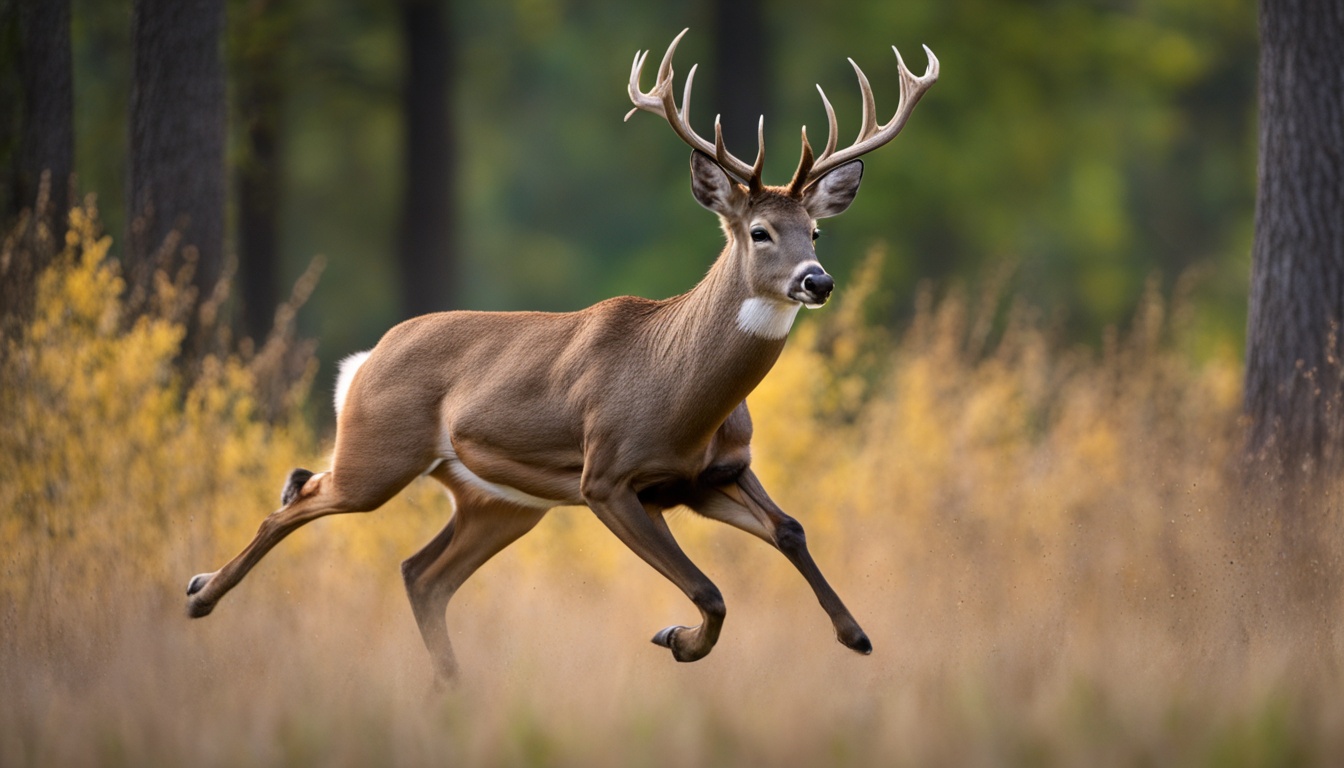
Mule deer and whitetail deer are known for their unique hopping or “stotting” behavior. This is most common in male deer during the breeding season, known as the rut. When they feel threatened, they bound away in vertical leaps, showing off their white rump patches. This behavior sends signals to other deer about their fitness and readiness to mate.
Observing The Whitetail And Mule Deer’s Unique Movements
Watching male deer hop is quite a sight. During the rut, a buck may bounce around to show off to a doe. This hopping is a way for them to signal their strength and health to potential mates. The white patches on their rump make these displays even more noticeable.
This hopping isn’t just for the rut. Male deer also do it when they’re scared or trying to get away from predators. It’s a way for them to show off and protect themselves. The energetic nature of these displays shows how important deer are in their territories.
Understanding why do male deer hop helps us see how complex deer are. This movement is a key way for them to communicate. It tells other deer about their fitness and readiness to breed. By watching and studying this, we learn more about how these animals survive and reproduce.
The Science Behind The Hop: Evolutionary Adaptations
Why do male deer hop? Male deer exhibit a behavior called “stotting” or hopping. This is an evolutionary adaptation with several benefits. It helps them quickly move away from threats and shows off their white rump patches to warn predators.
This behavior also shows off the deer’s fitness and health to other deer. It’s important for finding mates and settling social hierarchies. The “honest signal” theory suggests that stotting tells predators the deer is fast and agile if needed.
Studies show that when more wild dogs stott, they are less likely to kill a gazelle. This hints at a link between stotting and keeping predators away. But, there’s not enough evidence to fully understand why deer stott.
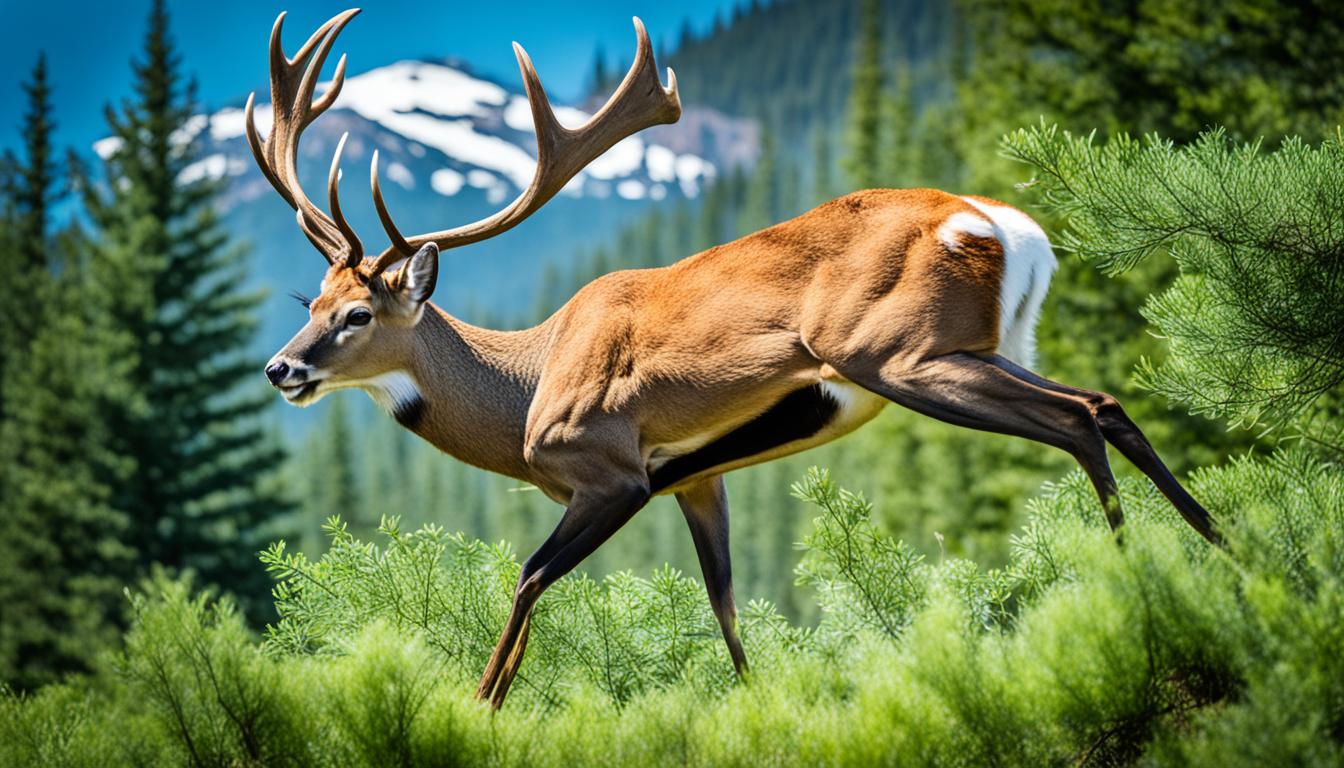
Deer aren’t the only ones who hop; kangaroos, kangaroo rats, hares, and rabbits do it too. They hop fast and far to escape predators and move through their environments.
The deer’s hopping is a key adaptation for survival and finding a mate. It’s a fascinating behavior that scientists and nature lovers find intriguing.
Why Do Male Deer Hop: The Key To Mating Success
Male deer hop or “stot” during the mating season, known as the rut. This behavior is key to their success with females. They show off their fitness and dominance with these energetic leaps.
This display of strength and agility helps a buck attract females. It shows he’s a good mate and can protect his territory. The rut for white-tailed deer lasts three weeks in the Northern Hemisphere. In tropical zones, it can happen most of the year.
White-tail does can be in estrus for up to 72 hours. They may come into estrus up to seven times if they don’t mate. The peak of the white-tail rut in the U.S. is November 13.
Bucks can lose up to 20-30% of their body weight during the rut. Some may lose as much as 50 pounds (23 kg) after mating. They need to eat a lot to get back their strength.
This amazing deer mating behavior, buck courtship displays, and rutting season antics show how male deer signal their fitness. It also highlights their deer attraction tactics. Understanding this behavior helps us appreciate deer mating and reproduction more and learn more about why do male deer hop.
Territorial Marking And Dominance Displays
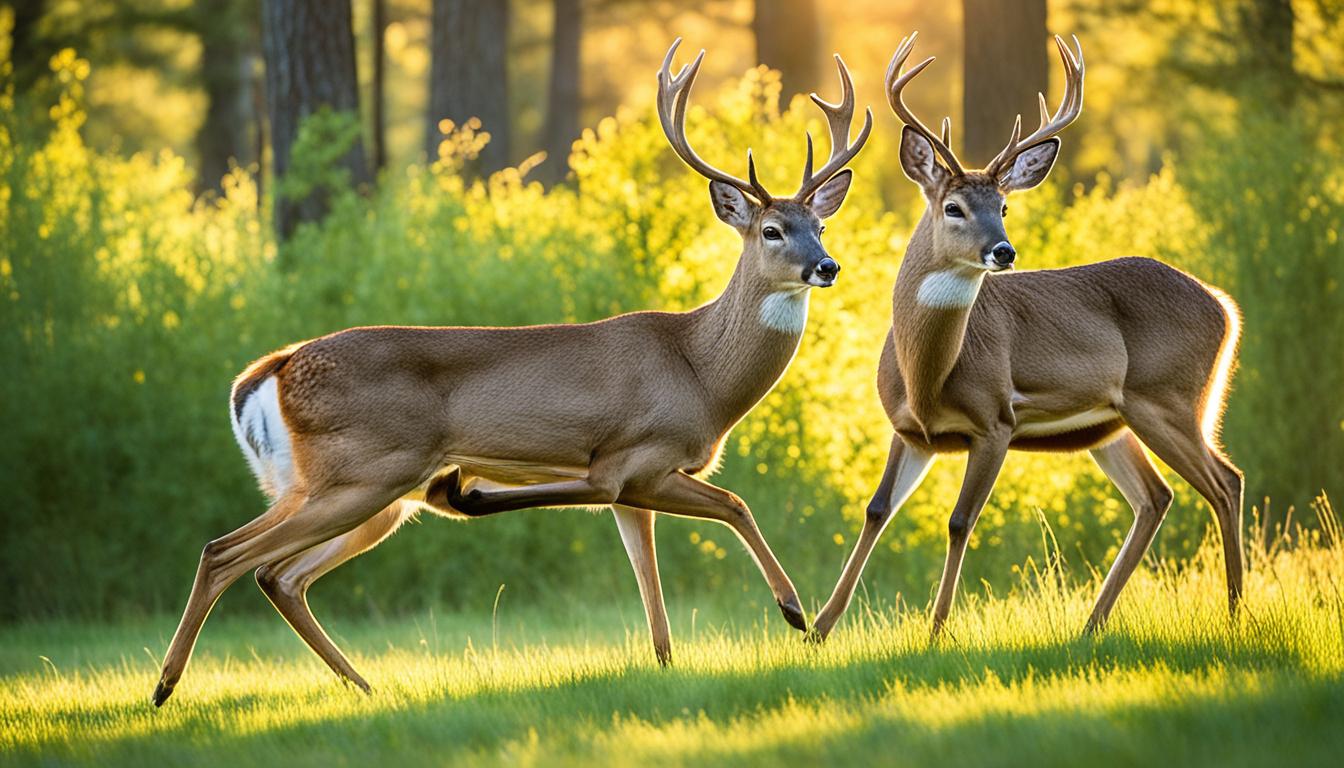
The hopping or “stotting” behavior of male deer is key for marking territory and showing dominance. In the breeding season, males fight to be the top buck and get to the females. Their high-energy hops show off their strength, speed, and readiness to protect their territory.
Understanding The Role Of Hopping In Intraspecific Communication
This way of communicating helps avoid fights that could hurt them. Smaller or less strong males might back down to avoid getting hurt. In many animals, like primates, birds, and rodents, the top ones get more food and mates.
But, being the top deer comes with a cost. They burn more energy and have higher stress hormones. Hopping is a safe way for deer to show they’re in charge and protect their land. This helps avoid fights that could lead to serious injuries or death.
Deer aren’t the only ones marking their territory and showing off. Animals like feral goats, vervet monkeys, and red wood ants do the same to show their rank and guard their resources. By learning about why do male deer hop, we see how these animals have adapted to survive in their world.
Conclusion
The hopping or “stotting” behavior of male deer is truly fascinating. It’s an evolution that helps them in many ways. It helps them avoid predators, find mates, and show who’s boss. This unique way of moving is key to their survival and social life.
Male deer hopping shows us how these animals have adapted to their environments. Whether it’s the whitetail deer or the mule deer, their hopping is impressive. It shows their strength and ability to survive in different places.
This behavior of male deer teaches us about the beauty and complexity of nature. By studying their unique ways, we learn more about their lives and how they interact. It’s important to understand and respect deer as we live alongside them. This knowledge helps us protect them and appreciate the natural world more.
]]>These herbivores have unique traits and behaviors. Learning about their differences therefore helps us understand nature and how to protect them.
Physical Differences Between Male and Female Deer
Size Disparity
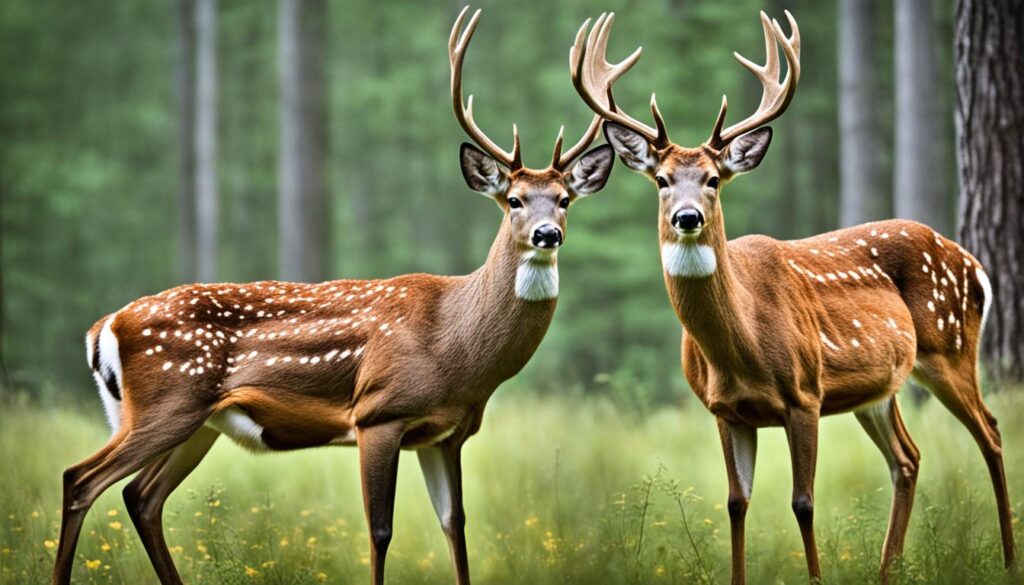
Male and female deer show clear size differences. White-tailed deer, for example, have distinct looks based on their sex. Generally, bucks are about 20% bigger than doe (s). They weigh between 100 and 300 pounds, while a doe can weigh between 85 and 130 pounds.
Adult white-tailed bucks weigh 120–160 pounds while their female counterparts weigh 80–120 pounds. It is interesting to note that newborn fawns weigh around 4–6 pounds and can walk right after birth!
Due to their size, bucks have a bigger home area than doe (s), ranging from 1–4 square miles. A single bed often belongs to a buck, while many beds mean doe (s) are present.
When it comes to tracks, bucks drag their feet, making less ordered tracks. Doe (s), however, lift their feet, leaving a pointed track.
The behavior of the female vs male deer also sets them apart. Bucks lead in finding food, scouting the area before grazing while doe (s) and young bucks follow them.
Unlike doe (s) bucks urinate while walking, leaving a scattered trail of signs as they move. Doe (s) squat to urinate, leaving clear signs.
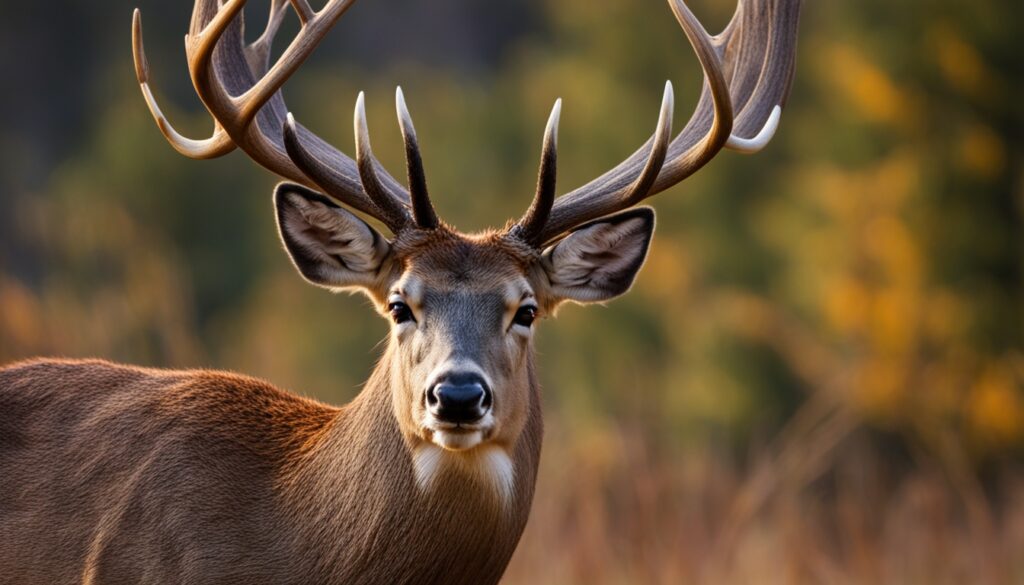
Female Vs Male Deer: The Distinctive Antlers
Male and female deer are easily told apart by the presence of antlers. However, in some species like the reindeer, both males and females have antlers.
Male white-tailed deer grow big antlers in the warm months. These antlers usually start covered in soft, velvety skin, which peels off later.
Some female deer also have antlers, but they are smaller and not as strong as the males’. This is because males have more testosterone, which helps their antlers grow big.
Consider the following facts about deer antlers;
- Only male deer have fully developed antlers, showing a clear difference between the sexes.
- Antlers can show a deer’s age and strength, helping to set a pecking order among males.
- Antler size often matches the deer’s overall size, linking size to dominance in males.
- During mating season, males use their antlers to threaten and establish their place in the group.
Antlers are mainly used by bucks for fighting and attracting doe (s). Antler fights can be dangerous, sometimes causing serious injuries or death. However, for the doe, the size of the antler shows a buck’s quality which affects which buck it (a doe) will choose to mate with.
Mating Behaviors: Female vs Male deer
Female and male deer show different mating behaviors and have an annual rut season. During this season, which is mostly in the fall, bucks compete for dominance and mating rights therefore becoming more aggressive.
Doe (s) on the other hand, focus on teaching their young (fawns) important survival skills from around 4 weeks old. The rut season is key especially for the whitetail, mule, red, and fallow deer.
The Rut and Mating Behaviors
Male deer, or bucks, have special behaviors during the rut. These special behaviors are exhibited to show they’re the best and get mating chances.
Male deer behaviors include:
- Aggressive posturing and antler-to-antler combat with other males
- Marking their territory with scent from their forehead glands
- Emitting grunts, snorts, and other vocalizations to attract females
- Closely following and courting receptive does
Female deer, or does, act differently during the rut. They stay in their areas and wait for the top males (those who are successful in securing a harem of females) When a doe is ready, mating is fast, lasting just a few seconds.
After about 200 days of pregnancy, doe (s) give birth to one or two fawns in the spring. The fawns learn survival skills from their mothers which helps keep the deer population going.
Mothering Instincts; Female Deer
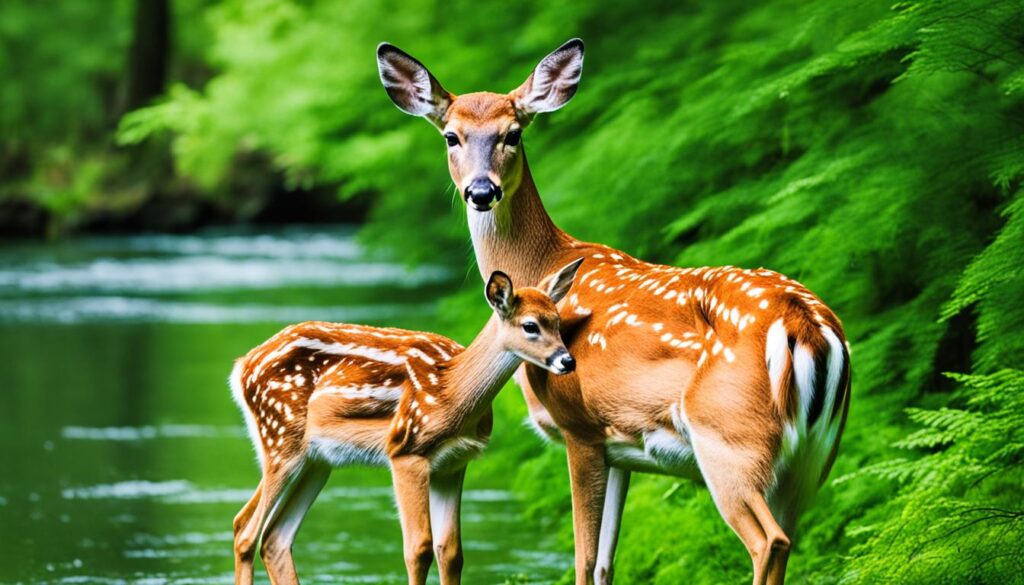
Female deer, or does, are known for their amazing mothering skills. When you see a deer with one or more fawns, it’s likely a doe taking care of her babies. She teaches them how to find food, which is key for their survival and growth.
The bond between a doe and her fawns is incredibly strong. She will protect her young with all her might, even risking her own safety. She shows them where to eat, helping them learn to find the food they need to grow strong.
Here are some interesting facts about the deer and the rut season;
- Most doe (s) breed in a single week
- Bucks can lose approximately a third of their weight after a month of mating.
- Deer penises have been used in traditional medicine since ancient Greek times to relieve men’s impotence.
- DNA tests on twins and triplets frequently confirm that one doe can mate with multiple males.
Taking Care of The Fawns
Fawns are born in the spring, often on stormy nights. Doe (s) keep their babies safe and feed them. Deer milk is special, with lots of fat and protein to help their babies grow strong.
The care that female deer give their fawns is vital for their survival. Threats like bears, bobcats, and coyotes are always there, and the does’ watchfulness and guidance help their young stay safe.
Deer Species Variations
The deer species around the world can be split into two main groups: Old World deer (Cervinae) and New World deer (Capreolinae). Old World deer, like the red deer and fallow deer, live mainly in Europe, Asia, and North Africa. New World deer, including the white-tailed deer and mule deer, are mostly in North and South America.
It is worth noting that each species has its own unique look and behavior, just like the differences between males and females in the same species.
For example, male red deer, or stags, are much bigger than females, called hinds. The same is true for Eurasian fallow deer, where males, or bucks, are much larger than females, or does. These size differences often lead to different mating behaviors and social structures within each deer species.
Deer have been important in human cultures for a long time. People have hunted and farmed deer for their antlers in many places. The diversity of deer species shows how adaptable and resilient they are.
On deer species variations, the following are worthy of note;
- Male deer of almost all species (except the water deer) and female reindeer grow and shed new antlers each year.
- Deer hunting has been popular since the Middle Ages and remains a resource for many families.
- Male red deer is a stag, while other large species may have a male called a bull and a female called a cow.
- The highest concentration of large deer species in temperate North America is in the Canadian Rocky Mountain and Columbia Mountain regions.
Conclusion
Understanding the differences between female and male deer is key to observing and identifying them in the wild. This knowledge will also help you appreciate deer more.
If you love wildlife, photography, or just being outdoors, knowing about deer can make your experiences better. When you’re out watching deer, look for clues that show if they’re male or female. Spotting these unique traits can help deepen your connection with nature.
]]>