These beautiful creatures are known for their amazing speed, reaching up to 40 miles per hour.
But can you beat a whitetail deer in a race? This question is what we’ll explore in this article, looking into the speed of these iconic deer.
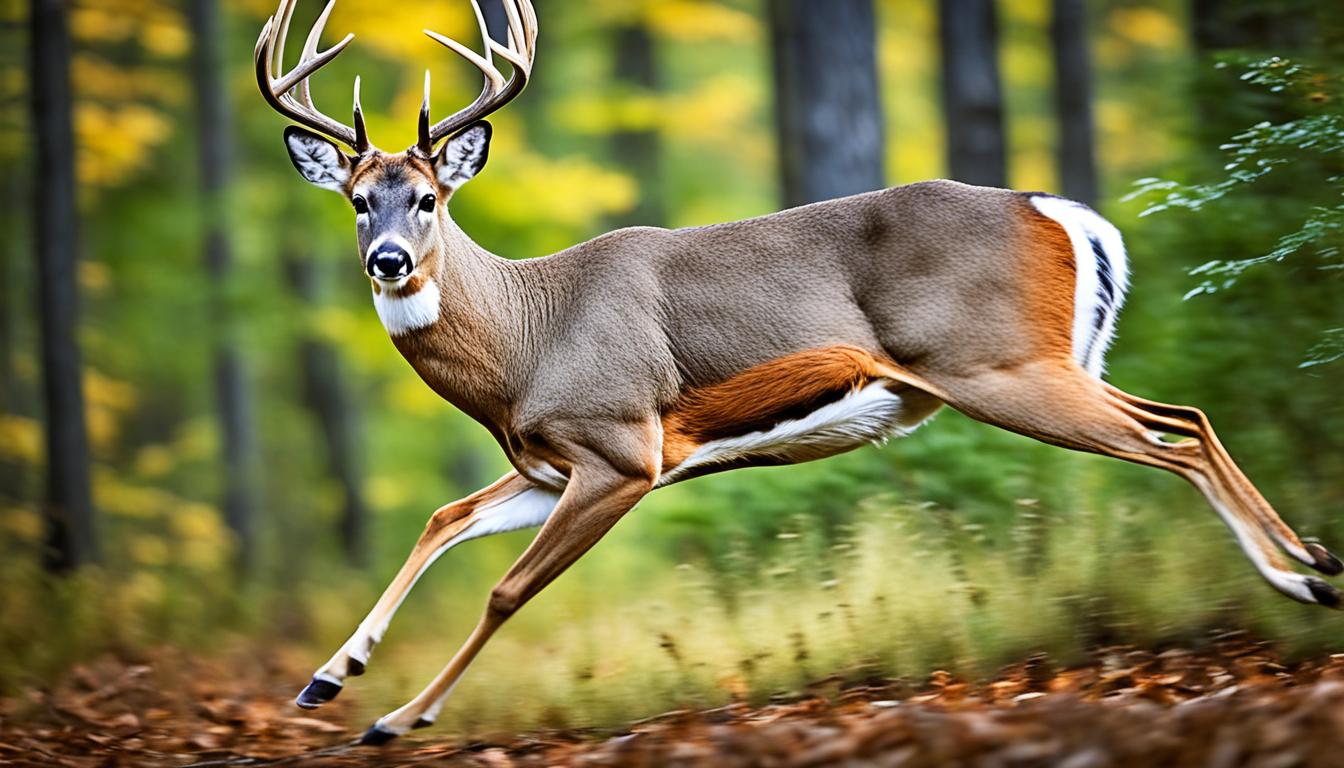
Whitetail Deer’s Incredible Running Velocity
Whitetail deer are the most common deer in North America. They can run as fast as 35 to 40 miles per hour. This speed lets them outrun even the fastest human, most horses, and all their natural predators.
Their speed shows their amazing athleticism and how well they’ve adapted to their environment. There are several factors that help deer run fast, these include:
- Powerful hindquarters: Their strong back legs give them the power for quick sprints.
- Unique front leg attachment: This special setup lets them move fast and change direction easily.
- Lightweight build: Being lean helps them run faster and be more agile in the wild.
With their strong body and sharp senses, whitetail deer have amazing deer sprinting capabilities. Seeing them run is truly impressive.
Top Speed Of A Whitetail Deer Vs Other Deer Species
Whitetail deer are incredibly athletic. Their strong back legs and special front leg setup let them change direction quickly. This makes them faster than many other agile animals.
Even though they’re not the fastest deer, their white-tailed deer athleticism helps them survive and escape danger. Species like the caribou, elk, and mule deer can run faster over longer distances, than the whitetail.
Whitetail Deer Vs Caribou
The caribou, also known as reindeer in some regions, is known as the top speedster among North American deer.
It can run up to 50 mph and during seasonal migrations, they cover vast distances in search of food and suitable breeding grounds.
While caribou may not be as fast as white-tailed deer in short bursts, they are known for their stamina and ability to sustain a steady pace over long distances.
They can travel at speeds of around 15-20 miles per hour (24-32 kilometers per hour) for extended periods like migrations.
Here are 2 key points to to note about the running capabilities of caribou:
- Endurance: Caribou can travel hundreds of miles across rugged terrain, boreal forests, and mountainous regions. This endurance allows them to reach their seasonal calving grounds, where they can give birth and find optimal foraging areas.
- Adaptations: Caribou have evolved physiological adaptations that help them excel in their long-distance movements. Their specialized hooves are well-suited for running through various terrains, including snow, ice, and rocky surfaces. Additionally, they have a large lung capacity and efficient circulatory system, enabling them to sustain their physical exertion over extended periods.
In summary, while both white-tailed deer and caribou are deer species, they differ in terms of habitat, physical characteristics, migration behavior, and diet. Each species has evolved to thrive in their respective environments and exhibit unique adaptations to survive in their ecosystems.
Whitetail Deer Vs Elk
In general, elk are faster than white-tailed deer when it comes to running speeds. They are known for their ability to reach speeds of up to 45 miles per hour (72 kilometers per hour) in short bursts.
Their speed allows them to quickly escape predators or navigate challenging terrain. Their larger size and powerful build contribute to their speed and agility.
The top speed of a white tailed deer will typically be around 30-35 miles per hour (48-56 kilometers per hour). See the difference?
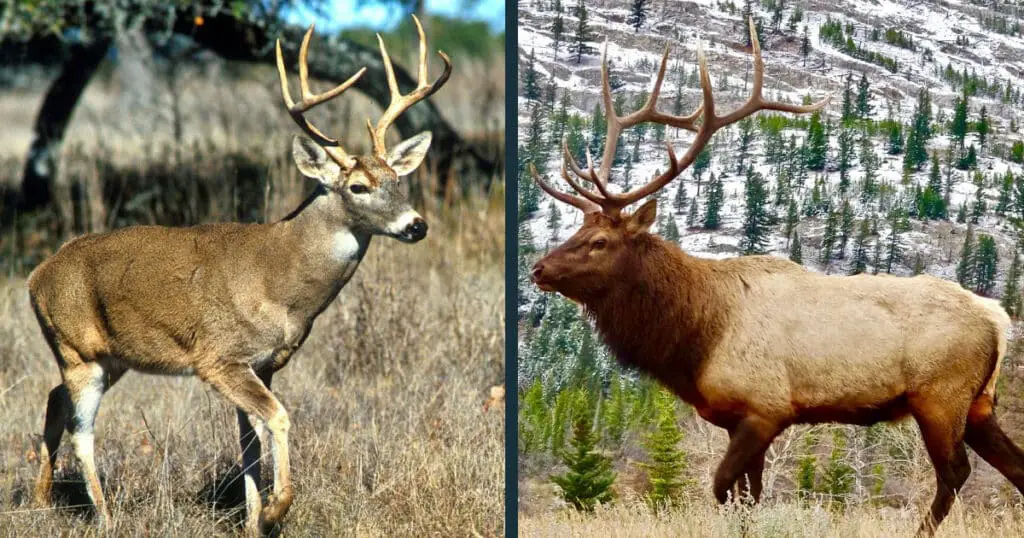
But while the top speed of a white tailed deer may be far less than that of an elk. White-tailed deer are known for their agility and quick acceleration, which helps them evade predators in their forested habitats.
Both elk and white-tailed deer have adapted their speed and agility to survive in their respective environments.
While Elk’s greater speed may give them an advantage in open habitats or when covering long distances quickly, the white-tailed deer’s agility are well-suited for navigating dense forests and evading predators in wooded areas.
White tail Deer Vs Mule Deer
Mule deer are closely related to white-tailed deer and are also known for their agility and speed. They are capable of reaching speeds of up to 45 miles per hour (72 kilometers per hour) in short bursts.
This speed allows them to quickly evade predators and navigate their varied habitats, which range from forests and mountains to deserts and grasslands.
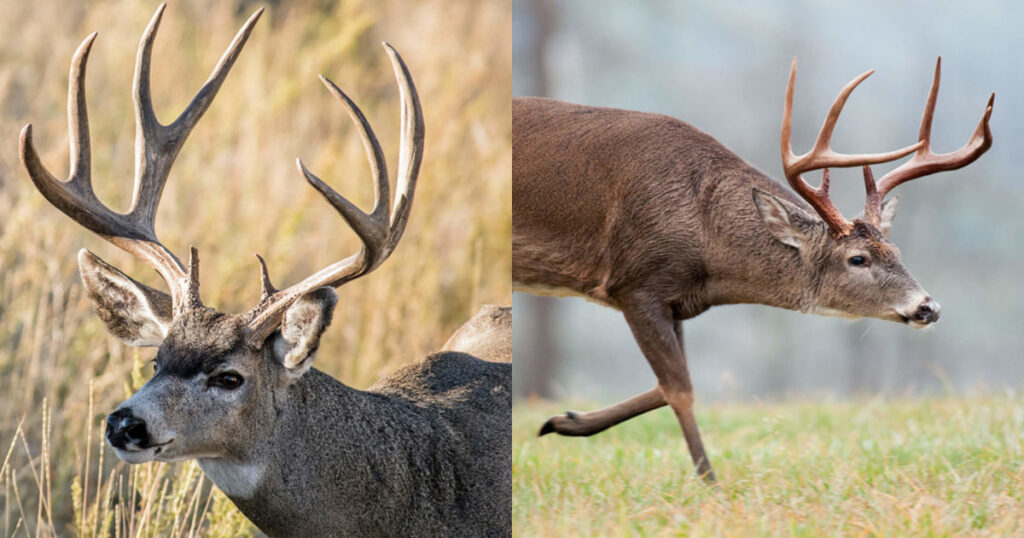
Let us consider the following:
- Adaptations for Speed: Mule deer have evolved physical adaptations that support their speed and agility. Their muscular bodies, powerful hind legs, and large hooves are well-suited for running and jumping. They also have a keen sense of sight, smell, and hearing that help them detect predators and react swiftly to threats.
- Escape Behavior: When faced with danger, mule deer rely on their speed and agility to escape. They can quickly accelerate to top speeds and change direction to evade predators such as coyotes, mountain lions, and wolves.
Overall, the speed of mule deer is a key feature that enables them to thrive in diverse habitats and avoid predators. Their combination of speed, agility, and alertness showcases their adaptations for survival in the natural world
Although the whitetail deer may not be the fastest, it is still a great runner. It can reach speeds of up to 35 mph. This lets it outrun many predators and stay safe easily. Its speed and agility make it a strong hunter in the wild.
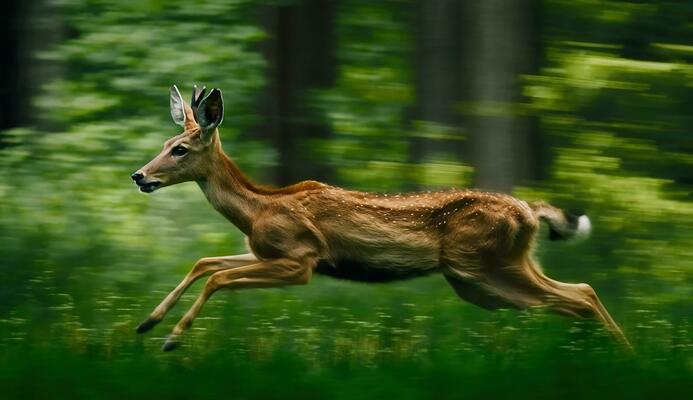
Top Speed Of A Whitetail Deer Vs. Their Predators
The top speed of a Whitetail deer is worthy of praise, however, they still face tough competition from other animals in the wild, particularly their predators.
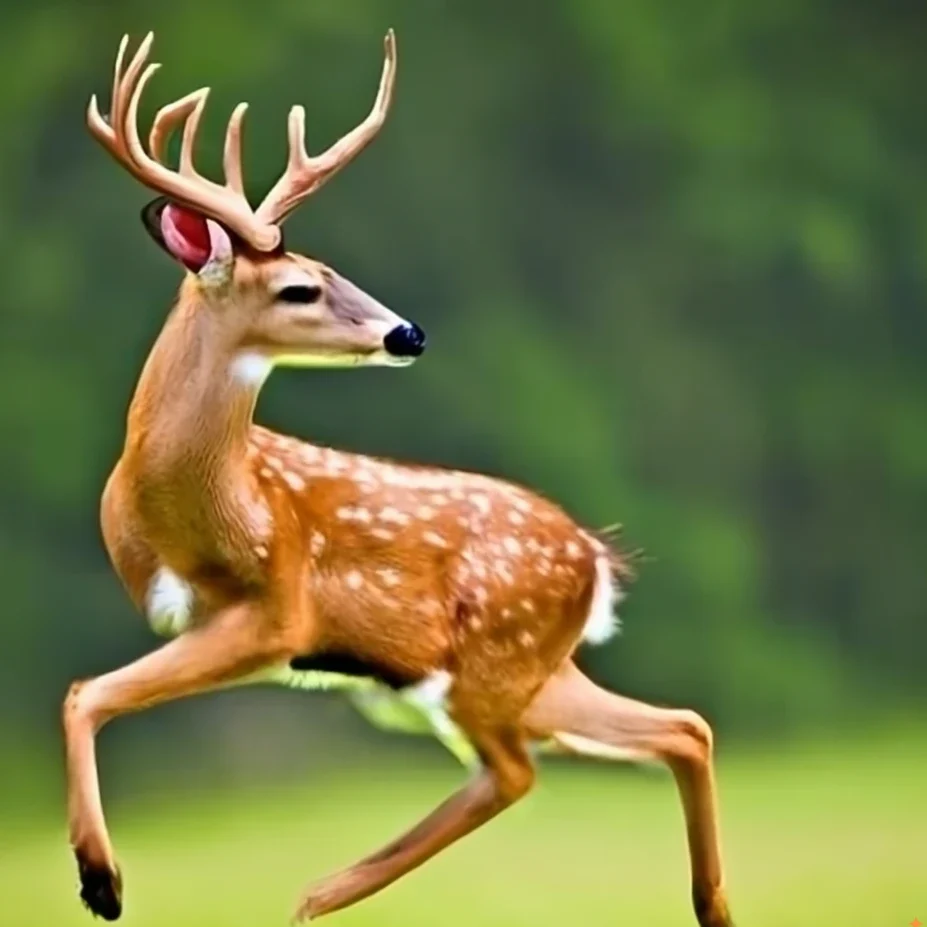
Predators like bears, wolves, and mountain lions can also run very fast, from 35 to 50 mph. So, whitetail deer can’t just rely on speed to escape these skilled hunters. A healthy adult deer might outrun a wolf or bear.
But, mountain lions are a bigger threat because they can hit speeds up to 50 mph for short distances.
Speed is a critical component of the white-tailed deer’s defensive strategies against predators. Their ability to run fast and navigate obstacles in their environment plays a vital role in their ability to survive and thrive in the face of predator pressure.
More Than Just Raw Speed
Aside from the amazing top speed of a whitetail deer, they can also zig-zag, jump, and dodge with amazing precision. Their quick reflexes let them dodge threats almost instantly.
For example, while sound travels at about 1,100 feet per second, an arrow shot from a bow moves at around 200 feet per second. This shows how fast deer can react.
Hunter Tips
Deer react less when they’re with friends, busy, or in certain weather conditions. But their agility and speed are key to their survival. They use these skills to stay safe and fast.
Humans vs. Whitetail Deer: The Race Is On
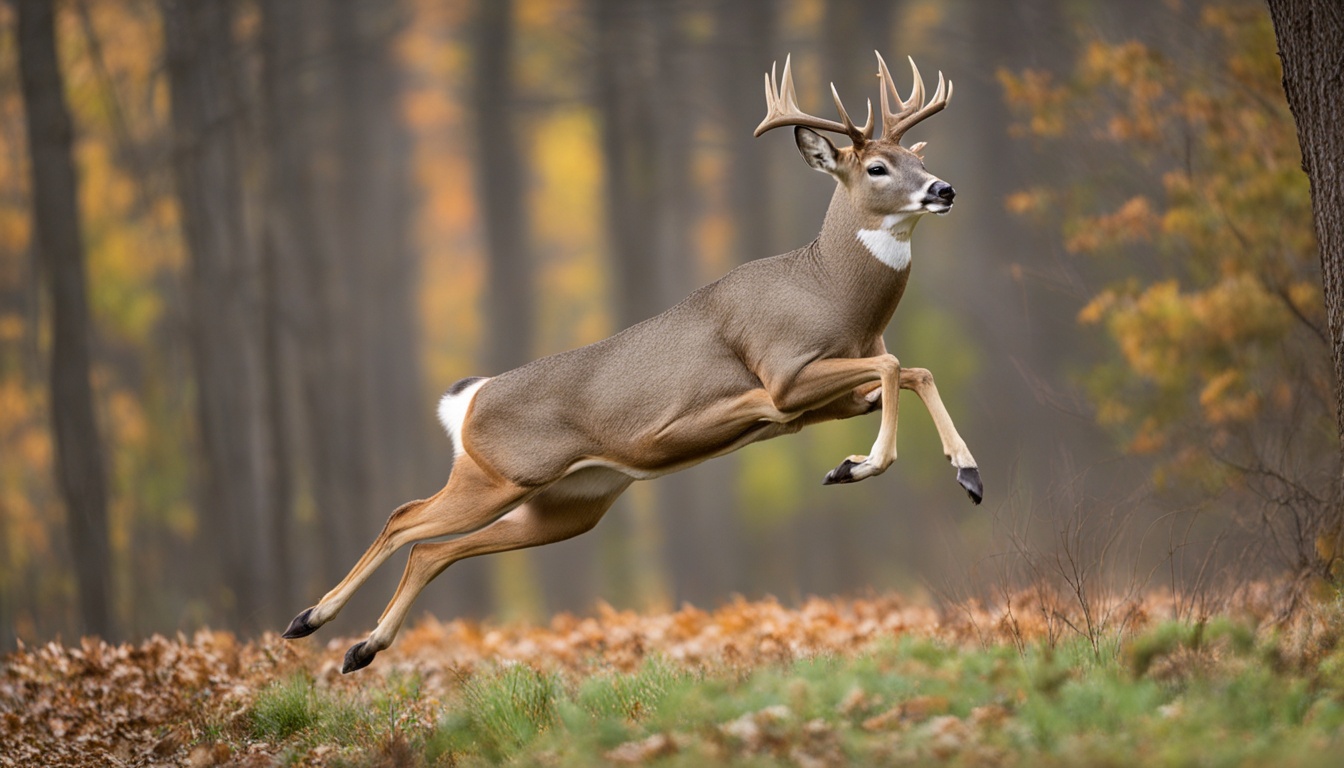
The top speed of a whitetail deer is between 35-40 mph. This makes them faster than even the fastest human, Usain Bolt, who tops out at about 27 mph.
This means if Bolt and a deer were racing, the deer would win, easily. Most humans run at less than 15 mph but human bodies have evolved to help catch deer by running them down. This method is called “persistence hunting,”.
Persistence hunting is still practiced by some groups, like the Kalahari bushmen. In an experiment in New Mexico, people were able to almost catch a pronghorn after chasing it for nearly 20 miles. This shows how effective this hunting method can be.
Harvard research shows that while deer are faster, humans can keep up for longer thanks to our sweat system. Humans have an edge in endurance running, which is helpful for catching fast prey like deer.
So while in a short race, the deer would win easily. Over a long distance, a human’s endurance might beat the deer’s speed.
Conclusion
The top speed of a whitetail deer is truly impressive. They may not be the fastest deer but they can outrun most predators and even the fastest human runners.
All these and many more make deer amazing creatures. They are a true wonder of the natural world.
]]>